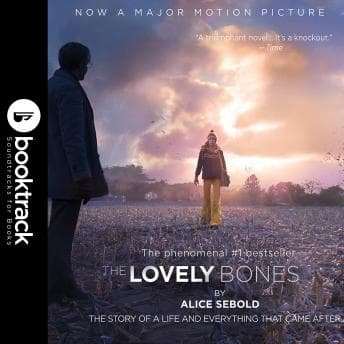

Look, I know what you're thinking. Tom, this isn't fantasy. There are no magic systems. No progression. No Sanderson avalanche. And you're right. But hear me out - I picked this up at 2 AM during one of those thesis-avoidance spirals where I'd already reorganized my entire board game shelf alphabetically AND by player count, and I needed something to fill the silence that wasn't another reread of Way of Kings. My D&D group's campaign had just wrapped a really heavy arc about a PC death and the party watching from the ethereal plane, and someone in our Discord said "that's literally The Lovely Bones." So here we are.
And honestly? I'm glad I'm here. Even if I feel a little weird about it.
A Ghost Story Without the Dungeon
Susie Salmon narrates her own murder and its aftermath from a personalized heaven - and before you tune out, this isn't some saccharine afterlife tourism brochure. Sebold builds her heaven like a procedurally generated space that reshapes itself around Susie's desires and limitations. (My thesis brain latched onto that immediately - her heaven has rules, constraints that define what she can and can't perceive, what she can influence. It's basically a soft magic system and I will die on this hill.) The real pull is watching Susie observe her family fracture in real time - her father Jack becoming consumed by obsession over finding her killer, her mother Abigail slowly detaching from the family entirely, her sister Lindsey hardening into someone who survives by refusing to break. The grief isn't one thing. It's different for every person Susie watches, and Sebold tracks each thread with this clinical precision that makes the emotional hits land harder because they're so specific. That same patience with grief's weird, sprawling architecture is something I found in Very Secret Society of Irregular Witches too - different genre, different stakes, but the same insistence that loss doesn't look the same on any two people.
The killer, George Harvey, is genuinely unsettling in a way that doesn't rely on gore or shock. He builds dollhouses. He's meticulous and ordinary and that's what makes your skin crawl. If you've ever run a campaign where the BBEG was just... a regular person in a position of trust, you know how much more disturbing that is than any lich or dragon.
The Author-as-Narrator Gamble
Okay, this is where things get complicated. Alice Sebold narrates her own book, and the audiobook community is genuinely split down the middle on this. Some listeners call her delivery touching and emotionally raw. Others say she "literally just reads it to you" - and I get both sides. She doesn't do what Steven Pacey does (Steven Pacey walked so other narrators could run, as always). She's not performing distinct character voices with different accents and cadences. What she does do is read Susie's internal narration with these long, deliberate pauses that feel like someone trying to hold themselves together while telling you the worst thing that ever happened to them. It's intimate in a way that's uncomfortable. Not polished. Not theatrical.
For me, it worked about 70% of the time. The scenes where Susie watches her family from heaven - especially her father smashing the bottled ships in his study - hit differently because Sebold's voice cracks in these tiny ways that a professional narrator might smooth over. But in dialogue-heavy sections, the lack of vocal differentiation between characters means you're doing more mental work to track who's speaking. If you're used to full-cast productions or narrators who give every character a distinct voice, this will frustrate you.
Also - and this matters - there are reported audio skips near the end of this Booktrack edition. I didn't hit anything catastrophic, but the last couple hours felt slightly uneven in places, like the edit wasn't as clean.
The Booktrack Thing
This is the "Booktrack Edition," which means there's a musical score playing underneath the narration. And... it's fine? The music is gentle, ambient, never overpowers the voice. It adds atmosphere during the quieter heaven sequences - almost like background music in a JRPG town. But it also means you can't fully zone out or multitask. This demands focused listening. I wouldn't recommend it for coding or cleaning or anything where your attention splits. This is a headphones-on, lights-off kind of listen.
Who Rolls Initiative on This One
If you want fantasy escapism, this is not your book. If you want something that sits in your chest like a weight for a few days after you finish - something that explores grief the way a good campaign explores loss, with specificity and patience - give it a shot. Parents who've lost children will probably need to steel themselves. Content warnings for violence, sexual assault, and the murder of a child are not optional disclaimers here; they're central to the text.
Skip if: you need a strong narrator performance, you can't handle heavy subject matter, or you want your audiobooks as background noise.
Listen if: you want a ghost story that's really about the living, and you're okay with an imperfect but deeply personal narration from the person who wrote it.
I Read This Instead of Writing My Thesis (Again)
I didn't expect to be reviewing The Lovely Bones on a fantasy audiobook account. But grief is its own kind of world-building - Sebold constructs the architecture of loss with the same care Sanderson puts into allomantic metals, just aimed at something rawer. The narration is polarizing and I respect that. The Booktrack music is a nice-to-have, not a must-have. And at 10 and a half hours, it's a manageable commitment that'll stick with you longer than its runtime suggests. Not a perfect audiobook. But a memorable one.