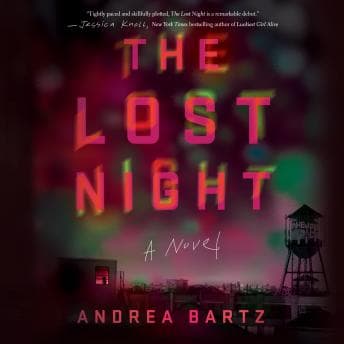

I was reorganizing the horror section at the library - yes, at 9 PM, yes, alone - when I decided to start this one. Brooklyn hipsters investigating a decade-old death? Not my usual fare. But Andrea Bartz kept getting compared to Gillian Flynn, and honestly? I needed to know if the hype was warranted.
Short answer: mostly.
The Ghost of Brooklyn Past
Here's what Lost Night understands that a lot of psychological thrillers don't: memory is the real monster. Lindsay's blackout from 2009 isn't just a plot device - it's the thing that makes this work as horror-adjacent. She can't trust herself. She might have done something terrible. And the audiobook format weaponizes this uncertainty in ways the print version probably can't.
The five-narrator setup sounds excessive on paper. It's not. Each voice anchors a different timeline, a different perspective, and - crucially - a different level of reliability. Kristen Sieh handles Lindsay's present-day sections with this low-grade paranoia that seeps into everything. By hour three, I was second-guessing details I'd already heard, which is exactly the point.
Bartz writes the 2009 Brooklyn loft scene with uncomfortable precision. The performative coolness, the competitive drinking, the way everyone's pretending they're not terrified of being left behind. It reads like a horror story about being young and stupid, which - let's be honest - is its own kind of nightmare.
Paula Hawkins' Shadow (And Why That's Both Good and Bad)
The Girl on the Train comparisons are inevitable and earned. Multiple unreliable narrators, a dead woman at the center, a protagonist whose memory can't be trusted. But where Hawkins went for the jugular, Bartz takes her time. Sometimes too much time.
Lindsay's obsessive investigation works for about seven hours. Then it starts to feel like watching someone refresh their ex's Instagram at 3 AM. You get it. She's fixated. But the repetition - the constant re-examining of the same night from slightly different angles - whittles away the tension instead of building it. I caught myself checking how much time was left around hour eight. Never a good sign.
The ending twist lands. I'll give it that. But it arrives after so much circling that the impact feels muted. Like a jump scare that takes too long to execute.
Five Voices, Uneven Magic
The multi-narrator approach mostly works. Sieh is the standout - her Lindsay carries this undercurrent of barely-suppressed panic that makes even mundane scenes feel ominous. When she's reading Lindsay's internal spirals, you believe this woman might actually be losing her grip on reality.
The other narrators are... fine? They're competent. They differentiate the characters. But nobody else brings the same darkness Sieh does. It's like watching a horror movie where only one actor understands they're in a horror movie.
(My podcast listeners would probably argue this is intentional - that Lindsay's sections are meant to feel more threatening because she's the one with the most to lose. Maybe. Or maybe some narrators just commit harder than others.)
The Pacing Problem
Look, I appreciate a slow burn. My entire podcast is dedicated to horror that takes its time. But there's a difference between building dread and just... taking too long. Lost Night crosses that line in the final third.
The investigation becomes repetitive. Lindsay interviews the same people about the same night. She finds a new piece of evidence. She spirals. She interviews someone else. She spirals again. By the time we reach the actual revelation, I'd already half-figured it out through process of elimination.
At 10+ hours, this needed tighter editing. The story is maybe seven hours of actual content stretched to fill the runtime. Unkindness of Ravens had similar pacing issues, though at least that one committed to its creepy atmosphere throughout. Speed up to 1.25x for the middle sections - you won't miss anything important.
Who Should Queue This Up (And Who Should Sleep In)
If you loved The Girl on the Train's audiobook - the multiple narrators, the unreliable perspectives, the slow unraveling - you'll find a lot to like here. Bartz understands the assignment. She just takes too long turning it in. Perfect for long commutes where you can zone out during the slower bits, or anyone who wants to feel vaguely unsettled about their own college-era blackouts.
Skip if you need momentum, get frustrated by repetitive internal monologue, or you're listening at bedtime. Several people apparently kept falling asleep and having to restart chapters. I get it.
Closing the Book at 3 AM
Lost Night is a solid debut that doesn't quite stick the landing. The premise is genuinely creepy - the horror of not knowing what you're capable of is underexplored in thrillers - and Kristen Sieh's narration elevates the material. Lock and Key: The Gadwall Incident mines similar psychological territory, though it leans harder into the paranoia. But the pacing issues are real, and the ending drags when it should sprint.
Shirley (my cat) was unimpressed. I was... cautiously interested? Bartz has since written better books (We Were Never Here is tighter), so maybe start there. But if you've already burned through Flynn and Hawkins and need something to fill the void, this scratches the itch.
Just don't expect to stay awake through all of it.