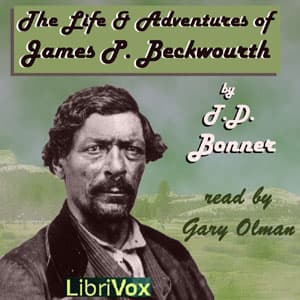

Seventeen hours into the Sierra Nevada wilderness with a man born into slavery who became a Crow war chief. That's not fiction. That's James P. Beckwourth's actual life.
I started this one during a long surveillance contract—twelve hours in a parking garage watching a warehouse. Ranger was with me, which meant frequent walks, which meant a lot of pausing and resuming. Good thing too, because this book demands attention in ways I wasn't expecting.
When History Reads Like a Dime Novel (Because It Was)
Let me cut to the chase: Beckwourth was either the most extraordinary frontiersman in American history or the greatest liar west of the Mississippi. Probably both. The man claims he was adopted into the Crow Nation, rose to become a war chief, took eight wives, and fought in more battles than I saw in three deployments. Some of it checks out historically. Some of it... well, let's just say I've heard similar stories from guys at the VFW who definitely weren't at Khe Sanh.
But here's what grabbed me—even when Beckwourth is clearly embellishing, the underlying details ring true. His descriptions of Crow warfare, the politics between tribes, the brutal economics of the fur trade—this stuff matches what I know from military history. The tactics he describes for ambushes and raids? I've seen similar approaches in mountain warfare. The man understood terrain, understood how to read an enemy, understood that survival depends on reading people correctly. Sergeant York and His People captures that same combination of tactical brilliance and human insight—another American who understood that winning battles requires more than just firepower.
What really hit different was his matter-of-fact discussion of violence. No glorification, no hand-wringing. Just "this happened, then that happened, then I killed three men before breakfast." It reads like an after-action report from someone who's been in the business so long that extraordinary violence has become routine. I've known men like that. Hell, I've been that man.
Gary Olman and the 1850s Voice Problem
Here's where I need to be honest—I couldn't find much specific intel on Olman's performance going in, and after 17 hours, I understand why nobody's writing detailed reviews. He's competent. Steady. The kind of narrator who doesn't get in the way but doesn't elevate the material either.
The challenge is the source material itself. This was dictated in 1856, and it sounds like 1856. Long, winding sentences that would make a modern editor weep. Casual racism that was standard for the era but makes you wince now. (Beckwourth himself was Black, which adds layers of complexity to how he talks about Indigenous peoples and other groups.) Olman reads it straight, no apologies, no modern commentary. I respect that choice even when the content made me uncomfortable.
At 1.25x speed, the pacing works. At normal speed, some of the longer descriptive passages drag. Beckwourth spent a lot of time describing scenery, and while I appreciate a good mountain vista as much as the next guy, I don't need three paragraphs about rock formations.
The Intelligence Buried in the Adventure
What kept me coming back wasn't the action—though there's plenty. It was watching Beckwourth operate as an intelligence asset without knowing that's what he was. The man was gathering HUMINT decades before the term existed. His descriptions of learning Crow customs, building trust, navigating tribal politics—this is a clinic in cultural integration that I'd recommend to anyone heading into unconventional warfare.
He understood something most people never figure out: you can't just observe a culture from outside. You have to become part of it, accept its logic on its own terms, before you can operate effectively within it. The Army spent billions trying to teach this in Iraq and Afghanistan. Beckwourth figured it out with nothing but survival instinct and what seems like genuine affection for the Crow people.
(Side note: Ranger perked up every time Beckwourth described tracking or hunting. Dog knows good fieldcraft when he hears it.)
Who Should Saddle Up—And Who Should Stay in Camp
This is for people who want primary source history, warts and all. If you're interested in the fur trade era, westward expansion, or Indigenous-settler relations from a perspective you don't usually hear, Beckwourth delivers. If you want a polished modern narrative with clear heroes and villains, look elsewhere.
Skip it if you need fast pacing or can't tolerate 19th-century prose. Skip it if you're looking for audio production values—this is straightforward narration, nothing fancy.
But if you've got long drives ahead and want to hear a genuinely remarkable American life story, even one filtered through self-promotion and the biases of its era? Worth your time.
End of Watch
Beckwourth's story deserves to be better known. The audiobook format works for what it is—a historical document read clearly and without pretension. Just don't expect Gary Olman to do voices or add dramatic flair. He's reading you a piece of history, and sometimes that's exactly what you need. Ranger approved, with the caveat that he fell asleep during the scenic descriptions. Smart dog.



![Steve Jobs [unabridged audiobook] audiobook cover](/_next/image?url=https%3A%2F%2Fcovers.audiobooks.com%2Fimages%2Fcovers%2Ffull%2F9788499923406.jpg&w=1920&q=75)