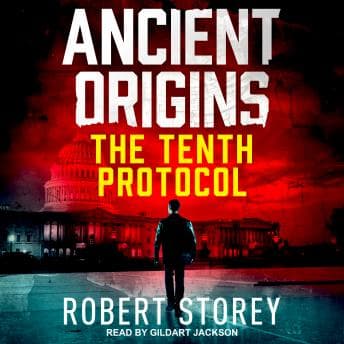

So everyone kept telling me this series was "epic" and "action-packed" and honestly I went in a little skeptical because those are the two most overused words in sci-fi reviews. But here I am, 19 hours later, writing this at 11:47 PM because I couldn't stop thinking about the underground sequences and needed to get this out of my system.
Let me back up. I started Let There Be Light during a particularly brutal on-call week - the kind where your pager goes off at 3 AM and you can't fall back asleep, so you just... lie there in the dark staring at the ceiling. Which, turns out, is the perfect headspace for a book about post-apocalyptic survivors trapped underground after an asteroid wiped out most of civilization. Kevin was asleep next to me and I was listening to people navigate a colossal subterranean realm called "Sanctuary" while trying not to wake him. Very on-brand for my life.
19 Hours Is a Commitment - Here's Why I Don't Regret It
TL;DR: Worth your commute. This is basically The Martian meets Journey to the Center of the Earth but with geopolitical thriller DNA spliced in.
Robert Storey is running three parallel storylines here: a covert ISS mission, a courtroom drama around a former Director General named Steiner who's facing the death penalty but apparently holds humanity's survival in his hands, and two characters - Sarah Morgan and Richard Goodwin - navigating this massive underground world trying to reach the surface. The Steiner thread is the most interesting to me as an engineer because it's basically a systems problem: the guy who broke everything is also the only one who knows how to fix it. That moral complexity carried more weight than I expected from what looked like a pure action series.
The underground Sanctuary sections are where the book really earns its runtime. Storey builds this world with enough geological and structural detail that my CS brain kept trying to map the architecture - like, I was mentally modeling the layout of this place during my morning commute. When Morgan and Goodwin's paths start converging and they inadvertently wake up something terrifying down there, the pacing shifts from exploration mode to full survival horror. The transition isn't subtle, but it works.
At 19+ hours, does it drag? In places - yeah. The ISS subplot takes a while to connect to the ground-level threads, and there are stretches in the middle where I could feel Storey setting up dominos that won't fall until the next book. I bumped my speed to 1.5x during some of the political maneuvering scenes and didn't miss anything critical.
Gildart Jackson Does the Heavy Lifting
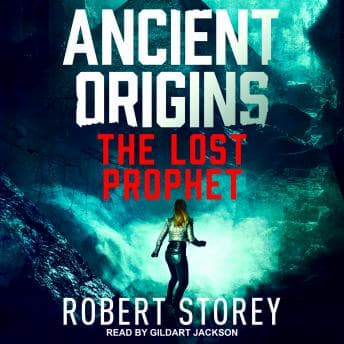
Jackson's not Ray Porter (nobody is, and I will die on that hill), but he handles the sheer volume of characters and settings with real skill. The action sequences - and there are a LOT of them - come through with genuine urgency. He shifts register convincingly between the clinical ISS communications, the courtroom formality around Steiner's trial, and the raw desperation of the underground survival scenes. His pacing during the Sanctuary "denizen" reveal had me genuinely tense on a packed 7:15 AM Caltrain, which is hard to pull off when you're wedged between a guy eating a breakfast burrito and someone's oversized backpack.
I don't have major complaints about the narration. It's professional, consistent, and he clearly understood the assignment - keep the relentless pace moving without making it feel breathless. That's harder than it sounds across 19 hours.
The Series Problem (and Why I'm Still Listening)
Here's my honest take: this is book four (or thereabouts) in Storey's Ancient Origins universe, and it shows. There's backstory I was clearly supposed to already know, characters with established relationships that got shorthand treatment. I picked this up without reading the earlier books and I could follow it - barely - but I definitely missed emotional beats that would've landed harder with context. The cliffhanger ending confirms this is very much a middle-chapter book. Setup for future payoff.
But here's the thing - I'm already queuing up the next one, which tells you something. Storey started writing after a car accident left him homebound, and there's this quality to his world-building that feels like someone who spent a LOT of time imagining every corner of these environments. The Sanctuary isn't just a plot device; it's a place with its own logic and ecosystem. That kind of obsessive detail is catnip for me.
The ROI on this audiobook is decent if you're already in the series. If you're not? Go back to book one. Trust me. Serialized world-building that rewards patience is genuinely its own art form — Round the Moon scratched a similar itch for me, that sense of being dropped into a journey already in motion with stakes that keep compounding.
Who Gets On This Train
Perfect for: commute, roadtrip, insomnia sessions. The action keeps your attention even at 6 AM zombie-mode. Skip for: anyone wanting a standalone experience - this is a serialized commitment and it doesn't pretend otherwise. Also skip if you need hard sci-fi rigor; the science is more movie-logic than peer-reviewed, and I made peace with that around hour 3.
I finished this in about 6 commutes plus two sleepless nights. Not my favorite sci-fi of the year, but solidly in the "I need to know what happens next" tier. And sometimes that's exactly what you need when your production systems are on fire and you just want to think about someone else's apocalypse for a while.