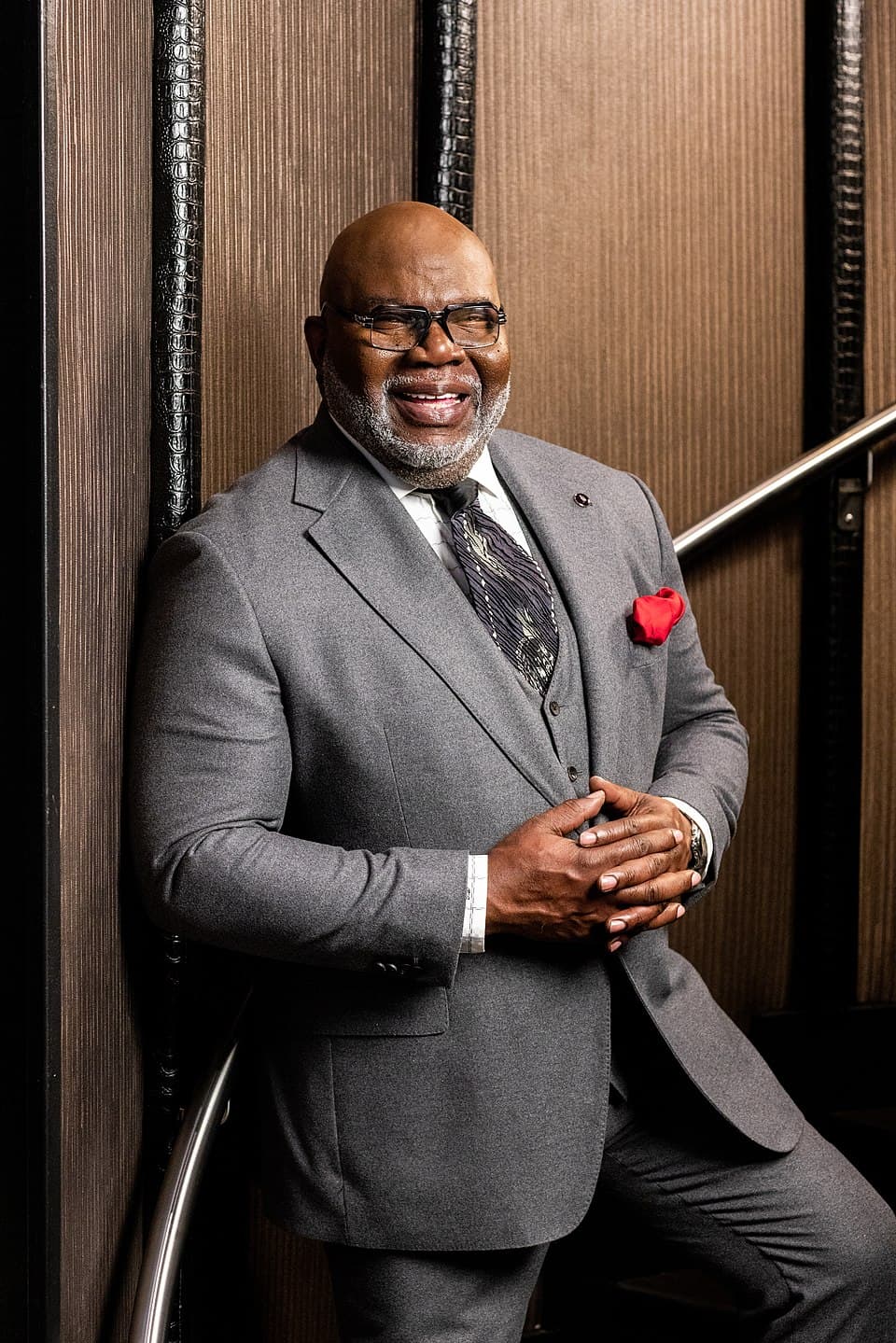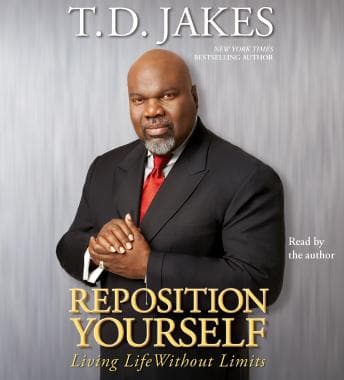

I was standing at my kitchen counter at 9 PM on a Tuesday, halfway through a dal that was taking way too long because I kept adjusting the spices, when T.D. Jakes said something about how we loan people pieces of ourselves — time, money, trust — and then spend years sending them invoices they'll never pay. I put the spoon down. Because psychologically? That's one of the most precise descriptions of resentment I've ever heard, and I've read approximately four hundred academic papers on the subject.
Let me be clear about what this book is and isn't, because I think that matters here.
When the Preacher Sounds Like Your Therapist
I'm not T.D. Jakes' target demographic. I'm a psychology researcher who approaches forgiveness as a cognitive process — there are measurable neurological correlates, there's Worthington's REACH model, there's decades of empirical work. Jakes approaches it through Scripture, specifically the Lord's Prayer. So you'd think this would be a rough pairing.
Except — and this genuinely surprised me — Jakes keeps landing on conclusions that the research actually shows. His analogy about forgiveness being like clearing a clogged drain so YOUR water can flow again? That's basically what Everett Worthington has been publishing about for thirty years, just without the plumbing metaphor. The protagonist here (and yes, Jakes IS the protagonist of his own book, he puts himself in the narrative constantly) exhibits classic avoidant patterns before arriving at his forgiveness framework. He talks about loaning someone money and never getting it back, and the way he describes the slow burn of that betrayal — the replaying, the bitterness that compounds like interest — I found myself asking: why does that specific story hit so hard? Because it's small enough to be universal. Everyone has a version of it.
Where Jakes differs from, say, a Brené Brown or an Everett Worthington is that he's unapologetically rooted in faith. If you need your self-help secular, this isn't it. But if you can sit with the theological framing, there's genuine psychological insight underneath.
That Voice Does About 60% of the Work
Here's where audiobook vs. print matters enormously. Jakes narrating his own material is a fundamentally different experience than reading it on the page. His voice has this quality — rich, deliberate, with the cadence of someone who has preached to thousands of people and knows exactly when to pause. He'll build a sentence slowly, layer clause on clause, and then drop a one-liner that lands like a verdict.
It's single-narrator, no sound effects, no music. Just Jakes talking to you for eight hours. And honestly? For a book about forgiveness — which requires you to actually sit with discomfort rather than skim past it — that stripped-down production works. There's nowhere to hide from what he's saying.
The downside is that Jakes is a preacher first and an author second. Some sections feel like sermons that got transcribed, complete with the rhetorical repetition that works great in a church but can feel circular in your earbuds during hour six. I caught myself thinking "you made this point twenty minutes ago" more than once. The book could've been tighter at six hours. It wouldn't have lost anything essential. I had a similar experience with Plant Paradox, actually — a book with a genuinely interesting central argument that keeps circling back to hammer the same point until you're mentally tapping out.
The Psychology Checks Out (Mostly)
What makes this book compelling is that Jakes doesn't just say "forgive people." He breaks it into domains — marriage, family, business, friendship — and acknowledges that forgiveness looks different in each. That's psychologically sound. Forgiving a spouse who betrayed you is not the same cognitive task as forgiving a business partner who cheated you, even if the emotional wound feels similar. The research shows that context-specific forgiveness interventions are more effective than blanket "just let go" advice, and Jakes seems to understand this intuitively.
Psychologically, what doesn't track for me is the implied timeline. Jakes sometimes frames forgiveness as a decision you make, almost instantly, through spiritual conviction. And look — for some people, maybe. But the literature on forgiveness as a process suggests it's iterative, nonlinear, and often painfully slow. My therapist would have thoughts about the expectation that you can just... decide your way out of resentment. (My therapist has thoughts about most things, honestly.)
But I'll give Jakes this: his central metaphor — stop paying the past with the resources of your future — is the kind of reframe I'd actually use with someone. It's concrete. It's actionable. It sticks.
Who Needs This in Their Ears
If you're someone who processes emotional work through a faith lens and you're carrying something — a grudge, a wound, a relationship you can't quite release — this is worth your time. Jakes' voice turns what could be a generic forgiveness manual into something that feels personal, like he's across the table from you.
If you need evidence-based frameworks or you're allergic to religious framing, this will frustrate you. Try Worthington's Forgiving and Reconciling instead.
If you're somewhere in the middle — like me, standing in your kitchen with turmeric-stained fingers, willing to be surprised — you might find more here than you expected.
My Clinical Notes
This is a fascinating case study in how pastoral wisdom and psychological science arrive at the same destination via completely different routes. Jakes doesn't cite a single study. He doesn't need to. The analogies do the heavy lifting, and his voice seals it. Not perfect — it's repetitive in places and the forgiveness-as-instant-decision framing is too tidy for how messy humans actually are. But the core message? "Stop sending invoices to people who will never pay." That's the kind of line that changes behavior. And isn't that the whole point?