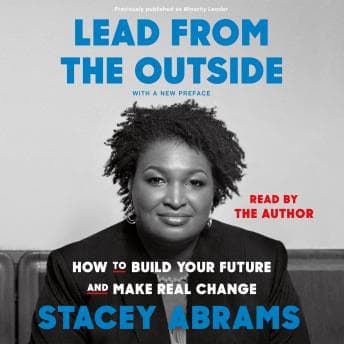

"Ambition is not a dirty word." Abrams drops this around the two-hour mark, and I actually paused my 2.0x playback. Because here's the thing—I've sat in boardrooms with women who apologize before every suggestion. I've watched minority founders undersell their vision because they've been trained to take up less space. This line hit different.
Bottom line: This is one of the rare leadership books that earns its runtime. Not every chapter, but enough of them.
The Outsider Framework Actually Works
Abrams structures this around what she calls the "outsider" identity—and before you roll your eyes at another identity politics angle, hear me out. She's not asking for sympathy. She's building a tactical playbook. The chapters on ambition, fear, money, and failure aren't theoretical fluff. They're case studies from her own stumbles: the business ventures that flopped, the campaigns that taught her expensive lessons, the moments she almost quit.
What separates this from the typical politician memoir disguised as self-help? She actually admits to screwing up. Not the humble-brag "I worked too hard" kind of admission. Real failures. Financial ones. Strategic ones. The kind my parents would recognize from thirty years of running their dry cleaning business—except my parents never had a framework for processing those failures. They just absorbed them and kept working.
Abrams gives you the framework they never had.
That Southern Drawl Carries Weight
She narrates this herself, and it matters. There's a particular cadence to how she delivers the harder truths—a slight slowing, a deliberate weight on certain syllables. Her Southern drawl isn't performative; it's the rhythm of someone who's had to explain herself to skeptical audiences her whole career. You can hear the lawyer training underneath, the precision of argument, but wrapped in warmth that keeps it from feeling like a lecture.
I listened to most of this during a red-eye flight to a client engagement in Atlanta—fitting, given her Georgia roots. Couldn't sleep anyway, and her voice actually helped. Not soothing exactly, but grounding. Like having a mentor in your ear who's been through the specific version of hell you're about to walk into.
Where It Drags (Because It Does)
Look, I'm going to be honest—the practical exercises feel bolted on. She'll build momentum with a compelling personal story, then hit you with "Now take out your journal and..." and I'm already reaching for the 30-second skip button. This is what my parents did instinctively. Now it has a TED talk. And worksheets.
The chapter on money is worth the listen alone. The other sections? Solid but not revelatory if you've already consumed your weight in business books. She's synthesizing familiar concepts—fear as fuel, failure as data—but through a lens that genuinely feels fresh. The "outsider" angle isn't just branding. It's structural.
Skip to Chapter 5. Thank Me Later.
That's the money chapter. Literally. Abrams talks about her own financial struggles with a candor you almost never see from politicians. Credit card debt. The specific dollar amounts. How she built her way out while building her career. This is the section I'd assign to every founder I work with who thinks talking about money is somehow beneath them.
Jenny would say I'm being harsh on the exercise sections. Jenny is right. They're not bad—they're just not why you're here. You're here for Abrams's brain, her pattern recognition, her ability to articulate what many outsiders feel but can't name.
Who Gets Maximum Value (And Who Won't)
If you're a woman, person of color, first-gen professional, or anyone who's ever felt like they're playing a game where the rules were written for someone else—this is your book. Not because it validates your frustration (though it does), but because it gives you actual plays to run.
If you're a white dude in management? Still worth your time. I've seen this fail at three different companies—the assumption that leadership advice is universal. It's not. Understanding how your colleagues experience the same systems differently isn't weakness. It's intelligence.
Skip this if you want pure tactics without personal narrative, or if you're allergic to any political context in your business reading. Abrams doesn't preach, but her worldview is present.
The ROI Breakdown
At 7 hours 16 minutes, it respects your time more than most in this category. I'd recommend 1.25x if you're not used to her cadence—2.0x works but you'll miss some of the emotional texture in her delivery. The new preface is short but adds context for how her thinking has evolved since the original publication.
This isn't a book that will revolutionize leadership theory. It's better than that. It's a book that will help specific people—people who've been told to wait their turn, to be grateful for the opportunity, to not be so ambitious—actually lead. Extreme Ownership tackles leadership from the opposite angle—military hierarchy instead of outsider status—but both books share that same refusal to sugarcoat what it actually takes to command a room. Finally, a business book that respects your time while giving you something your MBA never did: permission to stop apologizing for wanting more.









