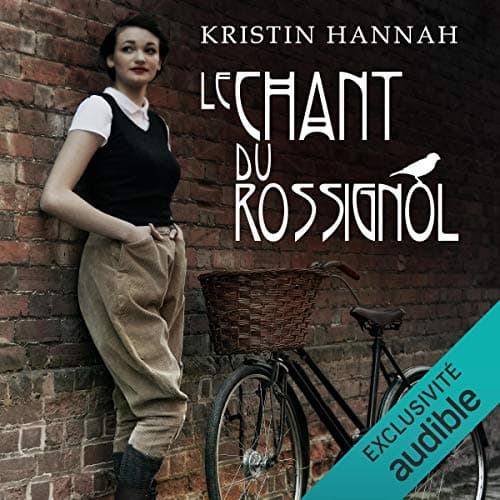

What does courage actually look like when there's no audience, no medal ceremony, no historian writing your name down?
I was halfway through a stack of sophomore essays on The Great Gatsby — it was maybe 11:30 on a Tuesday night, Denise already asleep — when Carine Obin's voice described Vianne Mauriac standing in her own kitchen, serving dinner to a Nazi officer billeted in her home while her daughter sat across the table. And I just stopped grading. Put the red pen down. Because that scene — the sheer domesticated horror of it, the way Vianne calculates every syllable, every glance — that's not the courage we teach in history class. That's something quieter and, honestly, harder.
Two Sisters, Two Wars, One Occupation
Kristin Hannah builds Le chant du rossignol around a structural choice that I think is the book's greatest strength and, at times, its most frustrating quality. Vianne and Isabelle Mauriac are fighting the same enemy from opposite ends of the moral spectrum — or what looks like opposite ends until you realize the spectrum is an illusion.
Hannah does something similar in O rouxinol, where moral clarity keeps dissolving the closer you get to the characters making the actual decisions.Vianne is the older sister. Practical. Afraid. She hides Jewish children behind forged baptismal records and risks everything through small, bureaucratic acts of defiance. Isabelle is eighteen, furious, reckless. She joins the Résistance under the code name "Le rossignol" and physically guides downed Allied pilots over the Pyrenees into Spain. The novel alternates between them, and here's where Hannah does something smart: she never tells you which sister is braver. She lets you argue with yourself about it for eighteen hours.
This reminds me of what Hemingway said about courage being grace under pressure — except Hannah is interested in the women Hemingway never wrote. The ones who didn't get to go to war but had war come into their kitchens, their bedrooms, their children's schools.
My students would hate this. I love it. They'd want action scenes and clear heroes. What they'd get instead is Vianne lying to a German captain's face about how many people live in her house, her voice steady while her hands shake. The prose deserves to be savored, and at eighteen hours, you have no choice but to sit with these women's fear.
Carine Obin Understands That Pause Is Punctuation
Let's talk about the narration, because it matters enormously here. Carine Obin reads this in French — the original translation, the way it was meant to land in a French market — and her approach is deliberately restrained. Her voice is calm, soft, almost gentle. One French listener described it perfectly: "Sa voix, juste, posée, et remplie de douceur" — just, settled, full of tenderness. And that's exactly right for material this brutal.
She doesn't perform the horror. She lets the words carry it. When Isabelle is caught, when Vianne makes an irreversible choice in the final third of the novel, Obin doesn't raise her voice or go theatrical. She stays steady. And that steadiness — that refusal to melodramatize what is already almost unbearable — is a genuine artistic choice. It forces you to feel the weight yourself instead of having it performed at you.
I listened at 1.0x because the author chose those words, and Obin chose that pace. Speeding this up would be like fast-forwarding through the silences in a Chopin nocturne. You'd get the notes but miss the music.
Now — a small caveat. At eighteen-plus hours with a single narrator, there are stretches in the middle third where the alternating structure loses momentum. Vianne's daily survival scenes can blur together before the stakes ratchet back up. It's not a flaw in the narration; it's the architecture of the novel itself. Hannah is building something cumulative, and cumulative takes patience.
Who Should Listen (And Who Should Skip)
If you loved All the Light We Cannot See or Sarah's Key, this is their spiritual successor — a WWII novel that centers women's experience without sanitizing it, but also without turning suffering into spectacle. If you listen to historical fiction because you want to understand what ordinary people actually did under impossible circumstances, this will reward every one of those eighteen hours.
But if you need constant plot momentum or you're looking for something to half-listen to during a workout — skip this one. It requires your full attention. The emotional payoff in the final hours depends entirely on having absorbed the accumulation of small moments that precede it. Background listening would gut this book.
Worth Pausing the Faculty Meeting For
I finished Le chant du rossignol on my morning walk along the lakefront, the last hour playing as the sun came up over the water. And I stood there for a minute after it ended, just — processing. Not because the ending surprised me. Because it earned itself. Every quiet dinner scene, every forged document, every freezing mountain crossing. Hannah and Obin together built something that knows the difference between drama and truth. The truth is usually quieter. And it stays with you longer.









