
"She stood there, knowing what she was, knowing what she had done."
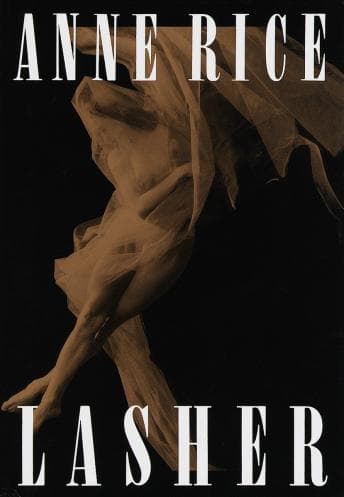
That line hit me somewhere around hour fourteen, walking the lakefront with Denise on a gray Saturday morning. I had to stop. Just stood there like an idiot while joggers passed, processing what Anne Rice had just done to me.
Look, I'll be honest. I assigned Interview with the Vampire to my AP Lit class once. Once. The permission slips alone nearly ended my career. But Rice's prose has always fascinated me—she writes like someone possessed, like the words are being channeled rather than chosen. Lasher is no different. It's excessive, it's sprawling, it's nearly 29 hours of gothic family saga that absolutely should not work as well as it does.
The Weight of 28 Hours
Here's the thing about this audiobook: it demands commitment. Not the casual "I'll listen during my commute" kind. The "I'm going to live inside this story for two weeks" kind. And I did. Faculty meetings, grading papers at 11 PM, pretending to organize my classroom while actually just standing there with my earbuds in.
The pacing is—and I say this with love—deliberately slow. Rice doesn't rush. She circles. She returns. She builds her Mayfair family history like sediment, layer upon layer, until you're buried in it. My students would absolutely hate this. They'd call it "extra" and they wouldn't be wrong. But that's precisely why we still read the Brontës, why Wuthering Heights matters. If you haven't experienced Wuthering Heights as an audiobook, you're missing something—the narration draws out all that obsessive intensity in ways the page can't quite capture. Some stories need room to breathe, even when that breath feels suffocating.
Rowan Mayfair sits at the center of all this chaos—a brilliant neurosurgeon entangled with a demon she can't resist and shouldn't want. It's Heathcliff energy, honestly. That magnetic pull toward destruction that Rice writes so well. The novel moves backward and forward through time, and Rice trusts you to keep up. She doesn't hold your hand. (Don't tell my students I said that—I'm always telling them to provide more context.)
Kate Reading Earns Her Golden Voice
Now, about Kate Reading. She's an AudioFile Golden Voice winner, and honestly? You can hear why.
Here's what she does brilliantly: she disappears. Some narrators you're always aware of—their voice, their choices, their performance. Reading dissolves into the text. Somewhere around hour eight, I forgot I was listening to a narrator at all. That's not nothing. That's craft.
Her character differentiation is subtle but effective. The demons sound different from the humans. The historical voices carry different weight than the contemporary ones. She handles Rice's dense, winding sentences with clarity that shouldn't be possible—the prose deserves to be savored, and Reading lets you do exactly that.
But—and I have to be honest here—some listeners have complained about the lack of Southern accents for the New Orleans Mayfairs. I can see that. The setting is so specifically Louisiana, so drenched in that particular gothic humidity, that the accent absence is noticeable. It didn't ruin it for me, but I understand why it might pull others out. Reading's strengths are in emotional delivery and pacing, not necessarily regional authenticity.
Who Should Listen (And Who Should Skip)
Let me be direct, because I think you need to know before you commit 29 hours of your life:
This is for readers who loved The Witching Hour and want to go deeper into the Mayfair world. It's for people who find gothic excess comforting rather than exhausting. It's for anyone who's ever read a Brontë novel and thought, "Yes, but what if there were demons?"
Skip this if you're an impatient listener or looking for light fantasy. And—I need to say this clearly—there are heavy themes here. Incest, abuse, violence, explicit content. Rice doesn't flinch, and neither does this audiobook. If you're sensitive to those elements, this isn't your book. That's not a judgment. Just information.
When Silence Does the Heavy Lifting
What struck me most, listening at 1.0x (yes, I know, I'm ancient), is how Reading handles Rice's rhythm. Rice writes in waves—building, cresting, pulling back. Reading matches that. She doesn't rush the quiet moments to get to the drama. She lets the silence work.
There's a section—I won't spoil it—where Rowan makes a choice that changes everything. Reading's delivery there is devastating. Not theatrical. Just... true. The kind of performance that reminds you why audiobooks aren't cheating. They're interpretation. They're art.
Class Dismissed
Probably won't listen again immediately. 29 hours is a lot, and I have papers to grade and a podcast episode on Middlemarch that my 47 listeners are waiting for. But I'm genuinely glad I experienced it this way. The audiobook is an entirely different experience than reading—more immersive, more consuming.
If you loved The Witching Hour, this is its spiritual successor in the most literal sense. Worth pausing the faculty meeting for. Worth the commitment.
Just maybe warn your spouse you'll be distracted for a while. Denise has learned to recognize my "Anne Rice face" by now.