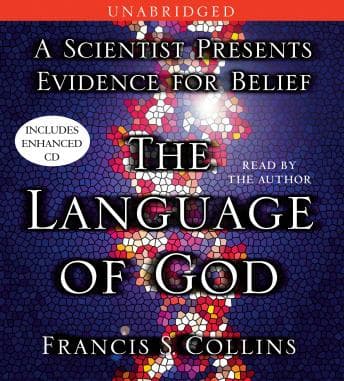

Can a scientist who mapped the human genome also make a compelling case for God? That's the central tension Francis Collins tackles here, and whether you find his answer satisfying probably depends on what you're bringing to the conversation.
I listened to this during a week of long commutes, and I'll say upfront: Collins reading his own work creates an intimacy that a professional narrator couldn't replicate. When he describes his journey from atheism to faith, you're hearing it from the source. There's no performance here—just a man explaining, with genuine warmth, how he reconciled his life's work in genetics with belief in a creator. That authenticity is the audiobook's greatest asset.
The Scientist's Methodology
Collins structures his argument methodically, which makes sense given his background. He walks through the major objections to faith from a scientific perspective, addresses the gaps in purely materialist worldviews, and makes his case for what he calls "BioLogos"—the idea that God used evolution as the mechanism of creation. The scientific explanations are remarkably accessible. Collins has clearly spent years explaining complex genetics to non-specialists, and it shows. He breaks down DNA, the Human Genome Project, and evolutionary biology in ways that never feel condescending.
Where Listeners Diverge
Now, here's where reception splits dramatically. Fans praise Collins for intellectual honesty—he doesn't hide from difficult questions, and he acknowledges the limitations of his own arguments. He's wrestling with these ideas in real time, not preaching from a position of certainty. For listeners genuinely curious about how a world-class scientist maintains religious faith, this is gold.
But critics have a point too. The pacing is deliberate—some would say slow. Collins speaks with the measured cadence of someone accustomed to academic lectures, not dramatic storytelling. If you're looking for an audiobook that grabs you by the collar, this isn't it. Several listeners have described the experience as "insufferable," which feels harsh but understandable if you're expecting something more dynamic.
The C.S. Lewis Foundation
The religious arguments themselves will land differently depending on your starting position. Collins draws heavily on C.S. Lewis's Moral Law argument—the idea that universal human moral intuitions point toward a divine lawgiver. If you find Lewis persuasive, you'll appreciate Collins extending that framework with scientific observations. If you've already dismissed Lewis's arguments, Collins probably won't change your mind. He's not offering new philosophical ground so much as demonstrating how one particular scientist integrated existing arguments into his worldview.
What struck me most was Collins's vulnerability about his own doubts. He doesn't present himself as someone who figured everything out. He describes moments of genuine struggle, periods where faith seemed impossible, and the slow process of coming to belief. That kind of honest spiritual wrestling shows up in Untethered Soul too, though from a completely different philosophical tradition. This isn't a triumphalist narrative—it's a personal testimony from someone who clearly spent years thinking through these questions.
Production Notes
The production quality is clean throughout. No background noise, no volume issues, just Collins's clear voice working through his material. At just over seven hours, it's a manageable length that doesn't overstay its welcome.
I'd recommend bumping the speed to 1.25x. Collins's natural speaking pace is contemplative, and a slight increase makes the listening experience more engaging without losing his sincerity. Particularly helpful during the more technical sections where the deliberate pacing can drag.
Who's This Actually For?
If you're a believer curious about how faith and science interact, this is essential. If you're an agnostic genuinely open to hearing a scientist's case for God, Collins is an intelligent, honest guide. If you're an atheist willing to engage charitably with religious arguments, you'll find a worthy conversation partner here, even if you ultimately disagree.
Who should skip it? If you want your science and theology in separate boxes, this will frustrate you. If you need fast-paced narration to stay engaged, you'll struggle. And if you're looking for either a pure science book or a pure theology book, this hybrid approach might satisfy neither appetite.
The Hypothesis Holds
The Language of God isn't trying to convert anyone. It's one scientist's honest account of how he holds together two things many assume are incompatible. Collins succeeds in showing that the conflict between science and faith isn't as inevitable as culture wars suggest. Whether his specific resolution works for you is another question entirely—but he makes his case with clarity, humility, and genuine conviction.