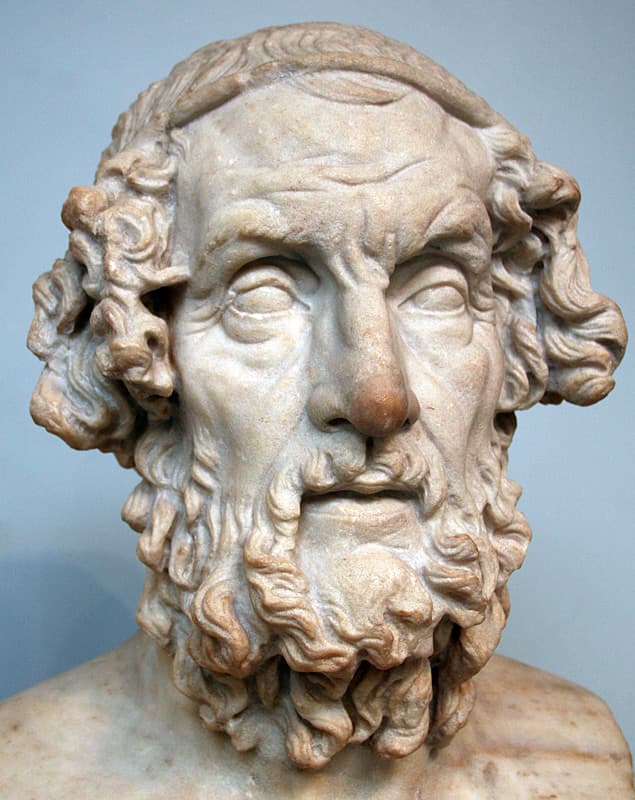

Eleven PM. Papers half-graded, red pen bleeding dry, and I'm listening to Homer in Spanish while Denise sleeps. There's something almost absurd about this—a Chicago English teacher consuming the foundational text of Western literature in a language I learned from telenovelas and two semesters at Northwestern. But here's the thing: La Ilíada hit different this way. Stripped of the academic English translations I've taught for two decades, the hexameters found new rhythm in my ears.
My old classroom reflex kept tugging me back to Iliad, but the Spanish made the familiar machinery feel newly oiled.
This is a LibriVox recording, which means volunteer narrator, which means you're getting Tux—one person, sixteen and a half hours, the entire wrath of Achilles delivered with what I can only describe as committed sincerity.
The Weight of Singing Rage for Sixteen Hours
Let me be honest about what you're getting here. This isn't a polished Audible production with sound design and celebrity voices. Tux reads Homer the way a devoted amateur would—with respect, with effort, and with the limitations that come from being one human voice attempting to channel the entire Trojan War.
The Spanish translation itself carries a formality that works for epic poetry. "Canta, oh diosa, la cólera del Pelida Aquiles"—even if your Spanish is rusty, you can hear the weight of that opening. Tux doesn't try to be theatrical. There's no attempt at distinct character voices for Hector versus Agamemnon, no dramatic pauses engineered for effect. It's straight reading, almost liturgical in its consistency.
And honestly? For Homer, that might be appropriate. This is how epics were originally delivered—one voice, one audience, the poetry carrying the drama rather than performance tricks.
What My Juniors Would Never Tolerate (But I Appreciated)
My students would abandon this within twenty minutes. No question. The pacing is deliberate—I'd say "slow" but that feels unfair to a text that was never meant to be rushed. The catalogs of ships, the genealogies of warriors, the repetitive epithets ("swift-footed Achilles," "grey-eyed Athena")—they're all here, unabridged, demanding your patience.
I listened at 1.0x because the author chose those words. Homer—or whoever Homer was, or the collective tradition Homer represents—built these rhythms intentionally. The Spanish translation preserves the dactylic feel surprisingly well, and speeding it up would murder the meter.
But here's my confession: I zoned out during the battle catalogs. Multiple times. Around hour seven, I realized I'd graded three essays without registering a single Achaean death. The violence is constant—content warning absolutely warranted—but it becomes almost hypnotic. Men fall like leaves, like waves, like wheat before the scythe. Homer loved his similes, and Tux delivers each one with the same steady cadence.
The LibriVox Reality Check
This recording is free. That matters. You can access the foundational epic of Western civilization, in Spanish, for the cost of nothing but your time and attention. The audio quality is clean—no background noise, no obvious editing mistakes that I caught. Tux clearly recorded this with care.
But I can't pretend it's equivalent to a professional production. There's no variation in energy across sixteen hours. The moments that should devastate—Hector's farewell to Andromache, Priam begging for his son's body—they arrive with the same measured delivery as the armor descriptions. If you want emotional peaks and valleys, you'll have to supply them yourself.
I did. Walking the lakefront last Saturday, I found myself genuinely moved during Achilles' grief for Patroclus. But that was Homer's words doing the work, not the performance.
Who Should Queue This Up (And Who Should Skip)
If you're a Spanish speaker—or a Spanish learner—who wants to experience Homer, this is accessible and complete. If you're like me, an English teacher who's taught The Iliad a dozen times and wanted to hear it fresh, the language shift accomplishes that beautifully. Skip it if you need dramatic narration to stay engaged, or if sixteen hours of steady, unvarying delivery sounds like punishment rather than meditation.
This reminds me of what Hemingway said about prose being architecture. Homer built something that survives translation, survives amateur narration, survives being consumed in fragments between grading sessions. The structure holds.
I felt that sturdiness even more plainly against Odyssey, where Homer’s wandering architecture asks for a different kind of patience.
Final Grade: Incomplete, But Passing
Worth pausing the faculty meeting for? Absolutely. (Sorry again, Principal Martinez.)
But know what you're signing up for: a marathon, not a sprint. A reading, not a performance. The poetry deserves to be savored, and Tux gives you space to do exactly that—even if they don't give you much else.