
I'll be honest - I almost gave up on this one around hour two. I was walking the lakefront on a Saturday morning, Denise pointing out the last of the fall colors, and I couldn't tell you whether I was in 1990s Tottenham or present-day North London or somewhere else entirely. The narrative kept fracturing, jumping, refusing to hold still. And then something clicked. Not like a plot twist - more like when you're grading a student's creative writing and you realize the mess isn't mess. It's architecture.
Let's talk about what Tice Cin is really doing here.
Heroin in the Cabbages, Poetry in the Prose
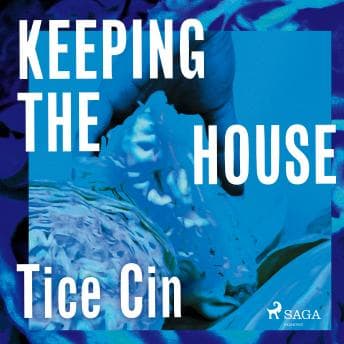
The premise sounds like it could be a gritty crime novel: a family navigating the North London heroin trade across three generations, with a stash waiting to be imported and a young woman named Ayla who has a plan involving, of all things, gardening. But Cin isn't writing crime fiction. She's writing something closer to a prose poem that happens to involve drug smuggling. The late-90s flashback sequences where heroin gets concealed in Turkish cabbages - prized for their enlarged leaf buds, the book tells us with almost botanical precision - sit alongside domestic scenes in spotless living rooms and whispering kitchens that feel uncomfortably intimate. The women in this family aren't tragic figures or hardened criminals. They're just... keeping the house. Literally and otherwise.
This is a book written by a poet, and you feel it in every line. Cin's sentences don't behave the way novel sentences are supposed to. They fragment. They loop. They land with the weight of verse rather than plot mechanics. My students would hate this. I love it. There's a confidence in the writing that reminds me of early Zadie Smith - that same North London energy, that same willingness to let community be messy and funny and devastating all at once - but Cin's approach is more experimental, more willing to abandon conventional structure entirely.
Which brings me to the problem.
The Audio Format Fights the Book (And Sometimes Wins)
Serena Manteghi narrates alongside Cin herself, and here's where things get complicated. When the narration works, it genuinely enhances the material. The ensemble of characters - and there are many, spanning those three generations - get handled with a surprising deftness given how many threads are running simultaneously. Manteghi keeps the family drama grounded when the prose wants to float away into abstraction. There are moments, particularly in the community scenes set in Tottenham, where you can hear the neighborhood breathing.
But I understand every single person who found this audiobook confusing. Because on audio, when the narrative splinters - when you're mid-scene and suddenly you're somewhere else, someone else, some other decade - you can't flip back three pages and reorient yourself. You just have to trust the current. Some listeners reported Manteghi's delivery as monotonal, and I can see that reading, though I'd push back slightly. I think the evenness is intentional - it mirrors the book's refusal to melodramatize what could easily become melodrama. Still, at certain points, particularly during the more fragmented passages, a bit more vocal variation would've helped me track who was speaking and when we were.
I listened at my usual 1.0x - the author chose those words, the pauses are punctuation - and I think anything faster would've made this genuinely incomprehensible. This is not a book you put on while pretending to listen to your principal discuss budget allocations. (Sorry, Principal Martinez.) This demands your full attention, a quiet room, and probably a second listen. I had a similar experience with 1984 on audio - Orwell's prose has that same quality where if your attention drifts for even a minute, you've lost the thread entirely and the whole architecture starts to feel like noise.
Who This Is For (And Who Should Walk Away)
If you loved Zadie Smith's White Teeth or Monica Ali's Brick Lane and you've been waiting for someone to push that tradition into stranger, more poetic territory, this is its spiritual successor - weirder, shorter, and more demanding, but carrying the same love for London's immigrant communities. If you're a reader who trusts structure to reveal itself rather than announce itself, you'll find something here that rewards patience.
But if you need clear plot progression, if nonlinear storytelling frustrates rather than intrigues you, if you're looking for something to keep you company on a long drive - skip the audio. Maybe read the print edition instead, where you can control the pace and revisit passages. At 6 hours and 15 minutes, this isn't a massive time commitment, but it's a dense one. Every minute counts and none of them are filler.
The fact that Cin also released a companion EP with the same title tells you something about her artistic ambitions. This isn't just a novel. It's an experience from someone who thinks across mediums. Whether that excites you or exhausts you will determine everything about how you receive this book.
The Prose Deserves to Be Savored, Even When It's Difficult
I keep thinking about those cabbages. The way Cin takes something so ordinary - a vegetable, a kitchen, a family argument - and lets you see the entire machinery of survival hidden inside it. That's what good literature does. It makes the invisible visible. My 47 podcast listeners are going to hear about this one, and at least 46 of them are going to have opinions.
Denise asked me what it was about when I finished. I said, "Women holding everything together while the world tries to fall apart." She said, "So, reality." She's not wrong.