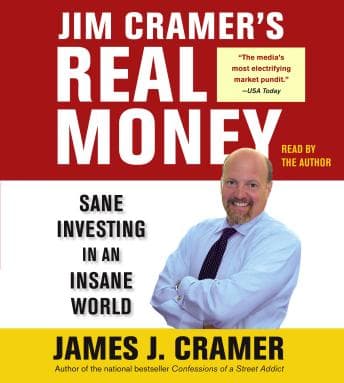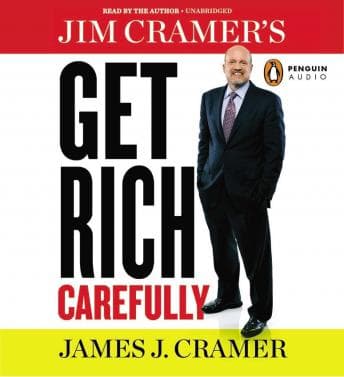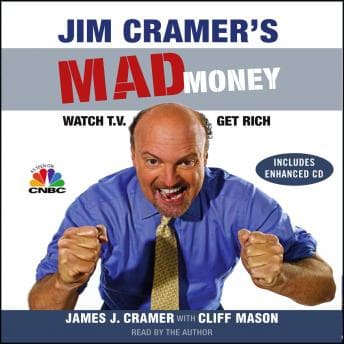

"From the first 'Booyah' to the last roar of the bull..."
That's how the intro pitches it, and honestly, it's not false advertising. I started this audiobook at 6 AM on the Caltrain, thinking it would be a decent way to wake up before hitting the code mines.
Bad idea.
Listening to Jim Cramer at my usual 1.75x speed is like injecting pure caffeine directly into your auditory cortex. I actually had to throttle him down to 1.25x just to parse the data stream.
This isn't really a standalone finance book; think of it as the README.md file for his CNBC show. If you've ever flipped past Mad Money and wondered why a grown man is throwing chairs and smashing buttons with sound effects, this book is the documentation that explains the feature set.
A High-Frequency Human
Cramer is basically a trading algorithm given human form and a microphone. The value here isn't the stock picks (which age like milk anyway) but the methodology. He spends a solid chunk of the six hours breaking down his "homework" protocol—how to parse a balance sheet, what a PEG ratio actually implies about growth, and why he deliberately mispronounces certain words. (It's a stylistic branding choice, apparently. Not a bug.)
For a distributed systems engineer, I appreciated the "Lightning Round" breakdown. He frames it as "stock-market strength training," which is a surprisingly apt metaphor. He explains how he assesses a stock in seconds—basically pattern matching against a mental database of sector performance and CEO credibility. Heuristic analysis, plain and simple. No Excuses! takes a similar approach to building mental frameworks, though with less screaming and more structured discipline.
Raw Signal, Variable Noise
The production is... raw. Since Cramer narrates it himself, you get all the inflection and manic energy of the TV persona. There's no "narrator voice" here. It's just Jim talking to you.
The signal-to-noise ratio varies, though. There's a section where he goes behind the scenes on his "chair abuse" and the prop buttons. Entertaining in a "watching a car crash" sort of way, but it felt like bloatware. I don't need to know the physics of your chair throwing; I need to know if I should dump my tech ETFs before the next correction.
If you're already a Mad Money regular, expect high redundancy. It feels like refactoring legacy code—the logic is cleaner, but the output is the same.
Run This If...
If you treat the stock market like a casino, this will just encourage your bad habits. Skip it. But if you're a retail investor who wants to understand the mechanics behind the TV theatrics, the ROI is positive. It's surprisingly lucid when he drops the act and explains the math behind a CEO interview. Give and Take explores similar territory around reading people and understanding motivations, though from a more academic angle than Cramer's street-fighter approach.
Just don't listen to it while trying to debug complex logic. The context switching costs are too high.