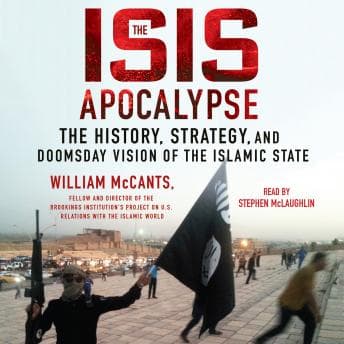

Let me cut to the chase: William McCants wrote the book I wish every politician and cable news pundit had been forced to read before opening their mouths about ISIS. This is the real intelligence briefing, not the dumbed-down talking points.
I finished this one during a late night at the office, waiting on a client's security assessment to come through. Ranger was snoring under my desk, and I was three cups of coffee deep into understanding how a bunch of zealots managed to outmaneuver both al-Qaeda and the combined forces of multiple nation-states. The answer, as McCants lays out with almost uncomfortable clarity, is that we fundamentally misunderstood what we were dealing with.
When the Enemy Writes Their Own Playbook
Here's what separates this from the usual terrorism analysis: McCants actually read the primary sources. In Arabic. The internal letters between ISIS leadership and al-Qaeda's old guard, the theological debates about whether it was too early to declare a caliphate, the apocalyptic prophecies that weren't just propaganda but actual strategic doctrine—it's all here. I've sat through enough intelligence briefings to know the difference between someone summarizing someone else's summary and someone who actually did the homework. McCants did the homework.
The core insight that'll stick with me: ISIS wasn't irrational. That's the mistake we kept making. Their brutality, the beheadings, the slavery—it wasn't random savagery. It was calculated to fulfill specific religious prophecies and attract a specific type of recruit. The apocalyptic timeline wasn't metaphorical to these guys. They genuinely believed they were fighting the final battles before the end of the world, and that belief shaped everything from their territorial ambitions to their willingness to make enemies of literally everyone, including other jihadists.
McCants traces how Abu Bakr al-Baghdadi outmaneuvered Ayman al-Zawahiri's al-Qaeda by essentially calling their bluff. Al-Qaeda kept promising an Islamic State someday. ISIS just declared one and dared anyone to say it wasn't legitimate. Bold move. Insane, but bold.
McLaughlin's Arabic Problem
Now here's where I have to be straight with you: Stephen McLaughlin's Arabic pronunciation is rough. And I mean rough. I spent enough time working with interpreters in Iraq to know when someone's butchering the language, and McLaughlin consistently mangles terms that are absolutely central to understanding the material. When you're discussing the theological significance of specific Quranic passages and prophetic traditions, getting the pronunciation wrong isn't just annoying—it actually makes it harder to follow the argument.
There's also something about his speech patterns that grated on me. A certain rhythm that felt almost mechanical after a few hours. Linda walked through the office around midnight and asked if I was listening to a GPS navigation system. She wasn't entirely wrong.
That said, the content is strong enough that I pushed through. At 6 hours and 45 minutes, it's a reasonable commitment, and the information density justifies the time investment. I'd recommend 1.25x speed—McLaughlin's pacing is deliberate enough that speeding up actually helps.
Who This Briefing Is For
Essential listening if you want to understand the ideological underpinnings of modern jihadism beyond the surface-level "they hate our freedom" nonsense. Anyone in security, foreign policy, or military planning should have this in their library. Also valuable for anyone who wants to understand why ISIS attracted so many Western recruits—the apocalyptic narrative is genuinely compelling if you're already inclined toward that worldview.
Fair warning: this isn't casual listening. You need to pay attention. There are names, dates, theological concepts, and organizational relationships that build on each other. Don't put this on while you're doing something else. The same level of focus is required for Thirty Years A Slave, which demands you sit with uncomfortable historical truths without flinching. And the content is exactly as dark as you'd expect—violence, enslavement, beheadings discussed in clinical detail because understanding the ideology requires understanding the brutality.
Skip this if you're looking for simple answers or good-versus-evil narratives. McCants isn't interested in making you feel better. He's interested in making you understand.
Mission Debrief
Worth your time? Absolutely. The narration issues are real, but the substance underneath is exactly the kind of rigorous, source-based analysis that's rare in the terrorism genre. McCants wrote this in 2015, and even now it holds up as one of the clearest explanations of how ISIS happened and why it mattered. I've recommended it to three clients already this month.
Ranger slept through the whole thing, but he's heard worse briefings.