
So here's the thing about Victorian sci-fi: it's basically the D&D of literature. Weird science that doesn't quite work by modern rules, morally questionable protagonists, and world-building that assumes you're cool with some hand-waving. H.G. Wells was doing this before it was cool—and honestly, before anyone knew what "cool" even meant in genre fiction.
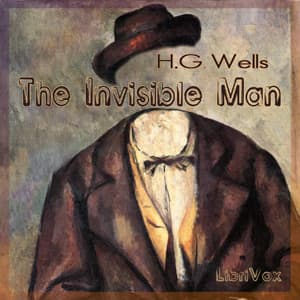
War of the Worlds has that same energy—Wells building impossible scenarios and then committing hard to the consequences.I picked up this audiobook because my thesis was staring at me accusingly and I needed something short. Under five hours? Perfect for a weekend of productive procrastination. And look, The Invisible Man isn't Sanderson-level magic system complexity (there's basically one rule: guy is invisible, guy is also kind of unhinged), but Wells does something clever here. He treats invisibility as a curse, not a superpower. Griffin—our invisible scientist—isn't a hero. He's a desperate, paranoid mess who makes increasingly terrible decisions. It's less "what would you do with invisibility" and more "what would invisibility do to you."
The Voice That Carried It
Alex Foster's narration is solid. Really solid. His English accent feels authentic without being stuffy, and he's got this warmth that keeps you engaged even when Wells goes on one of his Victorian tangents. (And oh, there are tangents. Wells loved his exposition.) The character voices are distinct enough that conversations flow naturally—you're never confused about who's speaking, which is critical when half the cast is reacting to a guy they literally cannot see.
I couldn't find much about Foster's other work online, but based on this performance, he's got good instincts. He leans into Griffin's growing mania without going full cartoon villain, and his villagers sound appropriately bewildered and terrified. There's this scene in the inn where everything goes sideways, and Foster's pacing during the chaos is chef's kiss. You feel the confusion.
One thing to note: some listeners have reported background noise and ads popping up between tracks. I didn't catch much of this in my listen, but if you're sensitive to production hiccups, maybe preview a chapter first. It's not a dealbreaker, but worth knowing.
Where Wells Gets Weird (In a Good Way)
Here's what surprised me: this book is genuinely unsettling. Not horror-movie scary, but that creeping dread of watching someone spiral. Griffin starts desperate and ends... well, I won't spoil it, but "sympathetic" is not the word. Wells wrote this in 1897, and it still hits—the whole "brilliant man who thinks the rules don't apply to him" thing lands differently now.
The pacing requires patience, I'll be honest. There are sections where Wells is basically writing a Victorian police procedural, and it drags. But Foster's narration keeps it from becoming a slog. When the story picks up, it really moves. The final act is surprisingly action-packed for something written over a century ago.
My D&D group would actually love this as inspiration. Griffin is basically a wizard who multiclassed into rogue and failed every Wisdom save. The invisibility "magic system" is hand-wavy (something about refractive indices and albinism?), but Wells commits to the bit. Warded Man does something similar with its wards—the rules are simple but the implications get explored obsessively. He thinks through the practical problems—Griffin can't eat without people seeing food digest, can't go out in rain without his outline showing, can't even close his eyes to sleep because his eyelids are transparent. It's that kind of detail that makes old sci-fi worth revisiting.
Would I Listen Again?
Probably not immediately—it's not that kind of book. But I'm glad I finally checked it off the list. At under five hours, it's a perfect palate cleanser between massive fantasy epics. (I've been in a Wheel of Time hole for months. This was refreshing.)
Who Should Listen (And Who Should Skip)
If you're into classic sci-fi and want to hear where a lot of modern tropes started, this is worth your time. Foster's narration makes it accessible without dumbing it down. Skip it if you need fast pacing throughout—Wells wasn't writing for people with TikTok brain. (I say this as someone with TikTok brain.)
The story's got violence, psychological intensity, and some genuinely dark themes about power and isolation. Griffin isn't meant to be a hero, and Wells doesn't pretend otherwise. It's a cautionary tale wrapped in sci-fi clothing, and it still works.
Now if you'll excuse me, my thesis is still glaring at me. But hey, at least I can say I'm "researching classic speculative fiction" now. That counts, right?