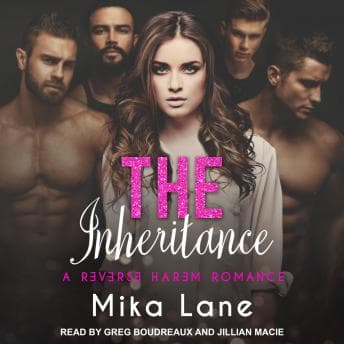

Look, I teach Austen and Brontë to teenagers who'd rather watch paint dry. I analyze narrative structure for a living. So when I tell you I listened to a reverse harem romance about a bartender inheriting millions if she can get married in 30 days, you might think I've finally lost it.
I haven't. (Okay, maybe a little.)
Here's the thing—I was grading papers at 11 PM, desperately needed something that required zero intellectual effort, and this popped up. Four and a half hours of pure escapism? Sign me up. My wife Denise walked by, saw my headphones in, asked what I was listening to. I said "research." She didn't believe me. She was right not to.
The Setup That Hemingway Would've Hated
Mika Lane wastes absolutely no time. Our protagonist is a bartender, she gets an inheritance from a creepy regular they called "Grandpa," and boom—she's got 30 days to get married or lose everything. It's ridiculous. It's completely implausible. And honestly? That's kind of the point.
This isn't Middlemarch. The prose doesn't deserve to be savored—it's meant to be consumed quickly, like the cocktails our heroine used to serve. Compare that to Where the Crawdads Sing, where Delia Owens actually wants you to linger over every marsh description—different goals, different execution. Lane knows exactly what she's writing and who she's writing for. There's a certain craft in that self-awareness, even if my literary sensibilities want to argue otherwise.
The pacing is breakneck. Too breakneck, actually. We're introduced to four eligible bachelors who apparently have nothing better to do than compete for this woman's hand in what feels like a rom-com fever dream. Background? Barely there. Character development? Minimal. Plot depth? Let's just say this isn't the book you bring to your book club unless your book club is very different from mine.
But—and I say this as someone who assigns Faulkner—sometimes you don't want depth. Sometimes you want cotton candy.
The Dual Narration Situation
Greg Boudreaux and Jillian Macie handle the dual narration, and this is where I have to be honest with you. Macie does fine work with the female perspective. She's got decent pacing, she hits the emotional beats when they matter, and she keeps things moving.
Boudreaux, though... look, I couldn't find much about his other work, but based on this performance, romance might not be his strongest genre. The four male love interests—and yes, there are four—tend to blur together vocally. When you've got a reverse harem situation, you really need distinct character voices. You need to know immediately whether it's Bachelor #1 or Bachelor #4 speaking. That distinction isn't always there.
Some listeners found his delivery "emotionless," and I can see where they're coming from. The steamy scenes require a certain... commitment, shall we say. A willingness to lean into the absurdity. The narration sometimes feels like it's holding back when it should be going all in.
(My students would be horrified that I'm analyzing the vocal performance of romance novel narrators. Don't tell them. Actually, don't tell Principal Martinez either.)
The Matty Problem
I need to address the gay best friend character, Matty. This reminds me of what we discuss in class about stereotypical characterization—when a character exists solely to be a "type" rather than a person. Matty falls into that trap. He's the sassy sidekick, the over-the-top confidant, the walking cliché. Several listeners found him annoying, and I understand why.
It's lazy writing, frankly. Lane can do better—the rapport between the five main characters in the romantic storyline actually feels more natural and earned. But Matty feels like he wandered in from a 2005 romantic comedy and never left.
Who's This Actually For?
If you're looking for spicy reverse harem content with a ridiculous premise and you don't mind narration that's competent but not spectacular, you'll probably enjoy this. Skip it if you want plot depth, character complexity, or vocal performances that truly distinguish four different love interests.
Class Dismissed
Here's my honest assessment: this is a 4-hour bedtime listen. Nothing more, nothing less. The steam builds at a reasonable pace. The chemistry between characters works better than it has any right to. But literary merit? Not the point.
I gave it a listen because I needed brain candy after a week of teaching symbolism in The Great Gatsby. It served its purpose. The production quality is clean, no weird audio issues, and at under five hours, it doesn't overstay its welcome.
My students would hate this review. They'd say I'm being too generous to "trash romance." But here's what I've learned in 20 years of teaching—every genre has its skilled practitioners and its workhorses. Lane knows her audience. She delivers what they want. That's worth something, even if it's not going on my podcast anytime soon.
(Denise finished it before I did, by the way. She said it was "fun." I'm choosing not to analyze that further.)