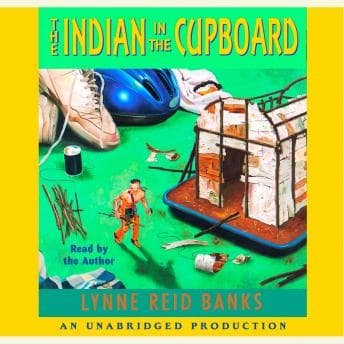

What happens when the author reads her own work aloud? Is it automatically better because she knows exactly how every line was meant to land, or does that intimacy sometimes get in the way?
I've been wrestling with this question since I finished Lynne Reid Banks reading The Indian in the Cupboard. And honestly? I think I have my answer.
The Magic of Hearing the Creator's Voice
There's something genuinely special about Banks narrating her own story. She wrote these words in 1980, and listening to her read them decades later, you can hear the affection she still has for Omri and Little Bear. Her voice is warm—not theatrical, not trying to be a voice actor—just a grandmother telling you a story she loves. And for a book aimed at kids, that's pretty much perfect.
I listened to this while grading essays on The Great Gatsby (yes, my students are still writing about the green light, and yes, I'm still pretending to be surprised by their insights). Something about Banks's measured, clear delivery made the grading less soul-crushing. Her pacing is deliberate. She trusts the story. She doesn't rush the wonder of a plastic toy becoming a living, breathing person.
My students would probably call this "slow." They're wrong. (Don't tell them I said that.)
Where the Story Still Shines—And Where It Shows Its Age
Look, we need to talk about the elephant in the room. This book was written in 1980, and its portrayal of Native American culture reflects... well, 1980. There are stereotypes here that make me wince as an educator. The character of Little Bear, while treated with respect within the narrative, exists within a framework that modern readers—especially parents and teachers—should be prepared to discuss.
But here's the thing: Banks's narration actually helps with this. She reads Little Bear's dialogue with dignity, not mockery. You can hear that she intended this character to be noble, brave, fully human. The execution may be dated, but the intent comes through in her voice. It's an interesting artifact—a chance to talk with kids about how our understanding of representation has evolved.
And the core magic? That still works. The idea that a toy could become real, that you'd suddenly be responsible for a tiny person with their own history, their own fears, their own life—that's timeless. Banks reads the scenes where Omri grapples with this responsibility with such quiet intensity. No dramatics. Just a boy realizing that magic comes with consequences.
Why Author-Narrated Sometimes Wins
I'll admit—I usually prefer professional narrators. They do voices. They perform. Banks doesn't really do distinct character voices in the traditional sense. It's more like she's reading to you, personally, in her living room.
And for this particular story? That works. The Indian in the Cupboard is ultimately about intimacy—the private relationship between a boy and a secret only he knows. Banks's understated delivery mirrors Omri's need to keep this miracle hidden. It's not a performance. It's a confidence.
At just over four hours, this is perfect for a family road trip or a few nights of bedtime listening. The production is clean, nothing fancy, which suits the straightforward storytelling. Banks passed away in 2024, which makes this recording feel even more precious—a direct line to the author's interpretation of her own imagination.
A Note for Teachers and Parents
As a teacher, I can see using this audiobook in specific contexts. It's excellent for discussing author's intent (because you're literally hearing it). It's a good entry point for conversations about representation in children's literature. And the story itself—the ethical questions about power, responsibility, the rights of small beings—that's rich material.
But I'd pair it with discussion. This isn't a "set it and forget it" audiobook for modern classrooms. It requires context.
For families? Same advice. Listen together. Talk about what you're hearing. Let the dated elements become teaching moments rather than awkward silences.
The book won the California Young Reader Medal and the Pacific Northwest Young Readers Choice Award back in its day, and you can hear why. The imagination is vivid. The emotional core is solid. Banks believed in this story, and forty-plus years later, reading it aloud, she still did. That same kind of enduring belief in storytelling comes through in Oliver Twist, where the narrator's commitment to Dickens's vision makes every character feel alive.
Who's Raising Their Hand for This One
Families with kids 8-12 who want a shared listening experience—and who are ready to have real conversations about how books age. Teachers looking for a text that opens doors to discussions about representation, responsibility, and author's intent. Adults who read this as kids and want to hear Banks herself bring it back. Skip it if you need fast pacing or polished voice acting, or if you're not prepared to contextualize the 1980s portrayal of Native American culture.
Class Dismissed
Worth pausing the faculty meeting for? Absolutely. (Sorry, Principal Martinez.)