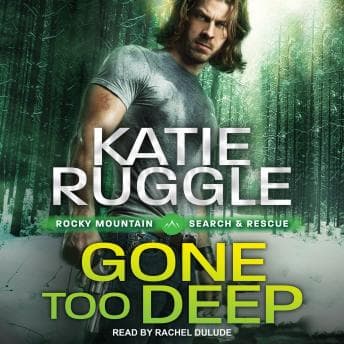

Look, I'll admit something. I teach high school English. I've read the canon. I've written papers on Austen's marriage plots and Brontë's gothic romance. So when I tell you I spent a weekend grading sophomore essays while listening to a romantic suspense novel set in the Colorado Rockies, you might think I've lost the plot entirely.
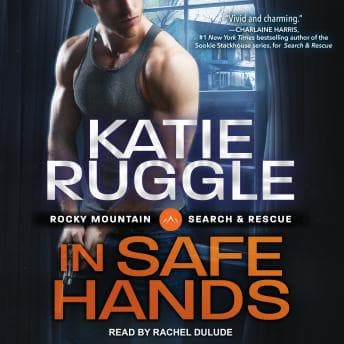
I haven't. I've just learned that sometimes the heart wants what it wants, and what my heart wanted was Katie Ruggle's In Safe Hands.
The Agoraphobia That Actually Felt Real
Here's what got me. Daisy Little has been trapped in her house for eight years. Eight years. And Ruggle doesn't treat this like a quirky character trait or a plot device to be conveniently cured by the love of a good man. The terror feels genuine. The way Daisy watches the world through her window, knowing she's both safe and imprisoned - that's the kind of psychological complexity I try to get my students to notice in Dostoevsky. It's also what makes Wuthering Heights so devastating - characters trapped by their own natures, watching happiness from behind glass. (They don't notice. They're seventeen.)
Chris Jennings is the deputy who's been quietly in love with her, and honestly? The slow burn here reminded me of those Victorian novels where characters pine across drawing rooms for three hundred pages. Except instead of a drawing room, it's a small Colorado town, and instead of subtle glances, there's a murder investigation.
Because of course there's a murder investigation.
Daisy witnesses something terrible. And suddenly her safe prison becomes the most dangerous place she could be. The romantic suspense genre gets a bad rap in some circles - my colleagues in the English department would probably raise eyebrows - but when it's done well, it's doing something the classics did too. It's asking: what happens when love collides with fear? When safety becomes a cage?
Rachel Dulude Earns Her Keep
I couldn't find much about Rachel Dulude's background online, but based on this performance? She knows what she's doing. Her pacing is deliberate in a way that adds genuine tension - she understands that pause is punctuation. When the suspense ratchets up, you feel it in her delivery. When Daisy's anxiety spirals, Dulude doesn't oversell it. She lets the words do the work.
And her male character voices? Exceptional. I've listened to enough audiobooks where the narrator's attempt at a male voice sounds like a bad impression of someone's dad. Dulude's Chris sounds like an actual human man - gruff when he needs to be, tender when the moment calls for it. She captures his protectiveness without making him seem overbearing, which is a tightrope walk in this genre.
The production is clean. No weird audio artifacts, no jarring transitions. Professional all the way through.
Series Context (Or: Can You Jump In at Book Four?)
This is book four in Ruggle's Search and Rescue series, and I'll be honest - I jumped in without reading the previous three. Could I follow the story? Yes. Did I occasionally feel like I was missing context on the supporting characters? Also yes. There's a whole brotherhood of search and rescue workers here, and their dynamics clearly carry over from earlier books.
If you're the type who needs to start at the beginning (and as an English teacher, I respect that impulse deeply), maybe go back to book one. But if you're like me and you grabbed this because it was available and you needed something to get through a stack of essays on The Great Gatsby, you'll be fine.
The mystery itself is solid. I won't spoil it, but there's a moment about two-thirds through where everything clicks into place, and I actually said "oh" out loud in my kitchen. Denise thought I'd burned something. I hadn't. I was just impressed.
Who This Is For (And Who Should Skip)
This is for the romance readers who want their love stories with a side of genuine danger. For the mystery fans who don't mind some emotional depth getting in the way of their whodunit. For anyone who's ever felt trapped - literally or figuratively - and wondered what it would take to break free. Skip it if you need pure thriller pacing or if romance subplots make you impatient.
My students would probably roll their eyes at this. They think romance is beneath them. (They're wrong. They'll figure that out eventually.)
But if you're someone who understands that genre fiction can do serious emotional work - that a book doesn't need to be on a syllabus to matter - this is worth your ten and a half hours. Rachel Dulude makes it easy to stay engaged, Ruggle's writing is sharper than the genre sometimes gets credit for, and Daisy's journey from terrified witness to something braver is genuinely moving.
Class Dismissed
I listened at 1.0x, because the pacing deserves it. The suspense builds properly. Don't rush it.
Now if you'll excuse me, I have seventeen more essays on the American Dream to grade. At least Daisy got her happy ending.