
Can we talk about how Rory Sorenson blushes? Because apparently we need to. Other listeners counted—and I understand the impulse, I really do—because this woman turns some shade of crimson approximately every time Ian Walsh breathes in her direction. It's a lot. My therapist would have thoughts about this physiological response pattern, and honestly, so do I.
But here's where it gets interesting. That excessive blushing? It's actually doing something psychologically coherent.
The Attachment Psychology That Surprised Me
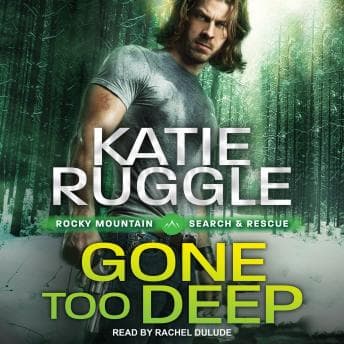
Ian and Rory's dynamic is a textbook case of what we call anxious-avoidant pairing, and Katie Ruggle handles it with more sophistication than I expected from a book where the heroine can't maintain eye contact without her face catching fire. Rory's constant flushing isn't just a romance trope—it's a genuine anxiety response pattern. Her body betrays emotions she's desperately trying to suppress. That's real. That's documented in the literature.
Ian, meanwhile, exhibits classic protective attachment behaviors. He's a firefighter with the local Search and Rescue team, which means his entire identity is built around saving people. And he's loved Rory since they were kids. The research actually shows that early attachment bonds, when they persist into adulthood, create particularly intense emotional responses. The Midnight Library explores similar questions about how our early choices shape who we become—though with considerably less blushing and more existential crisis. His willingness to defend her "to his last breath" isn't just romantic hyperbole—it's consistent with how childhood attachment patterns manifest in adult relationships.
What makes this pairing compelling is the contrast. Rory freezes; Ian acts. She's all social anxiety and awkwardness (listeners called it "adorkableness" and honestly, that fits); he's confidence and action. It's not a power imbalance. It's complementary coping mechanisms. And that creates genuine tension beyond the standard will-they-won't-they.
The arms dealing subplot adds an interesting wrinkle. Rory's managed to stay neutral between dangerous factions for years—that requires a specific psychological profile. Someone who can compartmentalize, who can read people, who understands power dynamics. Then she's forced to act in self-defense and everything collapses. A fascinating case study in what happens when someone built for neutrality gets pushed into choosing sides.
Rachel Dulude Made My Morning Runs Bearable
I listened to this during jogs through Cambridge, which meant Dulude's narration had to compete with my questionable cardiovascular fitness and the aggressive cyclists who apparently own the sidewalks. She won. Her delivery is warm without tipping into saccharine, and she handles the tonal shifts between romantic tension and genuine danger with appropriate weight.
The character voices are distinct enough that I never lost track of who was speaking, even while dodging puddles and questioning my life choices. Dulude sells Rory's awkwardness through slightly flustered vocal choices that make the constant blushing feel earned rather than annoying. (Okay, mostly earned. It's still a lot.)
Some listeners have noted mispronunciations in related series audiobooks. I didn't catch anything that pulled me out of the story, but I was also focused on not face-planting on tree roots. The production is clean—no weird background noise, no jarring volume shifts. Professional work that lets the story do its job.
Where the Pacing Gets Psychologically Questionable
Okay, I have to be honest. The romance progresses at what I'd call breakneck speed, which—from an attachment theory perspective—doesn't quite track. Real intimacy builds through vulnerability and repeated positive interactions over time. This felt more like the narrative equivalent of a psychological shortcut. Years of pining resolved in what feels like days of actual interaction.
But. And this is a significant but. Ruggle balances plot and character development in a way that keeps you from dwelling on the pacing issues. The suspense elements create genuine stakes, and I found myself running an extra mile just to see how certain scenes resolved. That same compulsive momentum drives Nowhere Safe, which also balances character psychology with high-stakes danger—though with an FBI profiler instead of a firefighter. That's not nothing.
The action sequences can feel rushed—there's a lot happening and sometimes transitions feel abrupt. If you need time to process dramatic events before the next crisis hits, this might feel overwhelming. But for a commute listen? For background while cooking elaborate dishes I'll eat alone? (Don't feel sorry for me, I prefer it.) The momentum carries you through.
Your Prescription (Or Not)
This is ideal for fans of romantic suspense who want their romance with a side of genuine danger. If you're into competence porn—people who are really good at their jobs doing those jobs well—you'll find it here. The Search and Rescue elements feel authentic, which makes sense given Ruggle's background with police academy training and rescue certification. She knows her stuff.
Skip it if you need slow-burn romance with realistic relationship pacing. Skip it if you're going to spend the entire book counting Rory's blushes. (Someone did. I understand the impulse but also: why do this to yourself?) And maybe skip it if you want a deep dive into the motorcycle club dynamics—that element exists but isn't the primary focus.
Case Notes
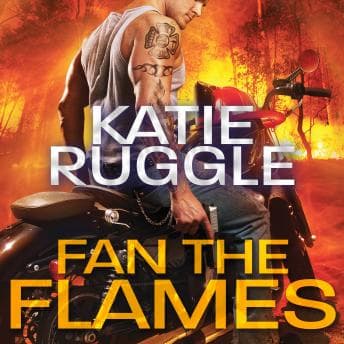
If you want an engaging, fast-paced listen that'll make your commute disappear? Fan the Flames delivers. Just know going in that you're getting a childhood-friends-to-lovers romance wrapped in gang war stakes, with a heroine whose circulatory system apparently has no chill whatsoever. I found myself asking: why does Rory's body betray her so consistently? The answer, psychologically speaking, is actually kind of interesting. And that made the whole thing work for me.