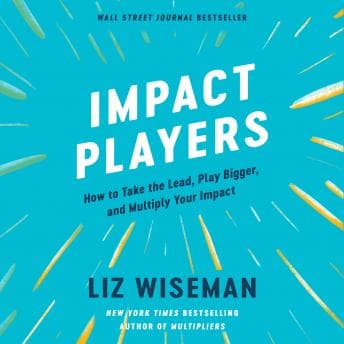

Ten hours and forty-nine minutes. Almost eleven hours for a book whose central thesis is: do the job that actually needs doing, not just the job you were assigned. My parents figured that out in 1987 when they started taking in alterations because the dry cleaning margins were garbage. No TED talk required.
Look, I'm being unfair. Wiseman's framework is more sophisticated than that. But I need to get the complaint out of my system first: this book is at least three hours too long. I was on a red-eye to Denver for a client engagement, couldn't sleep, figured I'd knock this out. Even at 2.0x I felt the repetition settling in around the halfway mark like turbulence that never quite stops.
The Five Practices Are Solid. The Padding Around Them Is Not.
Here's what Wiseman actually nails: the contrast framework. She doesn't just tell you what Impact Players do - she shows you what everyone else does in the same situation and why that default behavior feels logical but falls short. The "while others do X, Impact Players do Y" structure is genuinely useful. While others escalate problems to leadership, Impact Players move things across the finish line. While others add to the burden, Impact Players make heavy loads feel lighter. I've seen both types at every McKinsey engagement I've ever staffed.
The research base is decent - 170 top contributors studied across companies - and the Oracle anecdotes from Wiseman's own career have that gritty specificity that most business authors lack. She's not theorizing from an ivory tower; she ran teams, made calls, watched people either step up or step sideways. That credibility matters.
But here's where the 2-3 star reviewers aren't wrong: the content gets repetitive. Each of the five practices gets the full treatment - setup, examples, research findings, coaching tips - and by practice three you're hearing structural echoes of practice one. The concepts start bleeding together. I caught myself thinking "didn't she just say this?" more than once, and I was actively trying to take notes.
What My Parents Knew That Takes Wiseman 11 Hours to Explain
The core insight - figure out the real job to be done, not just the assigned task - is powerful precisely because it's not complicated. My mom didn't wait for someone to tell her the dry cleaning business needed alterations services. She saw customers asking, she bought a sewing machine, she learned. No one gave her permission. No one wrote her a job description update. The delusional self-confidence it takes to just start — without permission, without a title change, without a roadmap — is something I found explored with unexpected honesty in Man Up!: Tales of My Delusional Self-Confidence, though that book leans harder into the crash-and-burn side of that same instinct.
Wiseman's contribution is giving this instinct a vocabulary and a framework that corporate professionals can use. And that's genuinely valuable. If you're an individual contributor wondering why your equally talented colleague keeps getting tapped for the high-profile projects, this book will probably show you the gap. The mindset differences she identifies - seeing messy problems as opportunities vs. threats, stepping into leadership vacuums vs. waiting for authorization - these are real patterns I've watched play out across dozens of organizations.
The leader's coaching section at the end, though? Light. Almost afterthought-level. If you're a manager trying to develop Impact Players on your team, you'll get maybe 45 minutes of actionable guidance. Skip to that section, absorb it, but manage your expectations.
Author-Narrated, Which Means You Get the Real Thing (For Better and Worse)
Wiseman narrates her own book, and she's good at it. Clear, warm, the kind of delivery that sounds like a sharp keynote speaker who's given this talk two hundred times and knows exactly where to pause. Her explanations land cleanly and she handles the example stories with enough energy to keep them from going flat.
The downside of author-narration is always the same: you're getting a researcher's voice, not a performer's. Character differentiation in the anecdotes is minimal. But for a business book, this barely matters. You're here for the frameworks, not the drama.
The supplemental PDF is a nice touch - grab it if you're the type who actually implements what you read (and if you're not that type, this book is specifically about why you should be).
Who Gets ROI Here
Mid-career professionals stuck in the "I do good work but don't get noticed" trap - this is your book. New managers trying to articulate what separates their best people from the rest of the team - useful framework. If you loved Multipliers, this is the companion piece focused on the individual contributor side, and it's reportedly just as strong.
But if you've already read deeply in the high-performance space - Covey, Clear, Newport - you'll find the insights familiar, just repackaged. And at nearly 11 hours, the ROI per minute drops significantly past the midpoint.
Bottom Line: Worth the Listen, Not Worth Every Minute
The key takeaway is worth the listen. The other 5 hours? Not so much. Wiseman has real credibility and a genuinely useful framework buried inside a book that needed a harder edit. Skip to chapter 5 if you're short on time. Or do what I did - 2.0x, red-eye, no escape. You'll come out the other side with three or four ideas that actually change how you show up at work. That's more than most business books deliver. Just don't expect all eleven hours to earn their keep.