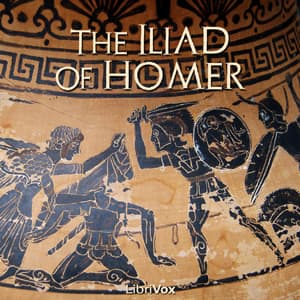

I'm going to be honest with you. I've taught the Iliad for twenty years. Twenty years of watching teenagers' eyes glaze over at "the wine-dark sea" and fielding questions about why everyone has so many names. And somehow, listening to this audiobook while grading papers at 11 PM, I found myself crying over Hector's death like it was the first time.
That's what a good translation and clear narration can do. They strip away the academic distance and remind you that this is, at its core, a story about grief. About rage. About what we lose when we choose violence over mercy.
The Weight of Every Syllable
StephenC's narration is disciplined in the best sense of the word. This isn't a performance with bells and whistles—no wildly differentiated character voices, no theatrical flourishes that might work for a thriller but would feel wrong here. Instead, he gives you something harder to achieve: sustained clarity over nearly sixteen hours of dactylic hexameter translated into English verse.
The pacing is deliberate. And I mean that as praise, though I know my students would disagree. (They'd want it at 2x speed. They're wrong.) Homer didn't write the Iliad to be consumed quickly. The repetition, the epithets, the catalogs of ships and warriors—they're meant to accumulate weight. StephenC understands this. He doesn't rush through the battle scenes to get to the "good parts." The battle scenes ARE the good parts, if you're paying attention to what Homer is actually saying about war.
Homer Doesn't Look Away
Okay, so here's where I have to be real with you. Some listeners find this audiobook overwhelming because of the graphic violence. And honestly? Fair. Homer does not look away from death. He tells you exactly how the spear enters, exactly which organs it pierces, exactly how the light leaves a young man's eyes.
But that's the point. That's literally the entire point.
The Iliad isn't pro-war propaganda. It's an unflinching look at what war costs. Every detailed death is Homer saying "this was a person. He had a father. He had a wife waiting at home. And now he's gone." If you skip the violence, you miss the thesis.
That said—if graphic descriptions of death genuinely bother you, maybe try an abridged version first. No shame in knowing your limits.
Mitchell's Translation, StephenC's Restraint
I couldn't find much about StephenC the narrator online beyond this recording, but Stephen Mitchell the translator? That's a different story. His translations are known for being accessible without sacrificing the poetry. This isn't the Lattimore translation I slogged through in grad school—Mitchell makes choices that let the verse breathe in English. I had a similar experience with Brothers Karamazov—the right translation turns a slog into something that actually moves you.
StephenC's delivery serves that translation beautifully. Clear, dramatic, emotionally present without being overwrought. When Achilles mourns Patroclus, you feel it. When Priam begs for his son's body, you feel it. The narrator trusts the text to do the heavy lifting, and it does.
Your On-Ramp (Or Not)
If you've always meant to read the Iliad but never got around to it—this is your on-ramp. Seriously. The audiobook format actually works better than the page for epic poetry, which was originally performed aloud anyway. You're experiencing it closer to how ancient audiences would have.
If you're a classics nerd who's read multiple translations—you'll appreciate Mitchell's choices and StephenC's restraint.
If you want something light for your commute—absolutely not. This is for the lakefront walk where you can actually think. This is for doing dishes at midnight when the house is quiet. This is for long drives where you can let the rhythm of the verse wash over you. Skip this if you need background noise or quick entertainment; it demands your full attention.
My students would hate this. They'd call it slow. They'd ask why anyone cares about a war that happened three thousand years ago.
Class Dismissed
I love it. I love that it's slow. I love that it demands attention. I love that after twenty years of teaching this text, an audiobook made me cry over Hector again.
Worth pausing the faculty meeting for. Worth every one of those sixteen hours.