
"The rage of Achilles—sing it now, goddess, sing through me."
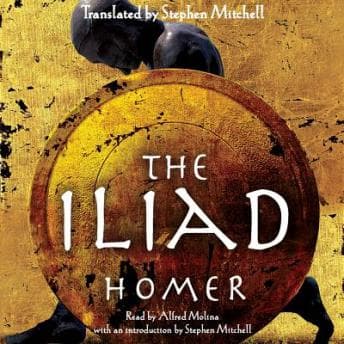
That's how it opens. And I swear, when Alfred Molina delivers that line, something happens in the room. Or in this case, something happened on the lakefront at 6:30 AM on a Saturday, because Denise wanted to walk early before the heat, and I had my earbuds in, and I stopped dead on the path near Montrose Harbor like I'd been hit. She thought I was having a medical event. I was just having Homer.
I need to be honest about something first: I've taught excerpts of the Iliad for twenty years. Bits of Fagles here, Lattimore there. I thought I knew this poem. I did not know this poem. Not like this.
Mitchell's Scalpel and What It Cuts Away
So here's what makes this translation different, and it's not just style—it's surgery. Stephen Mitchell based his translation on Martin L. West's critical edition of the Greek, which identifies hundreds of lines that were likely added after the original composition. Mitchell cuts them. And the result is something leaner, faster, almost shockingly direct. If you've read other translations and felt the poem sag in places—those catalogs of ships that go on forever, certain repetitive epithets that stack up like traffic on the Dan Ryan—Mitchell has trimmed the fat.
This will bother purists. I teach alongside purists. I understand the argument that every line is sacred because tradition said so. But listening to this version, I kept thinking: this is what velocity feels like in ancient poetry. The battle sequences don't lumber. They sprint. When Diomedes rages across the plain, or when Patroclus makes his fatal choice to push too far, the pacing doesn't let you look away. Mitchell's English moves with a kind of muscular simplicity that reminded me of—and I don't say this lightly—what Hemingway claimed he learned from Homer in the first place. Economy. Force. The weight of what's not said.
Molina Understands That Pause Is Punctuation
Alfred Molina. Listen. The man is an actor, and he performs this like an actor, but not in the over-the-top dramatic reading way that makes you cringe. He performs it the way a great stage actor handles Shakespeare—with intelligence behind every choice. His battle scenes have genuine vocal punch, a kind of controlled ferocity where you can hear the spear hit home. But then he'll shift into Priam begging Achilles for Hector's body, and his voice drops into something so restrained and grief-soaked that I had to pause.
(I was grading sophomore essays on To Kill a Mockingbird at the time. At 11 PM. The contrast between "Atticus Finch is a good father because he is nice" and Priam kissing the hands of the man who killed his son—I nearly lost it.)
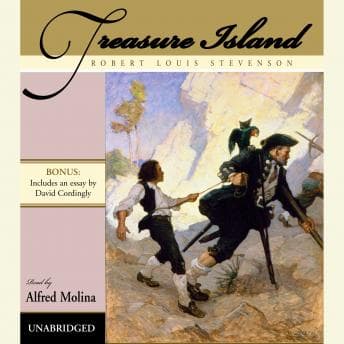
Molina doesn't do wildly different voices for each character, and he doesn't need to. What he does instead is shift register—a subtle thing, but you feel it. Achilles sounds younger, sharper, almost petulant in his early rage. Agamemnon carries this heavy, self-important weight. Hector sounds like a man who already knows. That same vocal precision is all over Treasure Island, where he lets Long John Silver's charm do the frightening work. Molina finds these distinctions through tone and rhythm rather than accent tricks, and it works because the Iliad isn't a novel with a cast—it's a poem with voices rising and falling inside a single current.
One genuine complaint: the introduction runs long. Mitchell's scholarly apparatus is interesting if you're me (and you're probably not), but it goes on for quite a while before you get to the actual poem. I'd say skip ahead to Book One on your first listen, then circle back to the introduction when you're hungry for context.
This Is Why We Still Read the Classics
Here's what surprised me most. I expected the glory and the gore—it's the Iliad, there's plenty of both. What I didn't expect was how sad this version feels. Mitchell's leaner text strips away a lot of the ceremonial buffer between you and the grief. When a minor warrior dies—some guy whose father raised horses, whose wife is back home waiting—Mitchell gives you just enough detail to feel it, then moves on. The brevity is devastating. My students would hate this. I love it.
I keep a dog-eared copy of La Ilíada in my classroom for the same reason—some scenes should hit you without warning.Eighteen hours is a commitment. But 1.0x is the only way to listen. The prose deserves to be savored. Mitchell chose those rhythms and Molina honors them, and speeding it up would be like fast-forwarding through a symphony because you want to get to the finale.
Who Should Press Play (And Who Should Keep Walking)
If you loved Fagles' Odyssey or Wilson's translation work—if you care about how English can carry ancient music—this is essential. I spent a month with Odyssey after this one, and while the homecoming story is wonderful, the translation I picked up never gave me this kind of charge. If you're new to Homer entirely, this is actually a fantastic entry point because Mitchell's cuts make the story clearer and more propulsive than most versions. If you're a Lattimore loyalist who wants every interpolated line preserved, you'll be annoyed. That's fair.
Not great for background listening. This demands your attention. Worth pausing the faculty meeting for.
The Annotation in the Margin
I've been thinking about what Molina does with that opening invocation for three weeks now. There's a reason I stopped on the lakefront. The Iliad is a poem about rage, yes, but it's really a poem about what rage costs everyone in its radius—the ones who feel it and the ones who just happen to be standing nearby. Molina understands that. Mitchell understands that. And somewhere around hour fourteen, walking home alone because Denise had long since gone inside, I understood it differently than I had in twenty years of teaching it.
That's what a great audiobook does. It doesn't just deliver the text. It reintroduces you to something you thought you'd finished with.