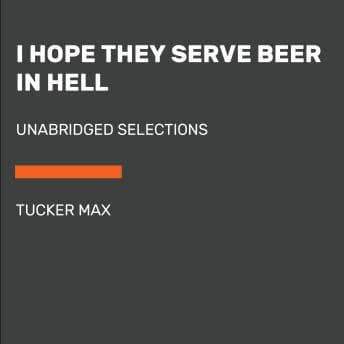

I'm going to be honest with you. I listened to this during a cross-country flight, headphones in, and I kept checking that no one could hear what was coming through. Not because I was embarrassed—okay, maybe a little—but because some of these stories are so aggressively juvenile that I found myself laughing at 30,000 feet like a complete lunatic.
Here's the thing about Tucker Max: he built an entire career on being the guy your mother warned you about. This audiobook is basically a 5-hour-44-minute case study in what happens when you give zero thought to consequences. From a pure business perspective? Genius. He identified a market (young men who wanted permission to laugh at terrible behavior), created a product (himself), and scaled it into a New York Times bestseller. That same ruthless self-packaging shows up in I'm Still Standing, though with slightly less bodily function humor. My parents would have zero respect for the content but grudging admiration for the hustle.
The ROI on Self-Awareness
What makes this work—and I can't believe I'm saying this—is that Max knows exactly what he is. The opening line is basically "My name is Tucker Max and I'm an asshole." That's not a confession. That's a business model. He's not asking for forgiveness or redemption. He's selling you tickets to the trainwreck and making sure you know the train is on fire before you board.
The stories themselves are exactly what you'd expect: drinking, hookups, bodily functions, and the kind of decisions that would get you fired from any company I've ever consulted for. But here's where it gets interesting from a content perspective—these are structured like case studies in social dynamics. Terrible ones. Ones you should never replicate. But there's a weird anthropological value here if you squint hard enough. One reviewer called it "an anthropological study of the most confusing species: men." She's not wrong.
When the Author Is the Narrator
Tucker Max narrating his own stories is both the best and worst choice they could have made. Best because nobody else could deliver these with the same authentic dirtbag energy. Worst because the man mumbles like he's still hungover from the events he's describing. At 2.0x speed—my usual setting—some sections became genuinely hard to follow. I had to drop to 1.5x for the more complex stories, which felt like a personal defeat.
The conversational style works for the genre. He sounds exactly like the guy at the bar telling you this story at 2 AM, which is both a feature and a bug. The production is clean enough, but don't expect polish. This isn't a professionally crafted memoir performance. It's a dude reading his blog posts out loud. Which, to be fair, is exactly what it is.
The Elephant in the Room
I can't review this without addressing it directly. A lot of this content is genuinely misogynistic. Not in a subtle, "you have to think about it" way. In a very direct, "this is how he talks about women" way. If you're sensitive to that—and plenty of people reasonably are—skip this entirely. No audiobook is worth listening to something that makes you feel gross.
For everyone else, you need to understand what you're getting into. This is fratire. It's a genre that peaked in the mid-2000s for a reason, and that reason is that culture moved on. Lone Survivor came from the same era but aged better—turns out actual heroism has more staying power than manufactured outrageousness. Listening to this in 2024 feels a bit like finding your college roommate's old Maxim magazines. Nostalgic for some, cringeworthy for others, and definitely not something you'd leave on your coffee table.
The Consulting Take
This audiobook delivers exactly what it promises. No more, no less. If you want outrageous stories delivered by the guy who lived them, you'll get 5 hours of entertainment. If you want depth, growth, or any kind of redemption arc, you're in the wrong place. Tucker Max isn't trying to be a better person in this book. He's trying to make you laugh at how bad he was.
The real value is worth about 2 hours of listening. The other 3 hours and 44 minutes? Diminishing returns. The stories start to blur together after a while—how many times can you hear about someone getting blackout drunk and doing something regrettable before it stops being shocking?
Who should listen: Guys who miss the mid-2000s fratire era and want some crude nostalgia. Who should skip: Anyone who finds misogyny a dealbreaker (fair), anyone looking for substance, and definitely anyone who might be within earshot of your headphones.
Would I recommend this to a client? Absolutely not. Would I admit to listening to the whole thing? I just did. Jenny would say I'm being harsh on myself for enjoying it. Jenny is right.