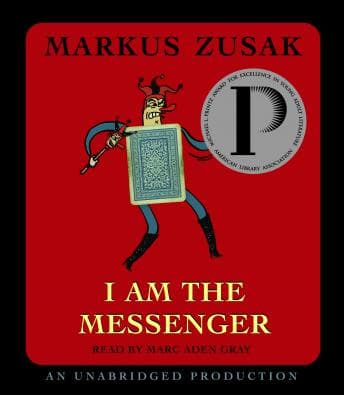

Most people come to Markus Zusak through The Book Thief. I came to him through this one, and honestly? I think I got the better deal.
I was up late dealing with a proposal for a corporate security audit that was going nowhere - one of those nights where you're staring at spreadsheets and your brain just quits. Ranger was already asleep on his bed. I figured I'd knock out a chapter or two of something light before crashing. Eight hours and forty minutes later, the sun was coming up and I'd listened to the whole damn thing. That doesn't happen to me often.
An Underage Cabbie With Playing Cards and a Purpose
Let me cut to the chase: this book shouldn't work for me. It's classified as YA. The protagonist is a 19-year-old Australian kid named Ed Kennedy who drives a cab illegally, plays terrible poker with his friends, and is hopelessly in love with a girl who won't love him back. No explosions. No spec ops teams. No geopolitical intrigue. And yet Zusak pulled me in so hard I forgot I was a 50-something retired colonel listening to a teenager figure out his life.
The setup is almost absurdly simple - Ed stumbles through stopping a bank robbery (and I mean stumbles, this is the least competent hero you'll ever meet), and then mysterious playing cards start showing up in his mailbox. Aces. Each one has addresses, times, clues. Ed becomes a messenger - delivering help, confrontation, sometimes violence to strangers in his neighborhood. The opening robbery scene sets the tone perfectly. It's funny and pathetic and a little bit dangerous all at once, which pretty much describes the entire book.
What got me was the structure. Each ace represents a suit, each suit has three missions. It gives the story a mission-based framework that my brain locked onto immediately. You complete one objective, move to the next. But unlike actual ops, these missions are deeply personal and weird and sometimes heartbreaking. Ed has to figure out what each person needs - sometimes it's protection, sometimes it's just someone showing up. There's a scene where he sits outside an old woman's house night after night just so she won't be alone. No dialogue. Just presence. That one sat with me.
Marc Aden Gray Gets Ed Right (Mostly)
Here's where opinions seem to split, and I'm landing somewhere in the middle. Gray's Australian accent is authentic and it fits - this is an Australian story with Australian characters, and he doesn't try to sand the edges off it. His Ed Kennedy is exactly what Ed should sound like: self-deprecating, a little defeated, genuinely funny. The fatalistic humor comes through clean. When Ed's talking about his cab-driving dog the Doorman (who drinks coffee, by the way - Linda would've loved that detail), Gray finds this warmth that makes you buy the relationship completely.
But. There are moments - particularly in the more emotional stretches of the third and fourth acts - where Gray pushes a little too hard. The delivery tips from earnest into theatrical, and for a character who's supposed to be an ordinary guy overwhelmed by an extraordinary situation, that theatrical quality works against the story. It's not a dealbreaker. It's more like a soldier who's good at his job but occasionally showboats during a debrief. You notice it, it annoys you, you move on.
The character differentiation is solid for a single narrator handling this many voices. Ed's poker buddies - Marv, Ritchie, Audrey - each have their own cadence, and you can tell them apart without effort. That matters in a book this dialogue-heavy.
The Question That Punches You in the Gut
I've seen some people call this a mystery because of the "who's sending the cards" angle. It's not really a mystery. The whodunit matters less than the why, and the why is essentially: what happens when someone tells an ordinary person they have to care? That's the question Zusak keeps drilling into, and he does it without getting preachy, which is harder than it sounds.
There's a recurring theme about purposelessness that - look, I won't pretend it didn't hit close. Twenty-five years of structure, mission, clear objectives. Then you retire and suddenly nobody's handing you the playbook. Ed's version of that is different (he's young, he's broke, he's Australian), but the feeling is universal. You're just existing until something forces you to do more. I bumped into that same restless-ordinary-person-called-to-something-bigger feeling in Seven Stones to Stand or Fall — different world entirely, but Gabaldon keeps returning to characters who never asked for the life that found them.
The ending is going to divide people. It broke the fourth wall in a way I didn't fully love - felt like Zusak wanted to make a point about storytelling itself, and I would've preferred he just let the story land. But it didn't ruin the experience.
Who Should Saddle Up (And Who Should Stand Down)
If you need constant action, this isn't your book. If you need military precision, wrong shelf entirely. But if you've ever been stuck in that space between who you are and who you could be - and you want a book that handles that without being insufferable about it - this is worth your time.
Parents: it's listed as Kids & Family, but there's some violence, language, and adult situations. I'd say 15 and up.
Worth your time? Here's the debrief: I went in expecting a light YA distraction and came out at sunrise with something stuck in my chest. Zusak writes like a guy who understands that ordinary people doing small brave things is its own kind of heroism. Ranger slept through the whole thing, but I'm counting that as approval.









