
Romance isn't my genre. Let me be upfront about that. I teach Middlemarch and Beloved and spend my podcast episodes explaining why Faulkner's run-on sentences are actually genius. So when Denise handed me her earbuds on our Sunday lakefront walk and said 'just try it,' I was skeptical in the way only an English teacher can be skeptical - which is to say, loudly and with footnotes.
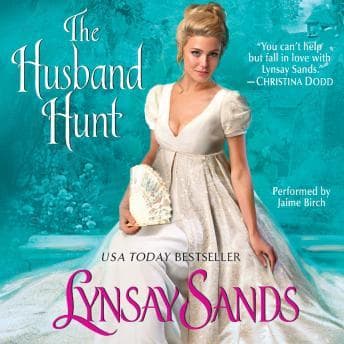
Husband Hunt is the third book in Lynsay Sands' Madison Sisters series, and it's exactly what it says on the tin: Lisa Madison, the youngest sister, is determined to find a husband. Standing in her way - and eventually falling for her - is Daniel Danvers, a rake who spent years dismissing her as a child and is now suddenly noticing she isn't one anymore. The setup is pure Regency comfort food. Sands knows this genre cold, and the story moves with the kind of confident momentum that comes from a writer who has done this many, many times. There's warmth here. Real warmth. Lisa's determination has a scrappy charm that works on the page.
The Voice Problem Nobody Warned Me About
Here's where I have to be honest with you, because this is the part that genuinely surprised me, and not in a good way.
Jaime Birch is the third narrator this series has had across three books. I didn't know that going in, but apparently listeners who've been with the series from the start felt it immediately. I felt something else: confusion about who was actually speaking during any scene with more than one male character. The men in this book - Daniel, his friends, various lords and rakes at various social gatherings - landed somewhere between pompous drawing-room bluster and, occasionally, something closer to a teenager doing an impression of a pompous drawing-room bluster. They weren't differentiated enough to track in audio without visual context. In print, you have 'Daniel said' to anchor you. In audio, you're relying entirely on the narrator to signal the shift, and those signals weren't coming through clearly.
The women fared better. Birch has a natural warmth that suited Lisa's voice, and the female characters were generally distinguishable from each other. But romance novels live and die on the chemistry between leads, and when one half of that chemistry keeps sounding like he's chairing a committee meeting, the tension deflates.
I want to be fair: Birch isn't bad. The pacing is solid, the emotional beats land when the text is doing the heavy lifting, and there's genuine care in the reading. But 'not bad' is a hard sell for a narrator in a series where listeners already had two other narrators they preferred.
What Sands Actually Does Well (And Why It Half-Survives the Audio)
Here's the thing I didn't expect: the story itself kept me walking past my usual turnaround point on the lakefront. The rake-who-ignored-her-now-wants-her trope is about as old as the novel form itself - Austen was doing versions of this in 1813 - but Sands executes it with enough momentum that I didn't mind. Denise made me review Jane Eyre last year and I gave her the same grudging credit - you don't outrun a well-worn structure, you either execute it or you don't. Lisa is supposed to be the sassy, sharp-tongued youngest sister, and there are moments where that comes through. The scenes where she's actively managing her husband hunt with the cheerful pragmatism of someone running a small business have real comic energy.
The complaint I kept seeing from series fans - that Lisa felt less sharp here than in her earlier appearances - is harder for me to evaluate since I came in at book three. But I can say that there were stretches where her voice felt softer than the setup seemed to promise. Whether that's the writing or the narration or both, I genuinely can't separate them cleanly.
My students would breeze through this in an afternoon and probably enjoy it. I found myself engaged enough to finish, which is its own kind of endorsement from someone who spent last week re-listening to Middlemarch.
Who Should Actually Listen to This
If you're new to the series and Regency romance comfort listens are your thing, the story itself is pleasant enough for a borrow. But if you're a Madison Sisters fan who's been with this series from book one, manage your expectations about the narrator switch - the audio community's frustration is real and warranted. The male voices are a genuine obstacle, not a minor quibble.
For the Regency romance faithful: stream it, don't buy it. The book is charming. The audio is uneven. Those are two different things, and in this format, they're both your problem.