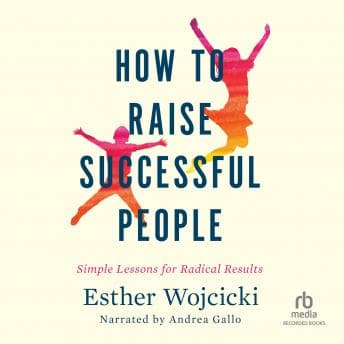

This is basically the anti-helicopter-parenting manifesto, but with actual credentials to back it up.
I started this one at 5:47 AM on a Tuesday, half-dead after a 1 AM deployment that went sideways. The kind of morning where you're questioning every life choice. And here's Esther Wojcicki telling me that her parenting philosophy boils down to five letters: TRICK. Trust, Respect, Independence, Collaboration, Kindness. My sleep-deprived brain immediately went "that's just good management principles for tiny humans" - and honestly? That's exactly what it is.
The TRICK Framework Is Basically Agile For Kids
Woj's whole thesis is that we're overengineering childhood. We're helicopter parents running waterfall when we should be running agile - give kids autonomy, let them fail fast, iterate. She taught journalism at Palo Alto High for decades and basically ran her classroom like a startup incubator. Students picked their own projects, set their own deadlines, figured out their own solutions. The result? Alumni who went on to do things at places you've definitely heard of.
The framework itself is straightforward - almost suspiciously so. Trust your kids. Respect them as actual humans with opinions. Give them independence (even when it's terrifying). Collaborate instead of dictate. Be kind. Each chapter unpacks one element with stories from her classroom and her own family.
Here's what I kept thinking: this isn't revolutionary if you work in tech. We already know micromanagement kills innovation. We already know psychological safety matters. Woj is just applying those same principles to raising humans instead of shipping products. That same mindset shift—applying performance principles to unexpected domains—is what makes How Bad Do You Want It? so compelling when it dissects the mental game of endurance athletes. The ROI on this audiobook is connecting dots you probably already had floating around.
Andrea Gallo Reads Like Your Wisest Friend
I finished this in about 5 commutes, and Andrea Gallo's narration is the reason I didn't bump it to 1.75x. She's got this calm, measured delivery that feels like getting advice from someone who's genuinely been there. No preachiness. No condescension. Just steady, thoughtful pacing that lets the concepts land.
The research I found called it "pitch-perfect" and honestly, that tracks. Gallo captures Woj's voice as someone who's spent 40+ years watching kids succeed and fail, and has opinions about why. There's warmth without being saccharine. Authority without being preachy. Immune has that same approachable-expert vibe—complex science delivered without condescension. Perfect for 6 AM when you need information delivered gently.
Where It Gets Repetitive (And Why That's Okay)
Look, at nearly 11 hours, this book could've been tighter. Some concepts get hammered multiple times with different anecdotes. By hour 7, I was like "yes, I understand, trust is important, we've established this." Classic self-help bloat.
But here's the thing - repetition works differently in audio. Those repeated themes became almost meditative on my commute. Each story reinforced the framework from a different angle. If you're reading the print version, you'd probably skim. In audio, the redundancy actually helps the concepts stick.
The slower pacing won't work for everyone. If you're used to business books at 2x, this will feel sluggish. I'd recommend 1.25x as a sweet spot - fast enough to keep momentum, slow enough to absorb.
The Silicon Valley Elephant In The Room
I can't not mention this: Woj raised three daughters who became CEO of YouTube, co-founder of 23andMe, and a professor of pediatrics at UCSF. That's... a lot of success to attribute to any single parenting philosophy. There's some survivorship bias here. Also, she taught at Palo Alto High - not exactly a resource-strapped environment.
She acknowledges privilege occasionally, but not enough for my taste. The TRICK framework probably works differently when you're not in one of the wealthiest zip codes in America. The core principles - trust, respect, independence - are genuinely universal. You just might apply them differently.
Who's This Actually For?
If you're a manager wondering why your team needs constant direction, this book will hit different. If you're a parent who can't stop hovering, same. The frameworks translate surprisingly well between contexts.
Skip if you want tactical parenting hacks. This is philosophy, not a how-to manual. Also skip if you're allergic to anecdotes about successful Silicon Valley families - there are a lot of them.
Commit Message
Bottom Line: Worth your commute if you're ready to examine your control issues - whether with kids or direct reports. The framework is simple, the execution is the hard part, and Gallo's narration makes the 11-hour runtime feel like a conversation rather than a lecture. Not groundbreaking, but solidly useful. I found myself thinking about it during my next 1:1 with my skip-level, which probably says something.