
Look. I need to talk about the privilege thing first because it's been bugging me since somewhere around hour three.
Cat Marnell grew up with access to prep schools, psychiatrists who'd write whatever prescription she batted her eyes for, and a family safety net that - even when frayed - was still more than most people get. And she knows this. She's not unaware. But there's this thing that happens when you work nights in a Level 1 trauma center for fifteen years: you stop ranking people's suffering. I've held the hand of a homeless man withdrawing from meth AND a rich woman withdrawing from the same Adderall Cat pops like candy in this book. Addiction doesn't check your W-2. It just doesn't.
So when people say they can't empathize with her because she's privileged? I get it. But I also think they're missing the point.
She's That Patient Who Won't Stop Talking - And You Can't Walk Away
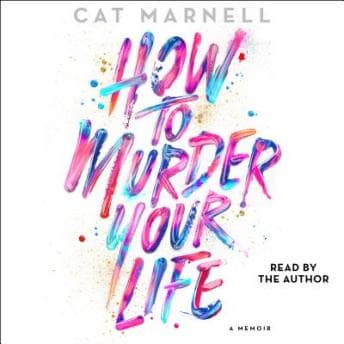
Cat narrates her own memoir, and this is where it gets complicated. She reads it exactly the way she writes - breathless, self-aware, chaotic, sometimes exhausting. It's like being cornered at a party by someone who's simultaneously the most interesting and most draining person in the room. Her voice has this specific quality - not polished, not trained, just... her. Raw. When she describes doctor-shopping on the Upper East Side, bouncing between psychiatrists who hand out stimulant prescriptions like Halloween candy, the casualness in her delivery is what makes it land. She's not performing shock. She's just telling you what Tuesday looked like.
As someone who's actually worked a code on patients who've mixed the exact cocktail of uppers and downers Cat describes - the Adderall-to-function, Ambien-to-sleep, Xanax-to-cope cycle - hearing her narrate it so matter-of-factly made my stomach drop. Because I know how that story ends in my world. And it's not with a book deal.
But here's the thing: after about six hours, the pattern gets repetitive. New job, new pills, new rock bottom that isn't actually the bottom yet, new enablers. The Condé Nast details are genuinely fascinating - the beauty closets, the insane pressure, the way the fashion magazine world practically runs on stimulants - but the cycle of self-destruction starts blurring together. I found myself zoning out during a couple of stretches, which is saying something because I was reorganizing the kids' bathroom cabinet at the time and that is deeply boring work that needs good audio.
The Medical Details Are Accurate. Finally.
I almost never say this about addiction memoirs. Most of them either sanitize the pharmaceutical stuff or get it cartoonishly wrong. Cat knows her drugs - brand names, generic names, dosages, interactions, the specific feeling of each one. When she talks about the way Ritalin made her feel focused but hollow as a teenager versus the way Adderall hit different in her twenties, that tracks. When she describes the insomnia spiral - stimulants all day, nothing works at night, so you add a sedative, then you need more stimulant to counteract the sedative hangover - I've literally explained this exact cycle to patients' families in the ICU. She gets it right because she lived it, and she doesn't dress it up.
What she also gets right, and what a lot of addiction narratives skip, is how functional addicts can look from the outside. She's filing beauty stories, attending fashion events, maintaining professional relationships - while hallucinating from sleep deprivation and hiding pills in her desk. I've had coworkers like this. We all have. The performance of normalcy while everything underneath is on fire? That's the most honest part of the whole twelve hours.
Who This Is (And Isn't) For
If you need your memoirists to be likeable and repentant, skip this. Cat isn't writing a recovery narrative with a neat bow. She's messy and sometimes she glamorizes the mess even while she's telling you it's destroying her. That tension is either going to fascinate you or make you want to throw your phone out the car window.
If you work in healthcare, addiction services, or you've loved someone through substance abuse - this is a useful listen. Not comfortable. Useful. It's the inside of the patient's head that we don't get to hear during a 3 AM admission. Black and Endless Sky gave me that same uncomfortable access to a perspective I don't get sitting on the clinical side of the bed.
Carlos asked why I was so quiet at breakfast after finishing this one. I didn't have a good answer. Sometimes a book just sits with you like a weight you didn't ask to carry.
Night Shift Rx
Not a perfect book. Too long by about two hours, the narrator's persona can wear thin, and there are stretches where it feels like she's performing chaos rather than reflecting on it. But the honesty is real, the medical accuracy matters more than people think, and Cat reading her own story gives it an authenticity that a professional narrator couldn't touch. Perfect for that post-shift decompression - just be ready for it to hit closer to home than you expect.









