
I listened to this audiobook in the exact amount of time it took for my masala chai to brew and cool down to a drinkable temperature. Twelve minutes. That's it.
Usually, I'm deep in the weeds of 15-hour psychological thrillers where the protagonist is an unreliable narrator with a dark secret (and I'm taking notes on their attachment style). But sometimes—usually around 11 PM when my brain is fried from grading undergraduate papers—I need something that resolves itself without a body count.
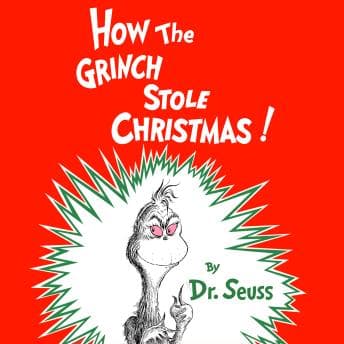
So, I queued up Walter Matthau reading Dr. Seuss.
(Yes, that Walter Matthau. The grumpy guy from Grumpy Old Men. Which, frankly, is typecasting genius.)
The Clinical Diagnosis of Mr. Grinch
Let's look at the subject. The Grinch.
From a psychological perspective, the Grinch is fascinating. We label him a villain, but honestly? The man is displaying classic signs of sensory processing disorder and social anxiety. He doesn't hate Christmas; he hates the noise. "Noise! Noise! Noise!" he complains.
Listening to Matthau deliver these lines, it hit me: The Grinch isn't a monster. He's an introvert living next to neighbors who have absolutely no boundaries. I found myself thinking about Networking for People, which also validates the introvert experience instead of pathologizing it.
Matthau plays this perfectly. He doesn't go for the creepy, slithering malice that Boris Karloff did in the cartoon (which, don't get me wrong, is iconic). Instead, Matthau sounds like a tired, exasperated old man who just wants some peace and quiet. When he talks about the Whos singing, he sounds genuinely exhausted.
It changes the whole vibe of the story. Makes the Grinch feel less like a criminal mastermind and more like... well, me, when the undergrads are partying on Commonwealth Avenue on a Tuesday night. You find yourself rooting for him to get a little silence.
The Matthau Factor: Warmth vs. Drama
Here's where we need to address the elephant in the room. Or the Max in the sleigh.
A lot of listeners—and I mean a lot—get hung up on the fact that this isn't the Boris Karloff version. I read through the reviews before listening (occupational hazard, I need data), and the nostalgia bias is strong. People want the deep, theatrical, scary voice they grew up with.
But here's why Matthau works: He makes it a conversation.
He sounds like a grandfather sitting in an armchair, maybe with a scotch in hand, telling you a story he knows by heart. He does this thing with his voice—a sort of gravelly, deadpan delivery—that grounds the rhyme scheme. Dr. Seuss can sometimes feel frantic with all the made-up words and galloping rhythm. Matthau slows it down. Leans into the comedy rather than the drama.
His Cindy-Lou Who voice? Surprisingly tender. A little high-pitched, sure, but he captures that specific, heartbreaking innocence that makes the Grinch pause. It's the pivotal moment of cognitive dissonance for the protagonist—the moment his worldview (Whos = Noise) is challenged by contradictory evidence (Cindy-Lou = Sweet).
If you go in expecting a theatrical performance, you might be disappointed. But if you want a cozy, humorous storytelling session, he nails it.
The Physiological Impossibility of Redemption
We have to talk about the ending. The heart growing three sizes.
Medically? Concerning. Psychologically? It's the breakthrough moment.
The narrative shift here is rapid—almost too rapid for my taste (real behavioral change takes months of therapy, not one song)—but Matthau sells it. When the Whos start singing despite having their material possessions stolen, the Grinch realizes his hypothesis was wrong. Happiness isn't correlated with inventory.
Matthau's voice lifts in these final minutes. The gravel smooths out just a tiny bit. It's subtle, but it's there. He conveys the confusion and then the clarity of the Grinch without overacting.
Who Gets the Most Out of This
Queue this up if you're an overthinker who wants permission to enjoy something simple, or if you need a twelve-minute palate cleanser between heavier listens. Skip it if you're a Karloff purist who can't separate nostalgia from quality—you'll spend the whole time comparing instead of listening.
Case Closed (Pass the Roast Beast)
Look, it's twelve minutes. You have time.
It's not the high-drama version you remember from TV. It's softer, funnier, and more human. A palate cleanser for the soul. And as someone who spends her life analyzing why people do terrible things, it's nice to listen to a story where the "bad guy" just needs a little perspective (and maybe some roast beast) to rejoin society.
(Though I still think the Whos need to respect noise ordinances. Just saying.)