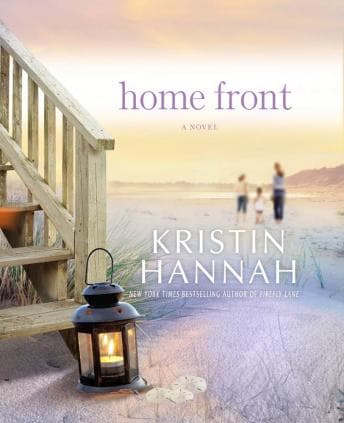

Kristin Hannah, why do you do this to me? I knew what I was getting into. I've read her before. I've cried before. But this book? This book had me sobbing into a logo design for a dental practice at 2 PM on a Tuesday. My cats looked genuinely concerned. Diego actually left the room.
Here's the thing that got me about Home Front—it's not just a war story. It's a marriage autopsy happening in real time while one spouse is flying Black Hawk helicopters in Iraq and the other is fumbling through school lunches and bedtime routines he never bothered to learn. Michael starts this book as the kind of husband who makes you want to reach through your headphones and shake him. He's checked out, resentful, already mentally drafting divorce papers while Jolene is literally deploying to a combat zone. And Hannah doesn't let him off easy. She makes you sit with his selfishness until it becomes almost unbearable.
When The Kids' Voices Made Me Want To Close My Laptop
Let's talk about Maggi-Meg Reed's narration, because it's... complicated. Her emotional delivery in the second half of this book? Absolutely gutting. When Jolene is dealing with her PTSD, when she can't recognize herself in the mirror, when she's pushing away everyone who loves her—Reed captures that fractured quality perfectly. Her voice breaks in these tiny ways that feel real, not performed.
But those kid voices. Dios mío, those kid voices. Betsy's petulant teenager voice made me physically cringe multiple times. And little Lulu sounds like Reed is doing a cartoon character impression rather than voicing an actual child. It's distracting in a book that's otherwise so emotionally grounded. I found myself bracing whenever the daughters had dialogue, which is unfortunate because their relationship with Jolene is central to the whole story.
Reed also has this habit of emphasizing every second or third word for dramatic effect. "She LOOKED at him and KNEW that everything had CHANGED." It's like she's underlining with her voice, and after fifteen hours, it starts to grate. But here's the thing—when it works, it really works. The PTSD scenes hit different because of her delivery.
A Marriage That Felt Painfully Real
What wrecked me about this book wasn't the war scenes (though those are brutal). It was the quiet devastation of watching two people who used to love each other become strangers. Michael's slow realization that he's been a terrible partner while Jolene was holding their family together—that hit me somewhere deep. Abuela would have had opinions about Michael. Strong ones. Probably involving chanclas.
Hannah doesn't sugarcoat the homecoming either. Jolene comes back broken in ways nobody prepared for, and the family has to figure out how to love someone who's become a different person. There's this rawness to how she writes PTSD—the nightmares, the hypervigilance, the way Jolene can't stand to be touched by her own husband. It felt researched but not clinical. Human.
I'll be honest—this isn't my favorite Kristin Hannah. The Great Alone and The Nightingale both hit harder for me. Home Front drags in places, especially in the first third when we're establishing how broken this marriage already is. It's overly sentimental sometimes, and Hannah's prose can get heavy-handed with the metaphors. But when it lands? My heart. MY HEART.
Who Should Listen (And Who Should Run)
If you're looking for a light listen while you're designing wedding invitations or whatever, this ain't it. This is a curl-up-on-the-couch, tissues-within-reach, maybe-cancel-your-afternoon-meetings kind of book. It demands your attention.
Perfect for anyone who wants to ugly-cry about family, marriage, and sacrifice. Military families will probably find this either cathartic or too close to home. Skip if you're sensitive to war violence or detailed PTSD depictions—also skip if narrator voice quirks drive you crazy, because those kid voices might be a dealbreaker.
Heavy Vibes, But I'd Do It Again
I finished this at 1 AM, Frida asleep on my chest, tears drying on my face. It's not a perfect audiobook—the narration has real weaknesses, and the pacing could be tighter. But Kristin Hannah knows how to write emotional devastation, and Maggi-Meg Reed, for all her quirks, knows how to deliver it when it counts.
This book felt like watching someone rebuild a house that burned down, brick by painful brick. It's about what we owe to the people who serve, and what we owe to the people who love us, and how sometimes those debts feel impossible to pay. Beekeeper of Aleppo explores similar territory—what war takes from people who survive it, and the impossible work of rebuilding afterward.
I cried four times. Added it to the spreadsheet. Abuela would have loved this one—she always had a soft spot for stories about women who were stronger than the men around them realized.