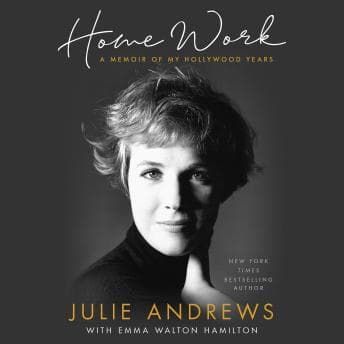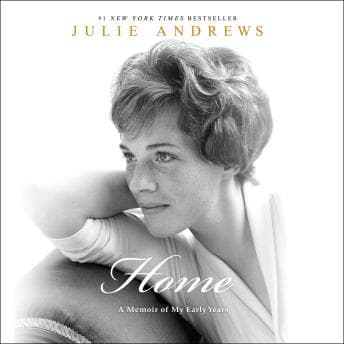

Look. I need to get something off my chest. Julie Andrews describes a childhood tonsillectomy in this book - a botched one that nearly ruined her voice - and she does it with the calm, measured grace of someone describing afternoon tea. Ma'am. MA'AM. As someone who's actually worked a code, who has watched patients grip bedrails while we explain what's about to happen to them, I wanted to reach through my steering wheel and say "It's okay to be angry about this." That restraint is both the charm and the frustration of this memoir.
I didn't listen to this on my usual post-shift commute. I was home with a nasty head cold - called out for the first time in three years, Carlos kept bringing me chamomile, and I needed something gentle enough for my pounding sinuses but interesting enough to keep me from doom-scrolling WebMD. (Yes, nurses do this too. We're not immune to being ridiculous.) Julie Andrews reading her own memoir seemed like the audiobook equivalent of being tucked in.
When Julie Andrews Tells You About the Blitz Like It's a Bedtime Story
Here's what gets me. She's describing the London Blitz - actual bombs falling, her family huddled in shelters, the world literally on fire around a small child - and her voice stays so composed, so beautifully modulated, that you almost miss how terrifying it was. She talks about dusty theaters and cramped backstage corridors and gardens she played in as a girl, and every detail is sharp, specific, clearly hers. You can smell the greasepaint. You can feel the cold of those wartime winters.
But there's this emotional distance that I kept bumping up against. Her parents' divorce, her mother's turbulent second marriage to Ted Andrews, the fact that she was essentially a working child performer by age twelve - she presents all of it with this positive-but-measured tone. And I get it. I really do. That's generational. My lola would talk about surviving the Japanese occupation of the Philippines the same way - factual, a little wry, never self-pitying. But part of me kept wanting Julie to just... let it rip. Give me the messy feelings. She gets close sometimes, and then the proper British reserve clicks back in like a thermostat.
The Voice That Launched a Thousand Octaves (Reading About Itself)
Here's where the audiobook format genuinely earns its keep. There are these little archival snippets - early Broadway tunes, gentle piano interludes - scattered through the production, and they're like finding old photographs tucked between pages. When she talks about performing in My Fair Lady with Rex Harrison, about his insistence on being heard over the orchestra, about the particular chaos of that production - you're hearing this from the woman who was there. That's not something print can give you.
Her reading voice is - and I'm not exaggerating - one of the most beautiful things I've ever heard in an audiobook. It's warm without being syrupy. It's precise without being cold. It genuinely feels like someone's elegant grandmother sat down next to you and said, "Let me tell you about the time Walt Disney himself came to see me on Broadway." And when she gets to that moment - Disney in the audience, the invitation to screen test, everything she'd worked for since she was a child clicking into place - even her composure can't quite contain the wonder in her voice.
Carlos asked why I was crying in the car. I blamed allergies. (I was actually in bed. I still blamed allergies.)
The Pacing Problem Nobody Wants to Admit
At 12 and a half hours, this book asks a lot of you. And I'll be honest - there are stretches in the middle, particularly detailed accounts of specific vaudeville tours and theater engagements, where the chronological march gets heavy. She's thorough. Maybe too thorough. I love that she remembers the names of every theater manager and bit-part performer she ever shared a bill with, but around hour seven I caught myself drifting. If you're listening during anything that requires half your attention - cooking, charting, folding laundry - you might lose the thread.
This is a focused-listening audiobook. It rewards your full attention and punishes your divided attention. Fair warning.
Who This Is For (And Who Should Probably Skip)
If you love Julie Andrews - and I mean love her, not just her movies - this is essential. If you're fascinated by post-war British entertainment, by the vaudeville-to-Broadway pipeline, by what it actually meant for a working-class girl to climb through the class system on the strength of a four-octave voice, you'll find so much here. My mom would love this (she still thinks I should've been a doctor), because it's a story about a daughter who exceeded every expectation placed on her while remaining impossibly gracious about it.
If you're looking for celebrity gossip, scandal, or raw emotional confession - this is not your book. Julie Andrews gives you exactly as much of herself as she wants to. Not one drop more. I ran into the opposite problem with Reckless Abandon — that one gives you more than you asked for, which is its own kind of exhausting.
Night Shift Rx
Night shift approved - but only on nights when you need comfort, not adrenaline. Perfect for recovery days, slow mornings, or any time you want to feel like the world still has some grace left in it. I finished it feeling like I'd spent twelve hours with someone genuinely good. And in my line of work, that's not nothing.