I was soaking black beans at 7:45 AM - the kind of post-shift domestic autopilot where your hands know what to do but your brain is still back in the trauma bay - when the last story in this collection ended and I just stood there holding a colander, thinking about women who eat children and whether the real monsters are the ones with pointy hats or the ones burning them.
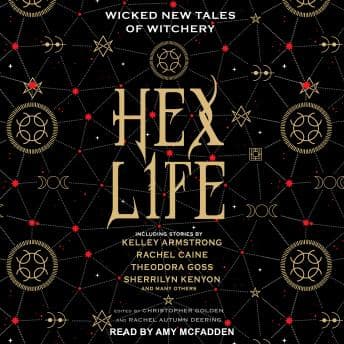
That's the energy of Hex Life. Uneven, weird, occasionally brilliant, sometimes frustrating. Like a potluck where three dishes are incredible, four are fine, and two make you wonder if someone brought store-bought and lied about it.
Some Witches Hit Different Than Others
Let me be real: anthology collections are inherently a gamble with audiobooks. You can't skip ahead to the next story as easily as flipping pages, so when a weak entry drags, you feel it. And some of these stories drag. The pacing across the full 10-plus hours is bumpy - you'll get a tight, atmospheric piece that builds dread perfectly, and then the next story meanders for twenty minutes before landing anywhere.
But the highs? The highs are worth it. The stories set in established universes - Kelley Armstrong's and Rachel Caine's contributions in particular - have this lived-in confidence that standalone entries sometimes lack. They know their worlds, they know their witches, and they don't waste time justifying the magic system. They just drop you in. Sherrilyn Kenyon's piece has that same energy, though it leans harder into romance than horror, which felt like a tonal shift from the surrounding stories.
What I appreciate about this collection's framing - "a woman's gotta eat" - is that it doesn't try to make every witch sympathetic. Some of these women are genuinely monstrous. Some are survivors. Some are both. As someone who's actually worked a code on a patient whose family was screaming that someone cursed them (this has happened more than once, I'm not joking), I appreciate fiction that doesn't sanitize the dark feminine. Not every woman with power uses it kindly. That's not anti-feminist. That's just honest. I kept thinking about how Dickens understood that same thing about women on the margins - Old Curiosity Shop has this uncomfortable undercurrent where the women who survive are the ones who've made peace with something dark in themselves.
Amy McFadden Carries the Weight (Mostly)
Single-narrator anthologies are brutal work. You're essentially doing a different audiobook every 30-45 minutes - new characters, new tone, new world. Amy McFadden handles it well, and her pacing adjusts story to story, which is harder than it sounds. Her voice has this warm, slightly conspiratorial quality that works perfectly for witch stories. Like she's telling you something she probably shouldn't.
Where she stumbles - and I noticed this during the stories with Southern-set characters - is the accent work. The Southern drawl she pulls out occasionally feels like it's sitting on top of her natural voice rather than coming from inside it. It's not terrible, but compared to how naturally she slides into other character voices, it's noticeable. Like when a travel nurse picks up local slang but the inflection is just slightly off. You know what I mean.
For the atmospheric, quieter horror pieces, though? She's excellent. There's one story - I won't spoil which - where a woman is slowly realizing what's happening to her, and McFadden's pacing slows down just enough that you feel the dread building in your own chest. That takes skill.
The Anthology Problem (And Why I Still Listened)
Here's my thing with horror anthologies versus, say, a Tana French novel or a solid standalone thriller: the emotional investment resets every story. You never get deep enough with any one character to feel gutted when things go wrong. And for me, driving home at 7 AM with my brain still buzzing from a twelve-hour shift, I want either full emotional investment or pure escapist fun. This collection sits somewhere in the middle - too literary for pure escapism, too short-form for deep connection.
But I kept listening. And I think that says something.
The feminist angle isn't heavy-handed, which I was worried about. It's woven into the DNA of the stories rather than announced. These are just women - old women, young women, angry women, hungry women - doing what they need to do. My mom would love this. She still tells stories about the mangkukulam in her province back home, and half these stories have that same energy: don't cross the woman who lives alone, because she knows things you don't.
Who Gets to Call Themselves a Witch
If you're a horror anthology fan, this is worth your time - but maybe on a subscription stream rather than a dedicated credit. The standout stories are genuinely good, the weak ones are forgettable but not painful, and McFadden's narration smooths over the rough transitions between authors' styles. Perfect for post-shift decompression when you want something that'll hold your attention without demanding you track a complex plot across fifteen hours.
If you need every story in a collection to be a banger, you'll be disappointed. That's just math. Seventeen authors, seventeen stories, they can't all be the best one.
Carlos asked why I was muttering about candy cottages while making breakfast. I told him it was a work thing. Close enough.