
"That's where the angels sang to me."
That line hit me somewhere around mile two of my morning jog through Cambridge, and I actually stopped running. Not because it was profound in some theological sense, but because — and this is the psychologist in me talking — it's such a perfectly constructed child utterance. Four-year-old Colton Burpo doesn't say "I perceived celestial beings." He says angels sang to him. And that simplicity is either the most genuine thing you'll ever hear, or the most effective rhetorical device Todd Burpo could've deployed. I spent the remaining five hours of this audiobook trying to figure out which one it is.
The Smallest Witness and the Biggest Claim
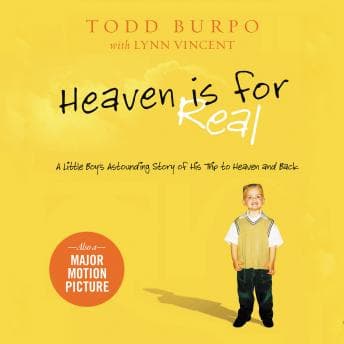
So here's what we're working with: Colton, age four, nearly dies during an emergency appendectomy. He recovers. And then, in fragments over months and years, he tells his parents he visited heaven. Met his great-grandfather. Sat on Jesus's lap. Encountered a miscarried sister he was never told about. Described what his father was doing — praying alone in a small hospital room — while Colton was on the operating table.
The protagonist exhibits classic features of what developmental psychologists call "source monitoring errors" — children frequently blend memory, imagination, and suggestion without even realizing it. But then Colton drops details he shouldn't have access to. The miscarried sibling. His father's exact location during surgery. And this is where the book gets genuinely interesting, not as theology, but as a case study in how families construct meaning from the inexplicable.
Todd Burpo, who narrates this story through co-writer Lynn Vincent, is a small-town Nebraska pastor and volunteer firefighter. He's not a sophisticated storyteller. The prose is plain, sometimes repetitive. But that plainness works in the book's favor, because it reads like testimony rather than performance. You feel Todd wrestling with his own belief system — a pastor who theoretically should accept his son's story without question but keeps testing it, keeps probing. I found myself asking: why does Todd need so much convincing if his entire life is built on faith? That tension is the real story here, and it's more psychologically honest than the book probably intends.
What Stu Gray Does With Sincerity
Stu Gray narrates with a steady, warm delivery that suits the material. He doesn't try to do a child's voice for Colton's quotes — thank god, because nothing tanks an audiobook faster than a grown man doing baby talk. Instead, he shifts into a slightly softer register when quoting Colton, which signals the change without making you cringe. The pacing is measured, maybe a touch slow for my taste (I bumped it to 1.25x around the halfway mark and it felt right). At five hours, it's a short commitment, and Gray doesn't pad the emotional moments with dramatic pauses the way some narrators would.
The bonus content about the movie adaptation is... fine? It's clearly packaged for fans who want behind-the-scenes material. If you're coming to this as a first-time listener weighing the claims, you can stop when the main narrative ends. The Q&As with filmmakers feel like DVD extras nobody asked for.
The Psychology of Believing Your Child
Here's what kept nagging me while I was chopping onions for dal that evening, still turning this over in my head. The research actually shows that children between ages three and five are in a period of intense "theory of mind" development — they're learning that other people have different knowledge, different perspectives. Colton describing his father's prayer posture from a location he couldn't have observed is either extraordinary or it's a detail he absorbed later and retrospectively inserted into his memory. Both explanations are fascinating. The book doesn't engage with this ambiguity at all, which frustrated me.
Todd treats each of Colton's revelations as evidence to be verified against Scripture, not as a psychological phenomenon to be understood. And look — I get it. He's a pastor writing for a faith audience. But the most compelling moments are when doubt flickers across his narrative. When Colton casually mentions the Battle of Armageddon — swords, horses, monsters — and Todd has to sit with the fact that his preschooler is describing apocalyptic warfare. The discomfort there is real and human and the book is better for not smoothing it over.
Psychologically, what doesn't entirely track is how selectively the family tests Colton's claims. They verify the details that align with their worldview and don't push on the ones that are harder to check. That's confirmation bias operating exactly as the literature predicts, and it doesn't make them dishonest — it makes them human. My therapist would have thoughts about this family's dynamic, specifically about a four-year-old carrying the weight of an entire community's spiritual validation.
Who Should Listen (and Who Should Prepare to Be Annoyed)
If you're a person of faith looking for comfort, this will land. If you're a skeptic, you'll spend five hours arguing with your earbuds. If you're like me — someone who studies why humans need these narratives, why we construct meaning from trauma, why a child's words carry more authority than an adult's in stories like these — it's a genuinely interesting listen, even when it frustrates you.
Skip it if unreliable narration (the literary kind, not Stu Gray) with no self-awareness drives you up a wall. Listen if you want a window into how one ordinary family processed an extraordinary claim and chose belief.
I didn't come away convinced heaven is real. But I came away convinced the Burpos believe it is, and that the psychology of that belief — the need, the hope, the terror of a sick child — is its own kind of truth worth sitting with. That same ache — the way belief and grief and desperation braid together into something that functions like truth — is what makes New Kind of Zeal worth picking up if this kind of psychological unraveling is your thing.