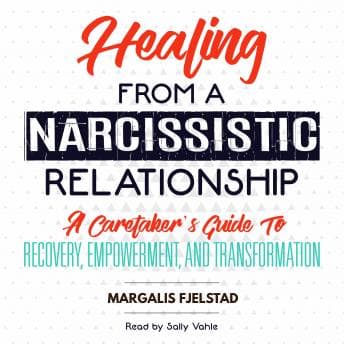

I don't usually review self-help books about relationships. That's not my lane. But a client recommended this after we spent three hours untangling why her startup's co-founder dynamics were so toxic. She said, "David, this book explained my business partner better than any management framework you've ever shown me."
So here we are.
The ROI Calculation on Emotional Recovery
Bottom line: Fjelstad delivers about 3 hours of genuinely useful content stretched across 8 hours of audiobook. My 2.0x speed couldn't fully save this one, but the core framework is solid. She breaks down the "caretaker" personality type—the person who gives and gives while their partner takes and takes—and honestly? I've seen this dynamic destroy more business partnerships than I can count.
The insight that made me pause my morning run: caretakers don't just enable narcissists in romantic relationships. They do it everywhere. In boardrooms. In family businesses. In startup founding teams. My parents did this with certain suppliers for years—always accommodating, always flexible, always getting squeezed on margins because they couldn't say no.
Fjelstad's framework for recognizing the pattern is worth the credit. Her process for breaking it? That's where things get uneven. Some chapters are laser-focused with actionable steps. Others feel like extended therapy sessions where she's processing alongside you rather than guiding you. I found myself skipping ahead more than once.
Sally Vahle's Voice in Your Head
Here's the thing about narrating self-help—you need to sound like a trusted advisor, not a lecture. Vahle mostly nails this. Her voice is calm without being condescending, clear without being clinical. Perfect for the subject matter.
But—and this is a real but—she can get monotonous during the longer explanatory sections. When Fjelstad is telling real stories from her practice, Vahle brings appropriate warmth. When the book shifts into more textbook-style content, the delivery flattens out. I noticed this most during my commute when I actually zoned out during a chapter on "emotional boundaries" and had to rewind. Not a great sign.
Production quality is clean. No weird audio issues, no distracting background noise. Basic but professional.
Who Actually Needs This
Let me be direct, because that's what you're here for.
This book is for you if: You've left a relationship (business or personal) where you gave everything and got nothing back, and you're still confused about how you ended up there. Or if you're currently in one and starting to recognize the pattern. Fjelstad is particularly good at explaining why caretakers stay—it's not stupidity, it's a deeply ingrained operating system that often starts in childhood.
Skip this if: You want concrete daily exercises and worksheets. This is more diagnosis than prescription. More "here's what happened to you" than "here's exactly what to do tomorrow." The book feels more like understanding your situation than solving it.
The business application: I've recommended this to three clients now—all founders dealing with toxic partner dynamics. The framework translates surprisingly well. Narcissistic patterns in intimate relationships look almost identical to narcissistic patterns in business partnerships. The power imbalances, the gaslighting, the way one person's needs always dominate. If you're running a company with someone who makes you feel crazy, this book might clarify things.
Jenny would say I'm being too clinical about an emotional topic. Jenny is right. But that's how my brain works—I see systems everywhere. And Fjelstad describes a system that, once you see it, you can't unsee.
The Concentrated Version
If you want efficiency: read chapters 1-3 for the diagnostic framework, skim 4-6 for the recovery process, and pay attention to chapter 7 on preventing future patterns. The real stories throughout are worth your time. The extended explanations less so.
For those who've been in truly damaging relationships, the slower pace might actually be a feature, not a bug. Sometimes you need to sit with ideas. I'm just not wired that way. I had the same impatience with Girl, Wash Your Face—lots of emotional processing, not enough tactical steps.
If you want something more action-oriented in this space, "Will I Ever Be Good Enough?" by Karyl McBride is worth comparing. Different angle, similar territory.
My parents never had language for the customers who drained them dry while demanding more. Fjelstad provides that language. That alone has value.









