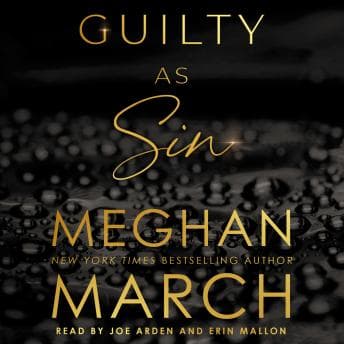

Look, can we talk about the fact that I, a man who assigns Wuthering Heights and lectures about the Brontës' revolutionary approach to passion, just spent five hours listening to a billionaire romance trilogy? While grading sophomore essays on symbolism in The Great Gatsby, no less.
Denise caught me smiling at my phone during the Riscoff family dinner scene and I had to pretend I was reading a funny student response. I wasn't. I was fully invested in whether Whitney Gable was going to tell Lincoln Riscoff exactly where he could shove his family's centuries-old grudge.
When the Feud Becomes the Foreplay
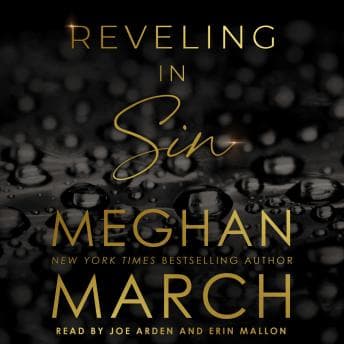
Here's the thing about Meghan March's Sin Trilogy—and this is book two, so fair warning if you haven't listened to the first—she's essentially writing Romeo and Juliet if Romeo was a controlling billionaire and Juliet had absolutely zero patience for his nonsense. The Gable-Riscoff feud gives the whole thing stakes beyond just "will they or won't they." They will. Obviously. But the HOW becomes genuinely interesting.
Whitney's arc in this one is what kept me listening past my usual 11 PM grading cutoff. She's done being the family scapegoat. Done being judged by her last name. And March writes that particular frustration—being convicted without evidence, as the description puts it—with enough specificity that it lands. My students would hate that I'm saying this about a romance novel. I love it.
The pacing dragged a bit in the middle. I'll be honest. There's a section where the push-pull between Lincoln and Whitney starts feeling repetitive—he's commanding, she's defiant, rinse, repeat. I caught myself zoning out during a faculty meeting (sorry again, Principal Martinez) and realized I'd missed about ten minutes of the audiobook. Went back and... didn't feel like I'd missed much. That's a problem.
But then the last third picks up considerably. When the family drama escalates and the consequences get real, suddenly I'm walking an extra lap around the lakefront because I need to know how this cliffhanger resolves.
Mallon and Arden Earn Their Paychecks
The dual narration is what elevates this from beach read to genuinely good audiobook experience. Erin Mallon does Whitney's chapters with this undercurrent of barely-contained frustration that works beautifully. She's not just reading the dialogue—she's performing the subtext. When Whitney says something polite to Lincoln's face while clearly wanting to strangle him, Mallon nails that tension.
Joe Arden's Lincoln is... well, he's doing the commanding alpha billionaire voice, and he does it well. I couldn't find much about his specific approach to this character versus his other work, but based on this performance, he understands that Lincoln needs to be more than just brooding. There are moments of genuine vulnerability that Arden delivers without making the character feel inconsistent.
The chemistry between them—and I mean the narrators, not just the characters—is what makes the romance scenes work. (Yes, there are spicy scenes. No, I will not be discussing them in detail. My students might find this review someday and I need plausible deniability.)
The Classics Teacher's Guilty Confession
So why did I listen to this? Honestly? Because sometimes you need a palate cleanser between Middlemarch and whatever 19th-century doorstop I'm tackling next. And because the best romance—whether it's Austen or contemporary billionaire fiction—understands something fundamental about human nature: we want connection, we fear vulnerability, and we're terrible at admitting both.
March isn't Austen. Let's be clear. Though if you want Austen done right in audio form, Pride and Prejudice remains the gold standard for romance with actual wit. But she's doing something with the forbidden love trope that feels earned rather than manufactured. The family feud isn't just window dressing—it actually complicates things in ways that matter. Identicals plays with similar identity and family tension themes, though in a completely different direction.
Who should listen? If you loved the first book in the trilogy, this is a solid continuation. If you're into enemies-to-lovers with actual stakes, this delivers. If you need something engaging but not demanding for your commute or your grading sessions, this works.
Who should skip? If you need resolution, wait until book three is out. This ends on a cliffhanger that had me immediately checking when the next one releases. Also, if you're not into the billionaire romance subgenre, this won't convert you.
At five hours, it's a quick listen. I finished it in two days of grading and one long lakefront walk. Worth pausing the faculty meeting for? Absolutely. Worth admitting to my AP Lit class? Never.