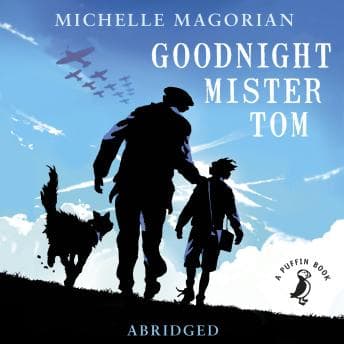

Look, I need to rant about something before we get into this. Why - WHY - do publishers still release abridged audiobooks in 2024? We have unlimited cloud storage. We have phones with more memory than the computers that landed us on the moon. And yet here I am, listening to what is apparently a trimmed-down version of a Guardian Award-winning children's classic. It's like ordering a pizza and having someone eat two slices before handing it to you. "Here's most of your food." Thanks. I hate it.
Okay. Rant over. (Mostly.)
So here's the thing about Goodnight Mister Tom - I picked this up because my mom kept asking what audiobooks would be good for my nieces on their road trip to Florida. And I'm sitting here thinking, okay, I mostly listen to 40-hour Sanderson epics and LitRPG progression fantasies, but sure, let me research some kids' stuff. This kept coming up. Guardian Award. Classic. Beloved. Fine, I'll give it a listen myself first because I'm not sending my nieces into something I haven't vetted.
Three and a half hours later, I'm sitting in my apartment surrounded by board games and thesis guilt, trying not to get emotional about a fictional old man and an evacuated child in WWII Britain. This was NOT the plan.
The Emotional Sucker Punch I Didn't See Coming
Willie Beech is a sad, deprived kid sent to the countryside as bombs start falling on London. He ends up with Tom Oakley, this gruff old widower who has zero interest in taking care of a child. Classic reluctant guardian setup, right? I've seen this in a hundred fantasy novels. The grumpy mentor who secretly has a heart of gold.
But Magorian doesn't play it for easy sentimentality. Willie's been through stuff - and I mean stuff - that the book doesn't shy away from. There's child abuse in his backstory. Real, ugly, painful trauma. And watching him slowly learn that not every adult is going to hurt him? That's where the book gets you. It's not manipulative. It's just... honest about how damaged kids heal. Slowly. With setbacks.
My D&D group would probably roll their eyes at me getting invested in this, but whatever. Good character development is good character development, whether it's a traumatized WWII evacuee or a Stormlight Knight Radiant. Even American Gods builds its emotional core on broken people learning to trust again. (Yes, I'm comparing this to Sanderson. I contain multitudes.)
Patrick Malahide Knows What He's Doing
I couldn't find a ton of background on Malahide as a narrator online, but based on this performance? The man understands restraint. He's not doing theatrical voices for every character or chewing scenery. It's warm. Clear. He lets the emotion come through the story instead of forcing it.
The pacing works beautifully for family listening - my test run confirmed this would be perfect for a car trip. Not so slow that kids zone out, not so fast that the emotional beats get lost. One listener mentioned their 5-year-old and 9-year-old were "spellbound," and honestly? I believe it. There's something about Malahide's delivery that holds attention without demanding it.
That said - and here's my gripe again - this is the abridged version. Some small moments are apparently missing. I haven't read the full book, so I can't tell you exactly what's gone, but knowing something's been cut bothers me on principle. It's like someone edited my character sheet without asking.
The Gut-Punch Moments
Without spoiling too much: there's a point where Willie gets called back to London. Back to his mother. And everything you've watched him build - the safety, the trust, the tiny fragile happiness - gets threatened.
I was doing dishes when this part hit. Had to stop and just... stand there. At the sink. Like an idiot. Because a children's book about WWII got me.
The book handles heavy themes with care but doesn't sanitize them. Parents should know going in: there's child abuse, emotional trauma, and WWII-related violence. It's age-appropriate in its treatment, but it's not a fluffy bedtime story. This is the kind of book that teaches kids about hard things while also showing them that healing is possible. That good people exist. That grumpy old men can learn to love again.
(Don't tell my advisor I spent three hours on this instead of my thesis. Actually, don't tell anyone. This is between us.)
Who's This For (And Who Should Skip)
Perfect for: families with kids ready for heavier themes, road trips where you want everyone engaged, and apparently thesis-procrastinating nerds who need a break from epic fantasy. Skip it if: you can't handle child abuse themes even handled carefully, or the very concept of abridged audiobooks makes you too angry to enjoy anything. (I barely made it through myself.)
Rolling a Nat 20 on Feelings
Honestly? Yeah, I'd listen again. Maybe with my nieces when I visit. It's short enough for a road trip, emotional enough to matter, and Malahide's narration makes it accessible for mixed-age listening.
But I'd also recommend hunting down the unabridged version if it exists, because I'm still salty about missing content. The progression of Willie's healing deserves every scene Magorian wrote.
For a 3.5-hour listen, this packs a serious emotional punch. Not my usual genre, but sometimes you need a break from magic systems and stat blocks to remember that simple stories about broken people learning to trust can hit just as hard as any epic fantasy.