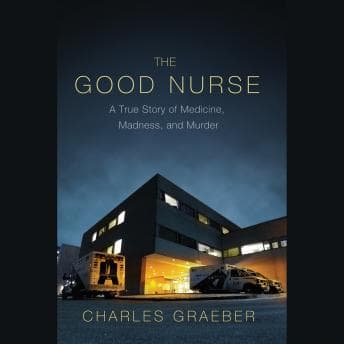

How do you listen to a book about someone who killed potentially 400 people and still find yourself thinking about humanity, about the people who chose to do the right thing when every system around them was designed to look away?
I wasn't expecting to ugly-cry during a true crime audiobook. Like, at all. But here I am, designing a logo for a local bakery at 2 AM, tears streaming down my face because of Amy—this overworked single mom nurse who had to choose between protecting her friend and stopping a monster. Frida jumped on my desk and knocked over my stylus. Even she knew something was happening.
The Voice in My Head for Eleven Hours
Okay, so Will Collyer. Let me be honest—his narration is... fine? It's clean and clear and he doesn't get in the way of the story, which honestly might be exactly what this book needs. But I'm someone who lives for narrator performances that make me FEEL things, and Collyer's approach is more documentary than emotional. He does these subtle voice shifts for different characters during dialogue that help you track who's talking, which I appreciated during the tenser interrogation scenes.
But here's the thing—there were moments where the content was so devastating, so infuriating, and the narration just... stayed level. Like, we're talking about hospitals literally covering up suspicious deaths to protect their liability, and the delivery is almost clinical. Some listeners apparently found his voice annoying, and I get it—there's this slightly flat quality that took me a few chapters to adjust to. He also apparently mispronounces a drug repeatedly, which I didn't catch (not a medical person, clearly), but I can imagine that would drive nurses and doctors absolutely bonkers.
I listened at my usual 1.0x because I was savoring the investigative details, but honestly? This might be one where 1.25x wouldn't hurt.
Where My Heart Actually Broke
Look, I came into this expecting a serial killer story. What I got was a devastating indictment of how broken our healthcare system is. Charles Graeber spent nearly ten years on this, with jailhouse interviews, wiretaps, police records—the receipts are THERE. And what emerges isn't just the story of Charlie Cullen, this man who moved from hospital to hospital leaving death behind him. It's the story of how nine different hospitals knew something was wrong and chose to protect themselves instead of patients.
Abuela spent her last months in and out of hospitals. She trusted those nurses. She loved them. And listening to this book, thinking about how the system is designed to prioritize liability over lives... I had to pause. More than once. Not because of the violence (though there are moments that are genuinely disturbing), but because of the institutional failure. The way administrators would let Cullen resign quietly rather than report him, knowing he'd just go kill somewhere else.
The heroes here aren't the detectives, though they're good. The heroes are the nurses and staff who risked their jobs—their livelihoods—to finally stop him. Amy's story gutted me. This is a woman who considered Charlie Cullen a friend, who was barely keeping her head above water as a single mom, and she had to make an impossible choice.
The Vibes Are... Complicated
This isn't a rainy Sunday book. This isn't cozy. This is a "stare at the ceiling at 3 AM questioning everything" book. That same unsettling, can't-look-away energy runs through Odd Hours, though in a completely different context. Graeber's writing is accessible but detailed—he's a journalist, and it shows in the best way. He's not trying to be literary; he's trying to make you understand something horrifying and systemic.
I kept thinking about how this story would have played differently in my abuela's generation, in her world. She would have been horrified, yes. But she also would have understood something about institutions protecting themselves, about little people being asked to be brave when the powerful won't be. She saw that her whole life.
Who Needs This (And Who Should Maybe Skip)
If you're a true crime fan who wants more than just murder details—if you want to understand HOW something like this happens, how systems fail, how ordinary people become heroes—this is essential. Healthcare workers might find it especially cathartic, or especially enraging, or both. But if you're looking for something you can half-listen to while doing other things, or if you have a loved one currently in hospital care, maybe save this one for later. Just don't listen while you're trying to do creative work. My bakery logo turned out way darker than intended.
My Heart, Honestly
Would I listen again? Probably not. But not because it's bad—because it's the kind of book that changes how you see something forever. I'll never look at hospital administration the same way. I'll never take for granted the nurses who actually give a damn.
The narration is serviceable. The story is devastating. My heart. MY HEART.