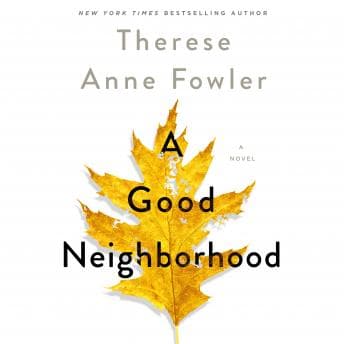

Everyone told me this book was a one-sitting read. Jodi Picoult said it. Multiple reviewers said it. And I'm sitting here like — cool, cool, when exactly was I supposed to find ten uninterrupted hours? Between the goldfish cracker negotiations and the ongoing battle over screen time? So instead I listened to A Good Neighborhood over five days, in stolen chunks, and honestly? It hit harder that way. Because this book is about how ordinary life — the daily proximity of neighbors, the small decisions that snowball — can turn devastating. And experiencing it in pieces, the way real life actually unfolds, made the slow creep of dread even worse.
I did not ugly-cry at school pickup. I ugly-cried in my car in the garage. Different.
The Oak Tree Is a Character and I'm Not Being Cute About It
Valerie Alston-Holt is a forestry professor, and Fowler uses that oak tree — this massive, historic thing rooted in Valerie's yard — as the spine of the whole story. It's not a metaphor the book waves in your face. It's more like... the tree is the quiet witness to everything that goes wrong between these two families. When the Whitmans move in next door and start bulldozing the lot to build their McMansion, that tree becomes the first battle line. And you feel it. The entitlement of Brad Whitman — this evangelical-adjacent new-money guy who sees the tree as an obstacle to his sightlines — versus Valerie, who understands what it means to protect something that was there long before you showed up.
What surprised me is how Fowler structures the narration. There's this collective "we" voice — the neighborhood itself telling the story, like a Greek chorus that's watched the whole thing unfold and is recounting it with grief. It took me a chapter or two to settle into it, but once I did, it made the inevitability of the tragedy feel communal. Like everyone saw it coming and nobody stopped it.
Ella Turenne Carries This Book on Her Back
Solo narrator for a story with this many perspectives and this much emotional weight? That's a big ask. Turenne handles it with a kind of quiet steadiness that works perfectly for the material. She doesn't do big dramatic shifts between characters — it's more subtle. Valerie sounds grounded and tired in the way that single moms who've been fighting institutional battles for years sound tired. (I recognized that voice. Different battles, same exhaustion.) Brad Whitman has this particular quality — confident, a little slick, the kind of guy who calls himself a good person so often you start wondering who he's trying to convince.
The teenagers — Xavier and Juniper — Turenne plays them with genuine tenderness. Their romance is sweet and fragile and you can hear in Turenne's delivery that she knows what's coming for them even when they don't. It's heartbreaking.
No sound effects, no music, no production bells and whistles. Just Turenne and the story. Honestly that's all it needed. Though if you want to see what happens when a narrator gets buried under too much atmospheric production, I reviewed Winter Witch: A Novel not long ago and kept wishing someone had made the same choice — strip it back and trust the voice.
This Is Not a Comfort Read (But That's Not Always What You Need)
I need to be straight with you. This book deals with race, class, sexual violence, and the particular brand of destruction that happens when white wealth decides it knows best. The content warnings are real. There were moments during Sophie's nap time when I had to pause not because she woke up but because I needed a minute.
Fowler — who has a background in sociology and cultural anthropology, and it shows — doesn't let anyone off easy. The Whitmans aren't cartoon villains. Brad genuinely believes he's a good man. His wife Julia is trapped in her own way. And that's what makes it so infuriating, because you can see exactly how people like them cause harm while maintaining total moral certainty. I kept thinking about neighbors I've known. People at the school. The HOA board. That specific combination of niceness and obliviousness.
Compared to something like Celeste Ng's Little Fires Everywhere — which covers some similar territory of neighborhood tensions and race and class — Fowler's book is angrier. Less literary puzzle, more gut punch. Ng gives you ambiguity to sit with; Fowler gives you a verdict.
The ending didn't surprise me, which I think is intentional. The Greek chorus structure means you know from early on that something terrible happens. The power is in watching HOW it happens. Every small choice, every assumption, every moment someone could've intervened and didn't.
Who This Is For (and Who Should Brace Themselves)
If you want a breezy listen while folding laundry — this ain't it. This is a car-time-with-no-kids book. A focused listening book. It survived my pauses fine — the structure is clear enough that coming back after interruptions isn't confusing — but the subject matter deserves your attention.
Perfect for book clubs (if I ever have time for book club again) because there's SO much to argue about. Perfect for anyone who read Jodi Picoult's Small Great Things and wanted something with sharper teeth. Not perfect for the week you need a guaranteed happy ending and a hug.
Made me cry in my car. Worth it though. But I sat there an extra ten minutes before going inside, and it wasn't for the silence this time.