
Look, I'm just gonna say it: I did not expect a Duck Dynasty guy to make me think about my abuela.
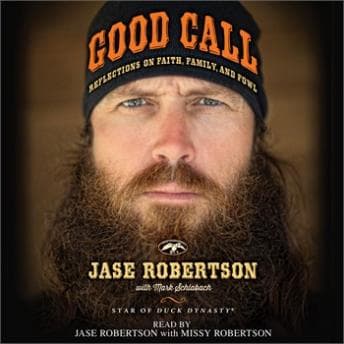
I was finishing up a logo design around 2 AM, cats sprawled across my desk like they pay rent, and I needed something low-stakes to fill the quiet. Jase Robertson talking about hunting and Jesus seemed like background noise material. Safe. Unchallenging. Maybe even a little ridiculous.
I was wrong. And I'm still kind of annoyed about it.
When the Camo Guy Gets Real About His Drunk Dad
Here's what got me: Jase doesn't sugarcoat his childhood. His father Phil was a violent, unpredictable alcoholic during Jase's early years. And when Jase talks about those memories—the chaos, the fear, the way a kid learns to read a room before they learn to read books—his voice drops into something raw. That Southern drawl, which I expected to find grating, actually carries this weight. It's not polished. It's not practiced. It's a man sitting with hard memories and just... telling you. That same unflinching honesty about growing up in chaos runs through Tweak: Growing Up on Methamphetamines, though Nic Sheff's addiction memoir goes to much darker places.
The chapter where he describes forgiving Phil? I had to pause. Not because it was sad (though it was), but because it reminded me of all the complicated forgiveness my abuela carried for my grandfather, who she loved fiercely despite everything. Jase talks about choosing to see his father's transformation as proof that people can change, and whether or not you share his faith, there's something achingly human in that choice.
Missy's Voice is the Secret Weapon
Missy Robertson reads her portions, and honestly? She's the emotional anchor. When Jase tells the story of their first date—which was literally a scheme to make another girl jealous (the audacity, sir)—Missy's delivery has this warmth that says "I've forgiven him for being an idiot teenager." Their dynamic is sweet without being saccharine. You can hear decades of marriage in the way they hand the story back and forth.
The production is simple—no sound effects, no dramatic music cues. Just two people talking. And for a book structured around "lessons from the duck blind," that intimacy works. It feels like sitting on a porch somewhere in Louisiana, humidity thick as soup, listening to family stories.
The Faith Stuff (Yes, There's a Lot)
I'm gonna be honest: I'm not the target audience for Christian memoir. My spirituality is more candles-and-crystals than church-on-Sunday. But Jase doesn't preach at you. He shares what he believes and why, and there's a gentleness to it. The chapter on hunting in heaven—where he talks about our responsibility to care for the land—actually felt more environmental than evangelical. It reminded me why I loved Big Magic: Creative Living Beyond Fear—that same gentle approach to sharing what you believe without demanding everyone else believe it too.
That said, if you're allergic to Bible verses and faith-based reflection, this isn't your book. It's baked into every chapter. Not in a pushy way, but in a "this is who I am" way. I respected it even when I didn't share it.
Who Should Hit Play (And Who Should Keep Scrolling)
If you loved Duck Dynasty: obviously yes. But also? If you've ever had a complicated relationship with a parent who wasn't always good to you. If you've ever wondered whether forgiveness is weakness or strength. If you want something genuine in a world of polished, ghost-written celebrity memoirs.
Skip if: you need plot, you can't handle religious content, or you're looking for something with narrative tension. This is reflective, not dramatic. It meanders like a conversation, which is either charming or frustrating depending on your patience.
At six hours, it's a quick listen. I finished it across three late-night design sessions, and by the end I was genuinely fond of Jase Robertson—a sentence I never expected to write.
Abuela Would've Had Opinions
She would've loved the family loyalty parts. She would've raised an eyebrow at the hunting obsession. She would've nodded approvingly at the faith stuff and then asked me why I don't go to church anymore.
This book felt like someone else's family album—not mine, not quite my world—but human enough that I could find my own reflections in it. And sometimes that's enough.
My heart didn't break. But it softened. That counts for something.