
I have a confession. I've been teaching literature for twenty years, and I've spent a shameful amount of that time avoiding the hard conversations. Not the ones about symbolism in The Great Gatsby or whether Holden Caulfield is a whiner. The hard ones. The ones where a student asks why the church their family attends says their existence is sinful, and I mumble something about different interpretations and change the subject.
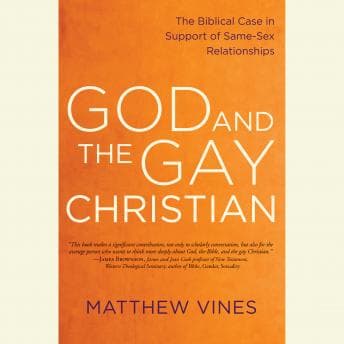
Matthew Vines wrote the book I should have read a decade ago.
When the Scholar Is Also the Subject
Here's what makes this audiobook work in a way the print version probably doesn't: Vines reads his own work. And before you roll your eyes—I know, I know, author-narrated books are often a disaster—this one isn't. His voice has this quality I can only describe as earnest without being naive. When he walks through the Greek translation of arsenokoitai in 1 Corinthians, you're not getting a performance. You're getting a man who clearly spent years wrestling with these texts because his life depended on the answer.
The pacing is deliberate. Almost too deliberate at points—there were moments during my 11 PM grading sessions where I had to rewind because the theological density required more attention than I could give while marking comma splices. But that's not a flaw. The prose deserves to be savored. Vines isn't trying to win a debate in a soundbite. He's building an argument the way a good essayist does: brick by brick, with the mortar of careful scholarship.
One listener complaint I came across wished for "more of a personal side." I understand the impulse, but I think they're missing what Vines actually accomplishes. The personal is there—it's just woven into the exegesis rather than separated from it. When he discusses whether celibacy can be a calling when it's mandated rather than chosen, you feel the weight of that question. That question about love—what it means, how we communicate it—surfaces in The 5 Love Languages, though from an entirely different angle. It's not abstract theology. It's a young man asking if he's allowed to hope for love.
The Sodom Problem (And Why We've Been Reading It Wrong)
This reminds me of what I tell my AP students about context: you cannot understand a text if you rip it from its historical moment. Vines does exactly what good literary analysis demands—he asks what these passages meant to their original audiences before asking what they mean to us.
The Sodom and Gomorrah chapter is particularly sharp. If you grew up in any kind of religious tradition, you've probably heard this story weaponized against gay people approximately ten thousand times. Vines methodically demonstrates that the ancient understanding of this passage was about hospitality violations and violence, not consensual same-sex relationships. The prophet Ezekiel, he points out, explicitly identifies Sodom's sin as arrogance and neglect of the poor. Not a word about sexuality.
Is this interpretation universally accepted? No. Vines acknowledges the counterarguments and engages with them rather than pretending they don't exist. That intellectual honesty is refreshing. He's not writing polemic dressed up as scholarship—he's actually doing the scholarly work.
What Paul Actually Meant (Maybe)
The Romans 1 analysis is where things get genuinely complex. Vines argues that Paul was condemning exploitative practices common in the ancient world—pederasty, prostitution, excess—rather than loving, committed same-sex partnerships, which simply weren't a recognized social category at the time.
You can disagree with this reading. Plenty of scholars do. But you can't dismiss it as wishful thinking or theological gymnastics. Vines has done his homework, and he presents it clearly enough that even listeners without seminary training can follow the argument.
I found myself pausing frequently—not because I was lost, but because I wanted to think. That's the mark of good theological writing. It invites you into the conversation rather than lecturing at you.
Who Needs This in Their Queue
Let me be direct: if you've already decided this question is settled and Vines is simply wrong, this book won't change your mind. He's not writing for you. Skip it.
But if you're a parent trying to reconcile your faith with your child's identity? A pastor wondering how to shepherd LGBTQ+ members of your congregation? A gay Christian wondering if you have to choose between your faith and your future? This is essential listening.
My students would probably find it too academic. I love it. At just under six hours, it's a focused, serious engagement with texts that have caused immeasurable pain when misunderstood. Vines offers a different reading—one rooted in the same Scripture, the same tradition, the same faith.
Class Dismissed
I finished this walking the lakefront with Denise last Sunday. She asked what I was listening to, and I tried to summarize it. Ended up talking for twenty minutes about first-century Roman sexuality and the translation history of obscure Greek words. She was patient. She usually is.
What I couldn't quite articulate then, I'll try now: this book matters because it takes the Bible seriously. Not as a weapon. Not as a relic. As a living text that demands our best thinking and deepest humility. Whether you end up agreeing with Vines or not, you'll understand the conversation better for having listened.
And maybe next time a student asks me that hard question, I'll have something better to say than mumbling about different interpretations.