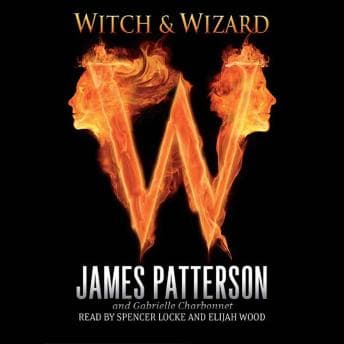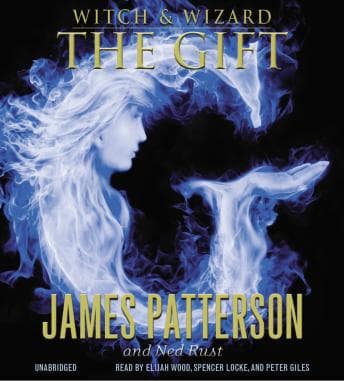

What happens when you hand Frodo Baggins a YA dystopia and tell him to run with it?
I'm being a little unfair. Elijah Wood is way more than Frodo at this point, but come on — hearing him narrate a teenage wizard fighting a totalitarian regime while I'm debugging procedural terrain generation at 1 AM? My brain kept doing this weird crossover thing where Whit Allgood was secretly a hobbit. (I read this instead of writing my thesis. Obviously.)
Elijah Wood As Your Narrator Is Either A Flex Or A Gimmick — Here It's Mostly A Flex
Look, the multi-narrator setup here is smart for what it is. Whit and Wisty alternate narrating chapters, so Wood handles Whit's perspective and Spencer Locke takes Wisty. Peter Giles picks up the third-person connective tissue. It works the way a well-run D&D session works — each player owns their character's voice, and the DM handles everything else.
Wood brings this earnest, slightly breathless energy to Whit that fits a teenager who's in way over his head. He's not doing Range-with-a-capital-R the way Steven Pacey would (Steven Pacey walked so other narrators could run, always and forever), but he commits. There's a genuine urgency when Whit's navigating Shadowland that made me stop pretending to work and actually just... listen. Locke matches him well as Wisty — she's got this defiant edge that sells the "rebellious magic girl who doesn't fully understand her own power" thing without tipping into Disney Channel territory.
The consistency from book one matters here. If you listened to Witch & Wizard, these are the same voices, same energy. Your brain doesn't have to recalibrate. That's underrated in series audiobooks.
The World-Building Is Diet Sanderson — And That's Fine For What This Is
Okay, I need to calibrate expectations here. This is James Patterson. The man writes books the way my D&D group burns through combat encounters — fast, punchy, next scene, go go go. You're not getting Sanderson-level world-building. You're not getting detailed explanations of how Wisty's fire magic interfaces with the metaphysics of Overworld versus Shadowland. Patterson gives you just enough to keep moving.
And honestly? At under 7 hours, that pacing kind of works. The whole Overworld/Shadowland dual-realm structure is giving me Feywild/Shadowfell vibes from D&D, which I'm into conceptually even if the book doesn't explore it as deeply as I'd want. The Gift — Wisty's mysterious special power that the villain needs — stays vague for a frustratingly long time, but when the book finally circles back to that opening prologue from book one (the execution scene), it lands. The payoff of a setup that's been hanging over two books is legitimately satisfying.
The New Order as a villain faction is pretty standard dystopian fare — authoritarian regime, suppress the youth, burn the books (literally, which as someone whose apartment is 40% books made me physically uncomfortable). The One as the big bad is more menacing in concept than execution. He needs Wisty for reasons that feel a bit hand-wavy even by YA standards.
Who's Rolling Initiative On This One
This is solidly a YA listen. If you've got a kid who's aging out of Percy Jackson and wants something with a bit more edge — there's some violence and the stakes feel real — this fits that gap. Hidden Kingdom occupies a similar sweet spot — that middle-grade-to-YA bridge where the world gets darker but the core is still fundamentally about kids figuring out what they're capable of. My D&D group would love the magic concepts even if they'd nitpick the system. The progression is satisfying in a "leveling up without stat blocks" kind of way (and yes, I wish there were stat blocks, but Patterson isn't writing LitRPG and I need to accept that).
If you're an adult fantasy listener looking for depth? This probably isn't your next credit. The chapters are Patterson-short — some are barely a page — and the prose is functional rather than beautiful. If you don't like info-dumps, this isn't for you (but you're wrong) — except Patterson actually has the opposite problem. I wanted MORE information about how these magic systems work and got action scenes instead.
The Booktrack edition apparently has a musical soundtrack layered in, which I didn't listen to because I'm a purist and also because I was already listening to this over my IDE's error messages. But listeners who tried it say the score matches the pacing well, so if you're into that immersive audio experience, it exists.
Worth A Spell Slot? Eh, A Low-Level One
At 6 hours 57 minutes, this is a quick listen — barely longer than a single Stormlight Archive sitting for me. The narrator trio elevates material that's honestly pretty standard YA dystopia fare. Wood and Locke carry it. The execution scene payoff from book one's prologue genuinely got me, even if I saw pieces of it coming.
But I can't pretend this scratched the same itch as a Sanderson or an Abercrombie. It's a fun, fast, well-narrated YA adventure that knows exactly what it is. Sometimes that's enough. Especially at 1 AM when your thesis advisor's last email is still burning a hole in your inbox.