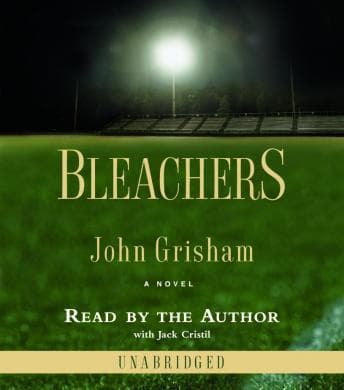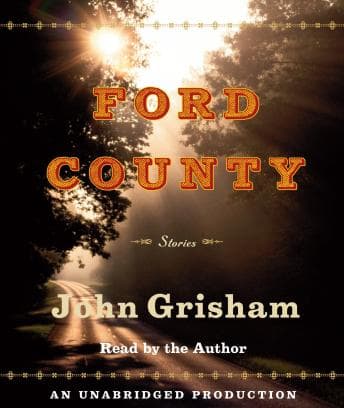

John Grisham narrating his own short stories is a fascinating psychological experiment. Not the stories themselves—though they're good—but the act of listening to an author read his own work. You're essentially getting unfiltered access to how he hears these characters in his head. And here's the thing: it's not what you'd expect.
I finished this during a week of early morning runs through Cambridge, and I kept finding myself slowing down. Not because I was tired. Because I was trying to figure out why Grisham's narration was working on me despite every technical flaw I could identify.
The Psychology of Author-as-Narrator
Let me be direct: Grisham is not a trained voice actor. His delivery is understated to the point of flatness. There are pauses that feel... off. He doesn't do distinct voices for different characters. My students would probably call it "monotone" and move on.
But here's what they'd miss—and what I almost missed during the first story about the Graney family's death row visit. Grisham's reading style creates this weird intimacy. It's like your uncle telling you stories on a porch in Mississippi. He's not performing. He's just... telling you. And for these particular stories, set in his fictional Ford County, that authenticity matters more than theatrical range.
The research actually shows that we process familiar voices differently than unfamiliar ones. Listening to an author narrate their own work activates something closer to conversation than performance. Your brain treats it as more personal. Whether that's a feature or a bug depends entirely on what you're looking for.
Seven Case Studies in Human Weakness
What makes this collection compelling from a psychological perspective is how each story examines a different flavor of desperation. You've got:
- A family's complicated grief and denial around a death row inmate
- A lawyer's midlife crisis that spirals into something darker
- A quiet man's revenge plot against the hustler who stole his wife
- Three good ol' boys whose "simple" errand becomes a disaster (this one's darkly hilarious, honestly)
- An elderly care home stalker—yes, you read that right
- A violent confrontation born from small-town memory
- A dying man finding unexpected connection in the last place he'd expect
Each protagonist exhibits classic patterns of rationalization. They're not evil people. They're people making terrible decisions and telling themselves stories about why it's okay. I saw that same psychological precision in Kill Alex Cross, where Patterson dissects a killer's mind with surgical clarity. Grisham understands human nature in a way that feels almost clinical sometimes. The lawyer Mack Stafford, for instance—his internal justifications for abandoning his entire life are textbook cognitive dissonance. You watch him construct his escape narrative in real time.
The final story, about the gay son returning home to die of AIDS, is the one that stuck with me longest. It's set in the 1980s, and Grisham captures the fear and ignorance of that era without being preachy about it. That kind of restrained emotional depth—where the author trusts you to feel it without manipulation—reminded me of Terminal List, which handles grief and isolation with similar understatement. The protagonist finds connection in Lowtown, the Black section of Clanton, and there's something psychologically true about how outsiders recognize each other.
Where the Drawl Does the Work
Grisham's Southern drawl gives these stories a certain air of small-town myth. That's not my observation—I found that in the listener reviews—but I agree with it completely. When he's reading dialogue from characters who grew up in Ford County, there's no translation happening. No actor interpreting what "Southern" should sound like. It just is.
Does he give a dynamic performance with distinct voices? No. Some listeners found this so frustrating they stopped listening, and I get it. If you're used to theatrical range, this will feel like a ninth-grader reading aloud. (Someone actually said that in a review. Harsh but not entirely unfair.)
But I found myself asking: why does this flat delivery actually work for me? I think it's because the stories themselves are so character-driven that my brain filled in the gaps. Grisham's writing does the heavy lifting. The narration just stays out of the way.
Who Gets Ford County (And Who Won't)
For Grisham fans who want to hear how he imagines his own world: absolutely worth your time. For anyone interested in small-town Southern dynamics and the psychology of desperation: yes. For listeners who need theatrical narration to stay engaged: maybe read the print version instead.
The Professor's Final Note
This won an AudioFile Earphones Award and was an Audies finalist, which surprised me given the mixed reception. But awards committees sometimes recognize things casual listeners don't—like how a technically "flawed" performance can still be the right choice for specific material.
I'm giving this a 3.5. The stories themselves deserve higher, but the narration is genuinely divisive. Sample first if you're on the fence. And maybe listen while doing something physical—running, cooking, cleaning. The understated delivery works better when you're not sitting there analyzing it.
(Don't tell my students I said that. I'm supposed to encourage analysis.)