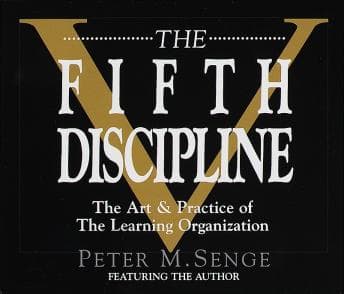

So I'm on the 6:47 AM Caltrain, half-asleep with my coffee cooling in my hand, and Peter Senge is in my ears talking about mental models. And I'm thinking—wait, this is basically systems thinking applied to why my team's retros keep failing. That woke me up faster than the espresso.
Bottom Line: Worth your commute if you're in any kind of leadership role. The concepts are genuinely useful, but the delivery is... let's call it "professorial."
When the Author Is the Narrator (Mixed Bag Alert)
Here's the thing about author-narrated business books: you get authenticity, but you don't always get performance. Senge clearly knows his material—I mean, obviously, he wrote the foundational text on organizational learning. His enthusiasm comes through, and there's something nice about hearing these ideas in the voice of the person who developed them.
But honestly? It can get a bit flat. I caught myself zoning out during some of the more technical sections, and I wasn't even that tired. The pacing drags in the middle—there's this whole stretch about systems archetypes that felt like sitting through a particularly dense lecture. I bumped it to 1.5x and that helped a lot. Would probably go 1.75x on a re-listen.
No character differentiation to speak of, but that's kind of expected for this type of book. It's not like he's doing voices for case study participants. It's Senge explaining Senge's ideas. You get what you get.
The Five Disciplines (Why This Still Matters)
Okay, so the content itself? Pretty solid for a book that came out in the 90s. The "five disciplines" framework—personal mastery, mental models, shared vision, team learning, and systems thinking—still holds up. I've been at my company for four years now and I can point to exactly where we're failing on at least three of these.
The systems thinking stuff is where it really clicked for me. Senge talks about how organizations create their own problems through feedback loops they can't see. This is basically debugging distributed systems but for humans. (Yes, I make everything about work. Kevin says it's a problem.)
At 4 hours 19 minutes, it's a reasonable commitment. I finished it in about four commutes, which felt right. Not so long that I forgot what happened at the beginning, not so short that it felt like it could've been a blog post. Though—and I say this with love—some of the case studies could've been tightened up.
Who This Is (and Isn't) For
Perfect for: train, maybe a long drive. Skip for: gym (too conceptual) or anything where you need to zone out.
The ROI on this audiobook depends entirely on where you are in your career. If you're an IC who just wants to code and go home? Probably not for you. If you're a tech lead, engineering manager, or anyone who's ever wondered why your organization keeps making the same mistakes? Yeah, this is worth your time.
I'll be honest—I found myself taking mental notes for a doc I want to write about our team's processes. That's the mark of a useful business book for me. Not "wow, what beautiful prose" but "okay, I can actually apply this on Monday."
The production quality is clean, no weird audio issues. No bonus content, which is fine—I don't need a workbook, I need ideas that stick. And these do stick, even if the delivery is a bit dry.
If you've already read "The Lean Startup" and Daniel Pink's stuff, this fits nicely into that ecosystem. It's older, more academic, but it's the foundation a lot of those other books are built on. Sometimes you gotta read the source material, you know? Though if you want something more tactical about building better habits, Automatic Millionaire takes a simpler, more prescriptive approach.
Would I listen again? Probably not cover to cover, but I could see revisiting specific sections. The systems archetypes chapter, once I got through the initial drag, actually had some frameworks I want to think about more.
Commit or Stash?
Not a must-listen for everyone, but if the phrase "learning organization" makes you lean in instead of roll your eyes, you'll probably get something out of this. Just... bring coffee. And maybe bump that playback speed.