
"For nine months, you cannot leave the grounds."
I was charting at 3 AM when that line hit, and I actually stopped typing. Because here's the thing—I've worked with postpartum patients, with NICU families, with women making impossible decisions about their bodies and their babies. And Joanne Ramos gets it. She gets the quiet desperation, the math women do in their heads when they're calculating survival against dignity.
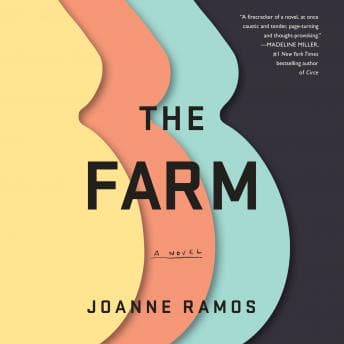
Jane is a Filipina immigrant working as a baby nurse for wealthy Manhattan families. She's exhausted, underpaid, and separated from her own daughter. When Golden Oaks—"the Farm"—offers her $50,000 to carry someone else's baby in a luxury facility, the choice isn't really a choice at all. It's survival arithmetic.
The Medical Details Are Accurate. Finally.
As someone who's actually worked with high-risk pregnancies, I was bracing myself for the usual Hollywood nonsense. But Ramos—who worked in finance before writing—did her homework. The monitoring, the dietary restrictions, the way the Hosts' bodies become corporate assets tracked and optimized like portfolios. The prenatal vitamins and organic meals aren't kindness. They're quality control.
The Farm is basically a luxury prison dressed up as a spa. And the horror isn't in what they do to these women—it's that the women consent. Because what's the alternative? Keep scrubbing floors for $12 an hour while your baby grows up without you?
I kept thinking about the night shift CNAs I work with. The ones working doubles because rent went up again. The ones who send money home to the Philippines, to Mexico, to Nigeria. They'd understand Jane perfectly.
Fran de Leon's Voice—A Complicated Thing
Okay, here's where I need to be honest. Fran de Leon is Filipina American, like Ramos, like me. And there's something powerful about hearing this story in a voice that understands the rhythms of Tagalog-inflected English, the code-switching between professional and personal.
But Jane's accent? Some listeners called it fake, and I get it. There's this thing that happens when you're trying to represent an immigrant voice—sometimes it tips into caricature. For me, it mostly worked. Jane's desperation comes through in de Leon's delivery, especially in the later chapters when everything starts unraveling. The scene where Jane gives her cousin Ate detailed instructions on caring for her baby daughter—that's the finest moment in the whole audiobook. I had to pull over.
The wealthy characters get crisper, more clipped deliveries. Reagan, the white Host who befriends Jane, sounds exactly like the well-meaning liberal women I went to nursing school with. The ones who wanted to "help" but couldn't see their own privilege. De Leon nails that tone.
This Isn't About Hospitals. It's About Power.
The Farm isn't really about surrogacy. It's about what happens when your body becomes someone else's investment. The Hosts sign contracts. They follow rules. They're monitored and measured and managed. And the whole time, they're told they're lucky.
I've seen this dynamic in healthcare. The way patients from certain zip codes get treated differently. The way "compliance" becomes a moral judgment. The way women's pain gets dismissed because they're "difficult" or "emotional."
Ramos doesn't preach about any of this. She just shows you. Jane folding herself smaller and smaller to survive. The other Hosts competing for bonuses. The administrators who genuinely believe they're doing good.
Carlos asked why I was crying in the car after this one. I blamed allergies. He didn't believe me.
Who Should Listen—And Who Should Maybe Skip
If you want a thriller with car chases and plot twists, this isn't it. The Farm is a slow burn—13 hours and 55 minutes of mounting dread and moral complexity. It requires focus. Don't try to listen while doing anything complicated.
Paradise Problem scratched a similar itch for me—slower burn than the title suggests, with that same quality of dread building quietly under a polished surface.Perfect for: Anyone who's worked in healthcare, childcare, or domestic labor. Anyone who's ever sent money home. Anyone who's had to make impossible choices about their body to provide for their family.
Maybe skip if: You need to like the protagonist. Jane makes choices that frustrated me. She's passive in ways that feel infuriating until you remember she has no power. None. And passivity is sometimes the only survival strategy available.
Night Shift Approved
My mom would love this. She'd also hate it, because it would remind her of every sacrifice she made coming to this country, every time she swallowed her pride to keep us fed. She still thinks I should've been a doctor. But nursing taught me to see the Janes of the world—the ones doing the invisible labor that keeps everything running.
Ramos sees them too. And she makes you see them.
The ending isn't neat. It's not triumphant. It's just... real. The way most immigrant stories are. You survive. You keep going. You hope the next generation has more choices than you did.
I finished this one parked in my driveway, engine off, not ready to go inside yet. That's the kind of book this is.