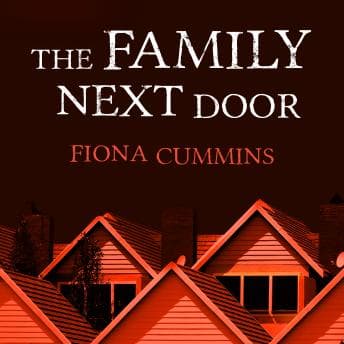

Let me cut to the chase: I started this one during a six-hour drive to a client site in Houston, and by the time I hit the city limits, I was sitting in the parking garage finishing the last chapter. That doesn't happen often.
Fiona Cummins knows how to build tension the right way - slow, methodical, like watching a sniper set up position. The premise is simple enough: family buys a house they can only afford because bodies were found in the nearby woods. Fresh start, right? Wrong. The Avenue is one of those picture-perfect suburban streets where everyone waves and nobody talks about what's really going on behind closed doors.
The Tactical Setup
Here's where Cummins earned my respect. She doesn't rush the reveal. The first half of this book is pure reconnaissance - you're gathering intel on the Lockwoods, their neighbors, the history of this street. Some listeners apparently found this confusing or slow. I get it. There are multiple perspectives, short chapters that jump around, and you're not entirely sure who you should be watching.
But that's the point. In any operation, you don't know who the threat is until you do. Cummins is building her target package, and if you're patient - and I mean actually patient, not the "I'll give it twenty minutes" kind - the payoff is significant.
Garrick and Olivia Lockwood are a mess. He's focused on flipping the house for profit. She's trying to hold their family together. Their kids are dealing with their own issues. And the neighbors? Each one of them is carrying something. The author clearly did her homework on how ordinary people can harbor extraordinary darkness. I've seen this scenario play out in real life - not the serial killer part, thankfully, but the way communities protect their secrets, the way people look the other way. That same understanding of human darkness drives Hidden, though it takes a more procedural approach.
Gemma Dawson's Command Performance
The narrator makes or breaks a thriller like this, and Dawson nailed it. Her British accent is clean and classically trained, but she's not stiff about it. She shifts between characters with enough distinction that I never lost track of who was speaking, even when I was navigating I-10 traffic.
What impressed me most was her pacing. When Cummins ratchets up the tension, Dawson matches it without going theatrical. She understands that real dread is quiet. It's the pause before the door opens. It's the slightly too-long silence after a question. Ranger was in the passenger seat for most of this drive, and I swear he was tense too - ears up, watching me like he knew something was wrong.
The emotional delivery is solid across the board. When characters break, Dawson breaks with them, but she never oversells it. That restraint is harder than it sounds.
Where It Lost Me (Briefly)
I'll be honest - there were moments in the middle where I wanted to shake some of these characters. The Lockwoods make decisions that had me muttering at my windshield. But that's not a flaw in the writing; that's just realistic human behavior under stress. People don't always do the smart thing. They do the emotional thing, the convenient thing, the thing that lets them keep pretending everything's fine.
My one real criticism: the multiple-perspective structure, while effective, occasionally felt like Cummins was showing her hand too early. There were a couple of reveals where I'd already pieced together what was happening, and the confirmation felt less like a gut-punch and more like a nod. But that might be occupational hazard - I spend my days thinking about threat assessment.
Mission Debrief
Worth your time? Absolutely, if you can handle dark content. This isn't a cozy mystery. There's violence, there's abuse, there's a serial killer element that gets genuinely disturbing. Cummins doesn't shy away from the ugliness, and Dawson doesn't soften it in the delivery. Skip this one if you need your thrillers sanitized or if slow-burn setups frustrate you. But if you appreciate methodical tension-building and don't mind sitting with discomfort? You'll be hooked.
The suburban setting works because it's so ordinary. The Avenue could be any street in any American suburb - or British, in this case. The horror isn't in some gothic mansion or isolated cabin. It's in the house next door. It's in the guy who waves at you every morning. Big Little Lies operates on the same principle - ordinary people, ordinary street, extraordinary secrets.
I listened at 1.25x because Dawson's pacing is deliberate enough to handle it. At normal speed, some of the quieter sections might drag for impatient listeners. But don't go faster than that - you'll miss the subtle shifts in tone that signal when things are about to go sideways.
Ranger approved this one. He was alert the whole drive, which is his version of a five-star review. Mission accomplished, Cummins. Now I need to track down the rest of your catalog.