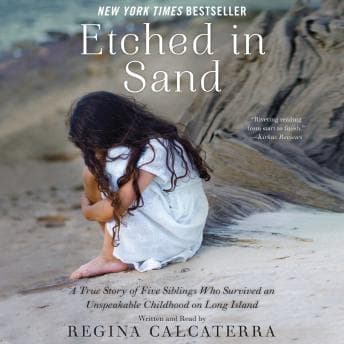

Look, I'll be honest. When I see "author-narrated memoir about childhood trauma," I brace myself. Sometimes it works. Sometimes you get someone reading their own pain in a flat monotone that makes you feel like you're eavesdropping on therapy. Regina Calcaterra's Etched in Sand is not that.
I listened to this during my morning walks along the lakefront, and there were moments I had to stop. Just... stop walking. Stand there like some weirdo staring at Lake Michigan while a woman in my earbuds described sleeping in cars with her siblings in the Hamptons. The Hamptons. That detail kept hitting me. We associate that place with wealth, with summer homes and cocktail parties. That jarring contrast between appearance and reality reminded me of Millionaire Next Door - how our assumptions about wealth and struggle are so often backwards. Calcaterra grew up there homeless, invisible, while tourists complained about parking.
When the Author Becomes the Narrator
There's a risk when authors read their own memoirs. They know the material too well. They've processed it, therapized it, distanced themselves from it. But Calcaterra threads this needle beautifully. She's clearly healed enough to tell this story without falling apart, but not so healed that she's sanitized it. You hear the catch in her voice when she talks about protecting her younger siblings. You hear the quiet fury when she describes her mother's cruelty.
This reminds me of what Hemingway said about writing - that you should write hard about what hurts. Calcaterra does that. But more importantly, she reads hard about what hurts. There's a difference between writing pain and performing it, and she manages both.
Her voice is clear and warm, which sounds wrong for the subject matter, but it works. She's not performing tragedy. She's telling you what happened with the steady certainty of someone who survived it. You're not hearing someone read a book - you're hearing someone remember.
Five Kids Holding On
What got me - what really got me - was the siblings. This isn't just Regina's story. It's about five kids trying to stay together while every system designed to help them kept pulling them apart. Foster care, homelessness, an abusive mother who showed up just often enough to derail any stability they'd found.
I teach teenagers. I've had students in foster care, students who've been through things I can't imagine. And I've read plenty of memoirs about difficult childhoods. But Calcaterra's focus on the sibling bond, on being the oldest girl trying to mother children when you're still a child yourself - that's what elevates this beyond trauma memoir.
The pacing is excellent. Eight and a half hours sounds long, but it moved. I never found myself checking how much time was left, which is my personal litmus test for audiobook engagement. (My students would be shocked to learn I have the attention span of a goldfish for anything that drags. They think I'm endlessly patient. I'm not. I just hide it well.)
Know Before You Listen
Here's where I have to be the responsible teacher for a second. This book contains detailed descriptions of child abuse, poverty, neglect, and the failures of systems meant to protect kids. If you're sensitive to that content, know what you're getting into. Calcaterra doesn't sensationalize it, but she doesn't soften it either. Skip this one if you need something lighter right now - there's no shame in that.
But if you can handle the subject matter? Essential listening. Especially if you work with kids, if you vote on policies affecting foster care, if you've ever driven through a wealthy neighborhood and assumed everyone there was fine.
My students would hate this. Too heavy, too real, too much like the stuff they're trying to escape when they put in their earbuds. But I loved it. Not enjoyed - that's the wrong word for a book like this. I valued it. I'm better for having listened.
Calcaterra writes with a lawyer's precision and a survivor's honesty. No melodrama, no self-pity. Just: this is what happened. This is how we survived. This is who I became.
Mr. Williams's Final Word
Worth pausing the faculty meeting for. Worth stopping on the lakefront for. Worth the heaviness in your chest when you finish.