"The mind is not what it contains, but what it releases."
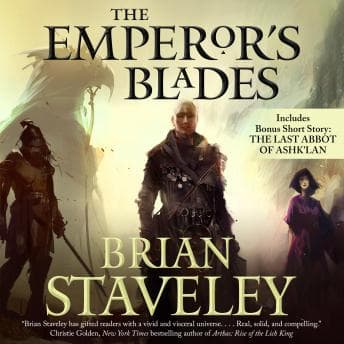
I don't remember the exact timestamp — somewhere deep in hour seven — but that line from the monks' training hit me while I was shelving returns in the library's back room, alone, the fluorescent lights doing that thing where they flicker just enough to remind you that you're in a building from 1974. And look, I picked up Emperor's Blades because a podcast listener wouldn't stop messaging me about it. "It's got monks and giant war hawks and political assassination," they said. "You'll love it." I was skeptical. Fantasy epic with three POV characters and a dead emperor? I've heard this pitch before. I've been burned before.
But here's what surprised me: Brian Staveley understands something about dread that most fantasy authors don't even attempt. This isn't horror — I know, I know, stay with me — but the Shin monastery sequences with Kaden? The way the monks systematically strip away identity, emotion, selfhood? That's body horror without a single drop of blood. The exercises where Kaden has to hold a perfect mental image of a goat — a specific goat, every hair, every imperfection — for hours, and his masters punish failure with casual violence? That's the kind of slow psychological dismantling that Shirley Jackson would've nodded at. Staveley taught religion and philosophy before writing this, and you can feel it in every monastery scene. These aren't generic wise-monk tropes. There's something genuinely unsettling about the Blank God's doctrine. That slow unraveling of self through ritual and belief reminded me of the divine manipulation at the core of Witch's Heart — different genre, same creeping sense that the gods in these stories are not your friends.
The War Hawks Deserve Their Own Sound Design
Valyn's storyline is the louder sibling — Kettral training, which is basically special forces but you ride enormous hawks into combat. And this is where Simon Vance earns his keep. His narration shifts register completely between the three storylines. The monastery sequences get this measured, almost meditative pacing. Then we cut to Valyn and Vance picks up intensity, drops his voice into something rougher. The Kettral graduation exam sequence — I won't spoil specifics, but it involves being buried — had me gripping my phone on my evening walk hard enough that a neighbor asked if I was okay.
Here's my honest complaint, though: some of Vance's male character voices bleed together. In scenes where Valyn is talking to multiple Kettral trainees, I occasionally lost track of who was speaking. It's not a dealbreaker — Vance is one of the best in the business and he narrates this thing like he's recounting actual history rather than reading fiction — but at 19+ hours, those moments of confusion add up. Oliver Cudbill handles the bonus short story at the end, which is a nice palette cleanser, but this is Vance's show.
Adare Gets the Short End of the Sword (And That's a Problem)
Here's where my discovery happened mid-listen. I started out thinking this was a three-equal-POV structure. It's not. Adare, the sister — the only woman among the three imperial children — gets dramatically less page time than her brothers. And what she does get is largely political maneuvering in the capital, which Staveley writes with less confidence than the monastery or military sections. It's not bad. It's just... thinner. You can feel the author finding his footing with her character in a way that he doesn't need to with Kaden or Valyn.
This matters because at 19 hours and 22 minutes, pacing becomes everything. The middle third drags — specifically the sections where we're cycling between Kaden's repetitive training exercises and Valyn's "who can I trust" paranoia without enough Adare to break the rhythm. I bumped my speed to 1.25x around hour 10 and honestly? That's the sweet spot for this book. Vance's deliberate pacing benefits from a slight push.
Who Needs This in Their Ears
If you're a fantasy listener who wants world-building that feels grounded in actual theological and military logic rather than Wikipedia-style lore dumps — yes. If you want a narrator who treats a 19-hour fantasy novel like a documentary about a real empire — absolutely yes. If you need all three storylines to be equally strong, or if similar-sounding character voices drive you up the wall, temper your expectations.
My podcast listeners are going to love this — specifically the ones who keep asking me to cover fantasy with genuine psychological unease rather than just swords and prophecies. The Shin monks' erasure of self is genuinely creepy in a way that most fantasy "dark orders" never achieve. Shirley Jackson walked so the Blank God could erase.
Shelving This One in the "Come Back For More" Section
I'm already queuing up book two. The cliffhanger isn't cheap — it's earned. But I need Staveley to give Adare the room she deserves, or this series is going to have a structural problem it can't outrun. For now? Vance's performance and the sheer weirdness of those monastery sequences make this worth the credit. I listened in the dark on that last chapter. Mistake? Maybe. Worth it? Absolutely.









