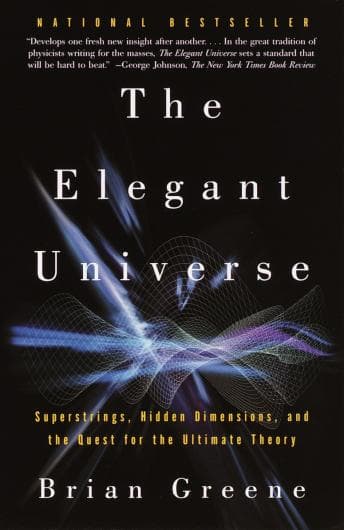

Look, I usually stick to space operas because my day job involves staring at distributed systems that are actively trying to catch fire. So voluntarily listening to a book about the actual architecture of the universe—string theory—felt a bit too much like work at first. If you want something lighter but still cosmic, Astrophysics for People in a Hurry is basically the express lane version. I mean, honestly, who wants to debug the fabric of reality at 7 AM?
But here we are. I finished this on the northbound Caltrain while staring at a foggy window, trying to visualize an ant on a garden hose. And surprisingly? I didn't hate it.
Physics ASMR (Kind of)
Erik Davies. I hadn't heard him before. (Ray Porter is still my king, obviously, and I will die on that hill.) But Davies brings this weirdly soothing energy to topics that usually make my cortisol spike. He sounds like that one senior engineer who explains why the database crashed without making you feel like an idiot.
He's calm. Almost too calm? At 1.0x speed, I might have fallen asleep between Palo Alto and San Mateo. Seriously, it's a very smooth, "everything is going to be okay" voice, even when he's talking about the universe tearing itself apart. But cranked up to 1.5x? Perfect clarity. He doesn't over-dramatize the math, which I appreciate. He just delivers the payload. Clean. Professional. No weird mouth noises or awkward pauses.
Debugging Reality
Greene is basically trying to refactor our understanding of gravity and quantum mechanics. The central thesis—that everything is just vibrating strings—feels like the ultimate "It's not a bug, it's a feature" explanation for why the universe works the way it does.
The analogies actually land. The garden hose thing for hidden dimensions? Genius. It's the first time Calabi-Yau shapes made sense to me visually. (Kevin tried to explain this to me last year using a napkin at a bar. He failed. Greene succeeded. Don't tell Kevin.)
There are moments where the "elegance" gets a bit thick, though. You can tell Greene really loves his theory. It's like a founder pitching their startup—lots of promise, very shiny, but you're still wondering if the tech stack actually scales. For a layman's guide? Top tier.
The ROI on Your Brain Cells
Is it dense? Yes. It's 15+ hours of heavy lifting. This isn't something you can listen to while doing a HIIT workout. You need just enough distraction to keep your body busy (like sitting on a train or folding laundry) but enough focus to track the dimensions.
It feels like reading a really well-written technical spec for a system you didn't know you were using. Grab this if: you want physics that respects your intelligence without requiring a PhD, or you need to feel smarter than the person sitting next to you on the shuttle. Skip it if: you need action to stay engaged, or 15 hours of theoretical physics sounds like punishment rather than entertainment.
Just don't blame me if you start seeing strings everywhere.





![Steve Jobs [unabridged audiobook] audiobook cover](/_next/image?url=https%3A%2F%2Fcovers.audiobooks.com%2Fimages%2Fcovers%2Ffull%2F9788499923406.jpg&w=1920&q=75)