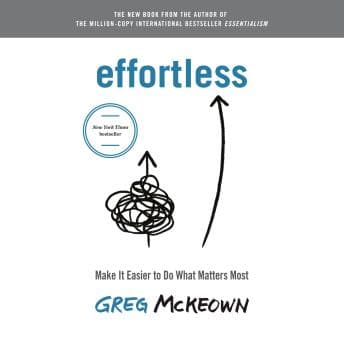

"Not everything has to be so hard." That line hits around the fifteen-minute mark, and I remember exactly where I was — standing in my kitchen, halfway through a dal that was getting way too complicated because I'd decided to temper spices in three separate batches like some kind of culinary masochist. And I thought: okay, Greg. You have my attention.
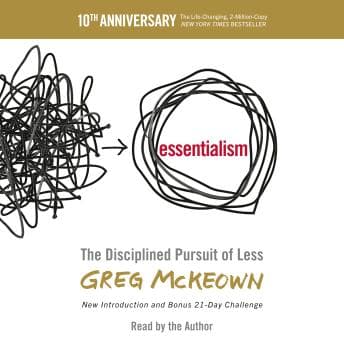
Here's the thing about McKeown. Essentialism was his "what to do" book — figure out what matters, cut the rest. I've already written up Essentialism as its own case file, so consider this the follow-up session. Effortless is the "how to do it without destroying yourself" sequel. And psychologically, this distinction is more interesting than it sounds. Because the research actually shows that high achievers don't just struggle with saying no to the wrong things; they struggle with making the right things unnecessarily painful. McKeown calls this the assumption that if something isn't hard, it isn't valuable. Classic Protestant work ethic internalized to the point of self-sabotage. My therapist would have thoughts about this.
The Permission Slip Nobody Asked For (But Everybody Needed)
What makes this book land — and what separates it from the tsunami of productivity content out there — is that McKeown is essentially writing a psychological permission slip. He's telling overachievers that the path of least resistance isn't laziness. It's design. It's the same psychological reframe I found in Becoming Bulletproof, where fear management is treated as training rather than temperament. He structures the book around three states: Effortless State (getting your head right), Effortless Action (simplifying processes), and Effortless Results (making things compound over time). It's clean. Almost too clean. The framework is so tidy it occasionally feels like it's optimizing itself into blandness.
But then he drops these small stories that stick. The one about his daughter's medical crisis — how the family dealt with an impossible situation by finding micro-moments of lightness — that's not a productivity hack. That's a human being processing grief and fear through the lens he knows best. I found myself asking: why does McKeown keep returning to this story? And I think it's because it's the emotional proof that his framework isn't just about inbox management. It's about survival.
When the Author Is the Narrator (and It Actually Works)
McKeown narrates his own book, and at six hours, it's a lean listen. His delivery is clear, brisk, almost clipped — like he's practicing what he preaches by not wasting your time with vocal flourishes. There's no dramatic pause theater here. No "let that sink in" energy. He reads it like he's explaining something important to a smart friend over coffee, which — honestly? For a self-help audiobook? That's refreshing.
The downside of author-narration is that you don't get the interpretive layer a professional narrator adds. McKeown reads his anecdotes with the same even tone he uses for his frameworks, which means the emotional beats (and there are a few genuine ones) don't always land the way they could. The story about his daughter deserves more vocal weight than it gets. But I'd rather have an author who under-performs emotionally than one who turns every paragraph into a TED Talk crescendo.
At 1.25x speed, this thing flies. I finished it across two cooking sessions and a morning jog through Cambridge where I was so absorbed I nearly missed my turn at the bridge. (I didn't. Spatial awareness is one of my few non-academic skills.)
Where the Psychology Gets Thin
Here's where my researcher brain gets itchy. McKeown references studies and stories, but the psychological grounding is sometimes... gestural. He'll invoke concepts like cognitive load or the paradox of effort without really sitting with the mechanisms. For a popular audience, that's probably fine. For someone who's read Kahneman and knows that "make it easier" is basically System 1 optimization dressed in a blazer, some of this feels surface-level.
And a few of his strategies — "pair essential tasks with enjoyment," "automate decisions" — aren't wrong, but they're not new either. If you've read Atomic Habits or The One Thing, you've encountered these ideas in different packaging. The value McKeown adds is the framing, not the tactics. He's saying: your identity as a hard worker might be the thing breaking you. That's psychologically interesting. That's the book I wanted more of.
Who This Is For (and Who Should Pass)
If you're a recovering overachiever who equates suffering with worth — and you know who you are, because you felt personally attacked by that sentence — this book is worth your time. If you've already done the deep work on productivity systems and you're looking for advanced strategies, you'll find this a bit introductory.
Best consumed in short focused sessions. Not a background listen — you'll miss the frameworks. Not a bedtime listen — it'll make you want to reorganize your morning routine at 11 PM.
The Case File, Closed
This is a fascinating case study in a writer arguing against the very hustle that probably made him successful. Psychologically, there's something almost subversive about a bestselling productivity author saying "stop trying so hard." Is it as groundbreaking as Essentialism? No. But it's the gentler, more humane companion piece — and sometimes that's exactly the book you didn't know you needed, standing in your kitchen with too many pans on the stove.