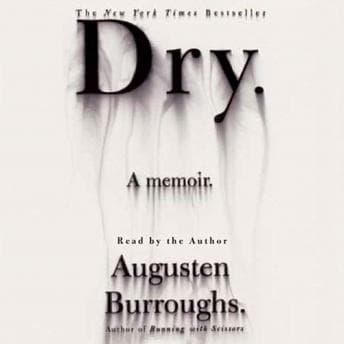

Everyone told me this was the funny addiction memoir. The one where you laugh through the pain. And look - they're not wrong. But I sat in my driveway at 7:45 AM after a twelve-hour shift, engine off, listening to Augusten Burroughs describe his friend Pighead dying, and I couldn't move. Carlos texted me asking if I was okay because he saw my car through the kitchen window. I blamed allergies. It was not allergies.
Here's the thing people don't tell you about Dry: it's not really a comedy about alcoholism. It's a grief book wearing a witty guy's expensive suit.
The Ad Man Who Couldn't Write His Own Copy
Burroughs worked in advertising - the kind of sharp, performative New York ad world where everyone drinks and nobody calls it a problem until the problem shows up at work with cologne on its tongue to mask the smell. The intervention scene from his coworkers is so painfully specific and awkward that I recognized it immediately. Not the drinking part - the part where colleagues become reluctant caregivers because the institution has no actual system for it. I've watched that dynamic play out in hospitals more times than I can count. Someone's falling apart, and the people around them cobble together a response because there's no playbook.
What Burroughs does really well is capture the magical thinking of addiction. The way he genuinely believes he can just... manage twelve drinks and show up functional. The automated wake-up calls, the loud ties as distraction, the whole elaborate scaffolding addicts build around the collapsing center of their lives. As someone who's actually worked a code on a patient whose family swore they only drank "socially" - yeah. That scaffolding is real.
The rehab sections are good but not where the book lives. Where it lives is in the after. The fluorescent-lit facility with paper slippers is almost the easy part, and Burroughs knows it. The hard part is walking back into Manhattan sober and realizing the city didn't get the memo.
Burroughs Reading Burroughs - A Mixed Bag at 3 AM
Here's where I have to be honest. Burroughs narrating his own memoir is both the best and worst thing about this audiobook. Best because nobody else could deliver his particular brand of self-aware dark humor with that exact timing. The Bewitched bit in chapter two - the way he talks about Darren Stevens getting a double like it's the origin story of his addiction - that lands because of his delivery. You can hear him smiling and also not smiling at all.
But. The character voices. When he does Foster's southern accent, it goes full Forrest Gump and I got yanked right out of the story. Multiple times. It's like watching a brilliant actor do bad improv - you want to look away but you also can't because the rest of it is so good. Some of the other character differentiations are inconsistent too. He'll nail a voice in one scene and then it'll drift in the next.
His emotional delivery though? When things get dark - the relapse, Pighead's decline - his voice does this thing where it gets very flat and controlled, the way people sound when they're describing something they've processed a thousand times but still can't quite hold. I know that voice. I hear it from patients' families. It's real.
Where It Hurts vs. Where People Say It Hurts
Everyone talks about this book compared to Running with Scissors, and some people think Dry is actually better. I haven't read Scissors yet (it's on the list, Mom, I know). But I can tell you how it compares to David Sedaris, since they get lumped together. Sedaris makes you laugh and then sneaks the knife in gently. Burroughs shows you the knife first, makes a joke about it, and then stabs you anyway. Dry is grittier. Messier. Some people call the writing sophomoric - and okay, there are moments where the prose feels like it's trying too hard to be clever when the situation already speaks for itself. But that's also kind of the point? This is a guy whose entire career was about crafting surfaces. The writing style IS the character.
The pacing does dip in places. Middle sections drag a bit - there's a stretch in rehab that felt longer than my last night shift, and not in a good way. But then Pighead's story accelerates and suddenly you're in that driveway unable to move.
Who Needs This Book (And Who Should Steer Clear)
If you've ever loved someone through addiction - yours or theirs - this will hit different. If you work in healthcare, you'll recognize every single person in these pages. If you want a neat recovery arc with a bow on top, this is not that. Burroughs relapses. It's ugly. This is not how Hallmark movies work. Trust me.
Not great for background listening. Not great for sleep. Perfect for that post-shift decompression when you need someone else's hard truth to help you let go of the ones you just witnessed. On the nights when Burroughs feels too close to the bone, I've found that Chakra for Beginners and Bedtime Stories does the opposite job - it's the palate cleanser my nervous system sometimes needs before sleep, though I'll be honest, the star rating reflects that it's no substitute for the real thing.
Shift Change
Eight hours and forty-three minutes. About the length of one of my shifts. And honestly, it felt like one - long stretches of mundane punctuated by moments that stop your heart. Night shift approved, with the caveat that you might need to sit in your driveway for a while after. Carlos will understand.