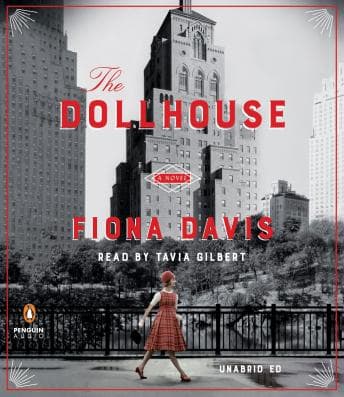

I need to rant for a second about mystery novels that telegraph their twists like a neon sign in a blackout. You know the type—you're barely past the first act and you've already mapped the entire plot because the author left breadcrumbs the size of boulders. Dollhouse flirts dangerously with this sin. I figured out the core mystery maybe four hours in, and I spent the remaining five going "come ON, Rose, keep up."
But here's the thing that kept me from rage-quitting during a 2 AM insomnia spiral (Shirley was doing that creepy cat thing where she stared at the corner of my bedroom like something was there—perfect ambiance, honestly): Tavia Gilbert's narration is doing heavy lifting that the plot doesn't entirely deserve.
The Barbizon as Gothic Space
This is where my horror-brain perked up. A women-only hotel in 1950s Manhattan? That's a pressure cooker of secrets, ambition, and barely-suppressed desperation. Davis understands—maybe accidentally—that the Barbizon functions like a gothic manor. The models on their floor, the secretarial students on theirs, the maids in the service corridors. Class stratification as architecture. When Darby befriends Esme the maid and starts descending into the jazz clubs and heroin dens of downtown, it reads like a descent narrative. The good girl going underground, literally and figuratively.
Gilbert gets this. Her Darby starts with this midwestern earnestness—slightly nasal, hesitant—and you can hear her voice change as the 1952 timeline progresses. The vowels loosen. The rhythm shifts toward something more syncopated, like the bebop she's falling for. It's subtle work, the kind of thing you only notice because you're lying in the dark with nothing to distract you from the performance.
Two Timelines, One Narrator Doing Overtime
The dual timeline structure—1952 Darby and present-day journalist Rose investigating the rumors—is pretty standard for historical fiction. What's not standard is how Gilbert differentiates them. Rose is sharper, more clipped, with that particular exhaustion of a woman whose personal life is imploding while she's trying to stay professional. Darby's sections feel warmer, more open. Even the male characters get distinct treatment—the jazz musicians versus the corporate men of Rose's world, the dangerous allure of certain 1950s men versus the emotionally unavailable types Rose keeps running into.
Gilbert creates and maintains these voices across nearly ten hours without slipping. That's craft. That's an actor who understood the assignment.
The Predictability Problem (And Why It Almost Doesn't Matter)
I can't pretend the mystery surprised me. The "deadly skirmish" the description mentions? You'll see it coming. The shocking truth? Shocking is generous. But—and this is a big but—the journey there is genuinely atmospheric. The seedy jazz clubs, the heroin that's treated with appropriate period-accurate casualness, the way Davis captures how a sheltered young woman could get pulled into a world that both terrifies and intoxicates her.
My podcast listeners know I'm always saying horror isn't about the scare, it's about the dread. Mystery works the same way. The destination matters less than the tension of getting there. Dollhouse has tension. The Barbizon's hallways practically echo with the ghosts of women's ambitions—some realized, most crushed. There's something genuinely melancholy about old Darby in her rent-controlled apartment, playing music that haunts her neighbors, holding onto secrets that have calcified into her identity.
Who Should Queue This Up (And Who Should Skip)
If you need your mysteries to genuinely surprise you, this might frustrate. Skip it if you're impatient with predictable reveals. But if you're here for the atmosphere of 1950s New York—the glamour and the grime, the way women navigated a world that wanted to put them in boxes—Gilbert's narration will carry you through the predictable beats. She's giving you a performance that elevates what could be a fairly by-the-numbers historical mystery into something more immersive.
Not quite horror, but there's darkness here. The heroin scenes don't flinch. The class dynamics have teeth. And the Barbizon itself—this building full of women's dreams and disappointments—functions almost as a character, one that Gilbert voices through the collective weight of everyone who lived there.
Worth the Midnight Hours
I finished this around 4 AM, Shirley finally asleep on my chest, the apartment silent except for Gilbert's voice in my earbuds. The ending didn't shock me, but it landed with a kind of sad inevitability that felt earned. Sometimes that's enough. A mystery that's more about atmosphere than surprise, carried by a narrator who commits fully to every voice, every era, every emotional register.
Fiona Davis has written better books since—The Address apparently tightens what she's doing here—but as a debut, this shows someone who understands that buildings hold stories. That same understanding of women navigating impossible systems shows up in Testaments: The Sequel to The Handmaid's Tale, though Atwood's world makes the Barbizon's constraints look quaint. And Tavia Gilbert understands that audiobooks are performances, not just readings. That combination? Worth your time, even if you see the ending coming from miles away.