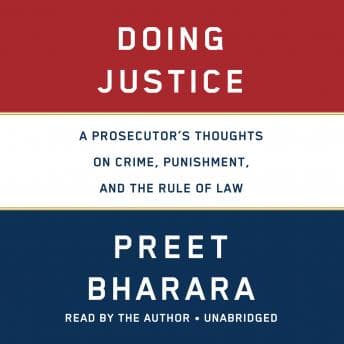

Let me cut to the chase: I expected this to be a political screed. Former federal prosecutor, fired by Trump, million Twitter followers - you can see where my skepticism came from. I was wrong.
I picked this up during a three-hour drive to meet a client in Houston, fully prepared to rage-quit if Bharara started grandstanding. Instead, I found myself sitting in the parking lot for an extra twenty minutes, engine running, because he was explaining the psychology of cooperating witnesses and I couldn't turn it off.
The Anatomy of a Case (Without the Hollywood Garbage)
Here's what Bharara gets right that most legal talking heads get wrong: he walks you through how cases actually get built. Not the Law & Order version where everything wraps up in forty-two minutes. The real version, where you're staring at a mountain of evidence, trying to figure out which thread to pull, knowing that one wrong move tanks the whole operation.
He breaks the book into sections - Inquiry, Accusation, Judgment, Punishment - and each one reads like an after-action report. Clean. Methodical. The kind of structure that makes sense to anyone who's ever had to brief a commander on a complex situation. He talks about the difference between being legally right and being morally right, and how prosecutors have to wrestle with that gap every single day. That tension between what's permissible and what's right runs through Art of War too, though Sun Tzu approaches it from the battlefield instead of the courtroom.
What got me was his honesty about the failures. Cases that fell apart. Witnesses who lied. Defendants who were probably guilty but walked because the evidence wasn't there. Most people in his position would bury that stuff. Bharara leads with it. Glenn Beck takes a similar approach in Miracles and Massacres, pulling back the curtain on historical moments that don't fit the sanitized narrative we usually get.
When the Author IS the Narrator
Bharara reads his own book, and it works. His delivery is conversational - not the polished radio voice you get from professional narrators, but the cadence of someone who's actually lived this stuff. He knows when to pause for effect. He knows when a story needs to breathe.
That said, don't expect dramatic range. This isn't a thriller with different characters needing different voices. It's one man explaining his worldview, and he does it with the confidence of someone who's spent decades in courtrooms. His wit comes through naturally - dry, self-deprecating at times, occasionally sharp when he's making a point about institutional failures.
I listened at 1.25x and it held up fine. His natural speaking pace is measured, almost deliberate, so the speed bump actually helped maintain momentum during the more philosophical sections.
Where It Lost Me (Briefly)
The book occasionally dips into territory that felt more like a lecture than a conversation. Some of the meditations on justice philosophy - while intellectually sound - stretched longer than they needed to. I found myself drifting during a few passages about abstract principles, wishing he'd anchor them with another case story.
And look, I'm not naive about politics. Bharara clearly has a perspective, and it shows in places. But he's not preaching. He's making arguments, backing them up with evidence, and acknowledging counterpoints. That's more than you get from most cable news prosecutors.
Who Should Deploy This / Who Should Stand Down
If you've ever wondered what happens between arrest and conviction - the real mechanics, not the TV fantasy - this is your book. Anyone in law enforcement, security, or legal fields will find themselves nodding along. Citizens who want to understand why the system works the way it does (and sometimes doesn't) will come away better informed. Skip it if you want a political takedown of anyone. That's not what this is. Also skip if you need action and explosions - this is cerebral, not tactical.
Mission Debrief
I've seen plenty of people with authority abuse it. I've seen systems fail because the people running them forgot why the rules matter. Bharara's book is a reminder that the system works when the people inside it take their responsibilities seriously - and falls apart when they don't.
Ranger slept through most of it, which means it wasn't exciting enough to trigger his tactical instincts. But he perked up during the section on witness intimidation, so maybe he was paying more attention than I thought.
Worth your time? Yeah. It's not entertainment - it's education. But it's the kind of education that sticks with you, delivered by someone who earned the right to give it.





![Steve Jobs [unabridged audiobook] audiobook cover](/_next/image?url=https%3A%2F%2Fcovers.audiobooks.com%2Fimages%2Fcovers%2Ffull%2F9788499923406.jpg&w=1920&q=75)